

Woven Trays, Baskets, and Lidded Boxes
Choose a woven container by testing how your things enter, rest on the base, and come out again.
By BeenEast Editorial · Published · Reviewed
Set frequently used items on a shallow tray
A shallow woven tray keeps everyday items within easy reach. An open basket adds walls to keep them together when you move them. A lidded box covers them between uses. Consider the same set of things in each one: keys, a card case, and a charging cable. The best fit depends on where those things will rest, whether they can catch in a gap, and how much room you have to pick them up.
For a tray by the door, picture a set of keys and a card case. The low rim leaves room to lift the case from the side, and the keys stay in view. A raised rim can keep keys from sliding off, but a rim that slopes inward takes space away from the flat part of the tray. A case that fits between the outer edges may still rest on that slope.
Set the items down side by side and measure the rectangle they occupy. Suppose they take up 6 × 4 in. (about 15.2 × 10.2 cm) in that arrangement. A tray that measures 8 × 6 in. (about 20.3 × 15.2 cm) at the outside but has a flat base of 7 × 3.5 in. (about 17.8 × 8.9 cm) comes up short in depth. That arrangement needs a deeper tray, or a different layout that still leaves space for your fingers. These are example measurements. At a shop, set the empty tray on a flat surface and gently press opposite corners. If it rocks, check where the base meets the table. A raised binding or an uneven foot may lift one part of the tray.

Use the sides and gaps of an open basket
If you carry those same items between rooms, taller sides help keep them together. Check the gaps near the base where the cable plug or a key tooth can settle. A plug may span a gap lying flat and slip into it end-first when the basket tilts. A tightly woven bottom supports small items even when the upper walls are open. On a used piece, compare a suspect opening with the repeat beside it. A gap that repeats is part of the pattern. A single opening with a broken end sticking into it can snag the cable when you lift it.
A removable liner can cover openings, but it takes up space and may bunch if it is too large. A small insert that sits flat can keep the same basket useful for loose items. The same opening check applies to wrapped snacks: try the narrow end of a packet as well as its broad face. For unwrapped food, use a separate dish intended for that food unless the maker confirms that the basket and its finish are intended for direct contact under those conditions.

Fit the contents and the lid together
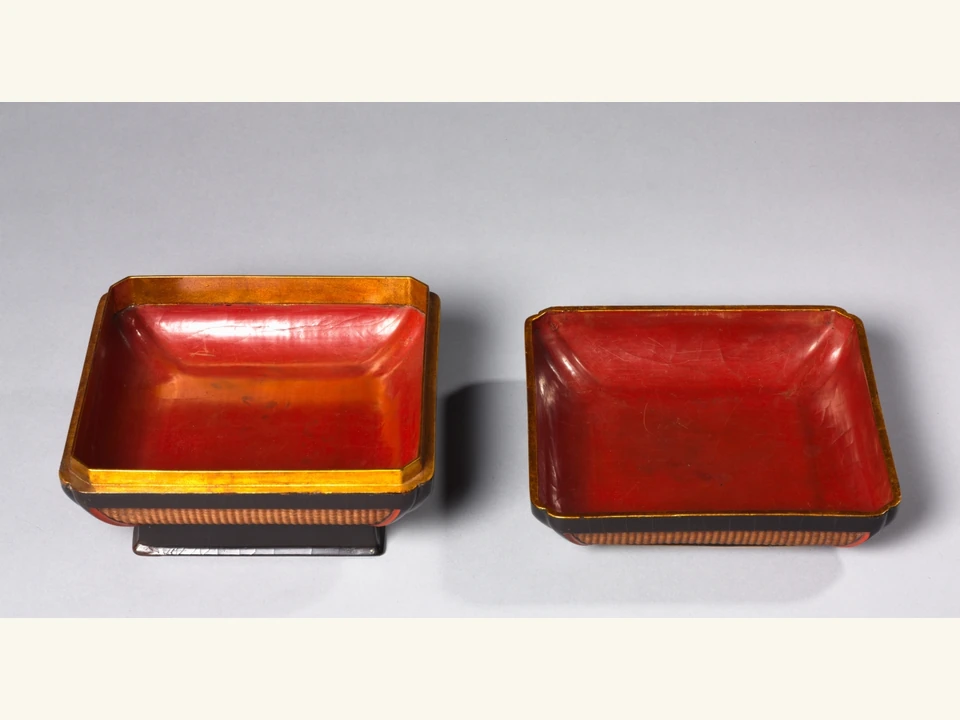
A covered box is useful when you want to put the keys, case, and cable out of sight between uses. A 1609 box in the Cleveland Museum of Art combines woven bamboo, wood, and lacquer. The lifted lid reveals the shallow interior and the rim it seats on. A lid also changes how a container fits a shelf.
For a box you are considering, compare the inside depth with the height of the contents, including any connector or cord that sits above the rest. Check the clearance with the lid fully seated. Then test the motion you will use to reach inside. A lift-off lid needs a place to rest, while a hinged lid needs room to swing. If the cable catches at the rim, laying it flatter or choosing a deeper box makes more sense than pressing the lid shut. When the lid sits fully on the rim and the cable lifts out without snagging, the box fits the job.
Continue reading
References
Cleveland Museum of Art, Wickerwork Box
