

How Should You Store and Display Hand Embroidery?
A small, sturdy hoop piece can hang in a dim, dry room. Store fragile or heavy embroidery flat, and leave room above raised stitches if you frame a piece.
By BeenEast Editorial · Published · Reviewed
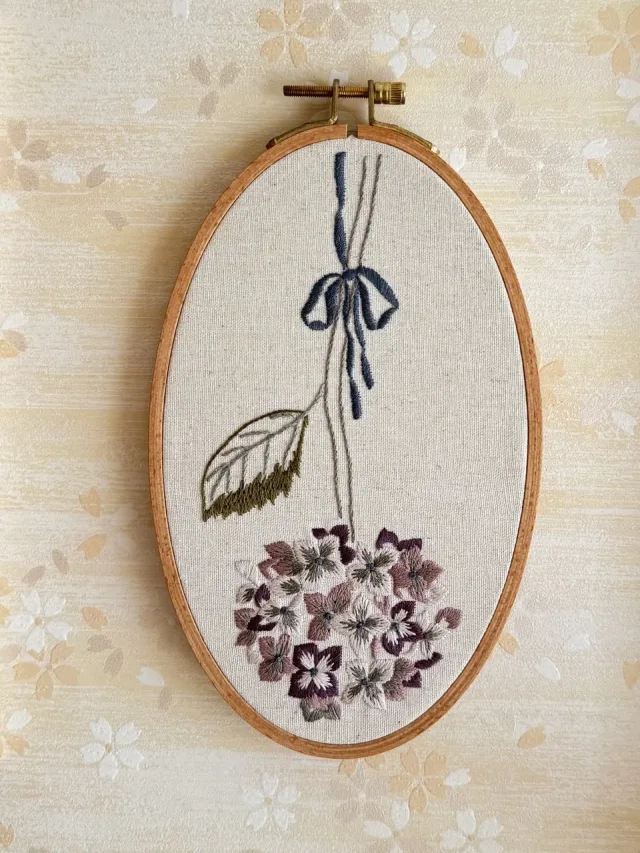
Decide whether to hang it
Look at the ground fabric, the cloth that carries the stitches. On a sound modern hoop piece, the cloth should sit evenly at the rim. Tears at the edge, loose stitches, or sagging beneath heavy decoration are reasons to lay the piece on a clean, flat support. Leave an heirloom with brittle cloth or lifting threads on its support and ask a textile conservator before remounting it.
Sources: Canadian Conservation Institute · Basic care for textiles
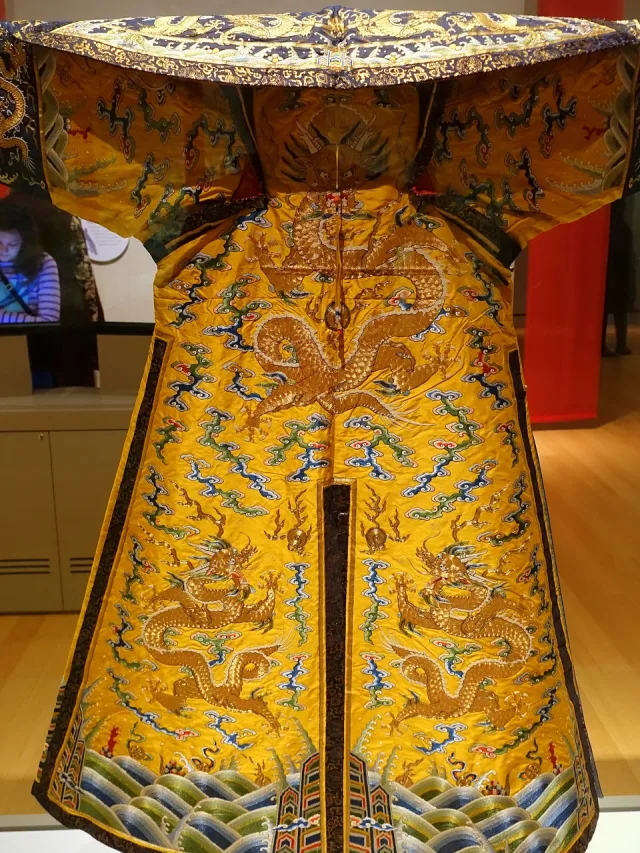
An embroidered court robe is a different kind of display. In the museum photograph, the robe is shown with its sleeves spread and its body hanging below. A textile with that shape and weight calls for a support fitted to the garment.
Sources: Canadian Conservation Institute · Caring for textiles and costumes · Wikimedia Commons · Qing court robe (Daderot, CC0)

Choose a display spot
Check the wall in the morning and again in the afternoon. If sun reaches the spot, choose a dimmer wall or keep the work in storage between displays. Light damage adds up, so even a spot with no direct sun benefits from shorter display time. Keep the piece away from radiators, air vents, and damp rooms.
Sources: Canadian Conservation Institute · Basic care for textiles · BeenEast · How felt finishes the back of an embroidery hoop
Support the back and leave room above the stitches
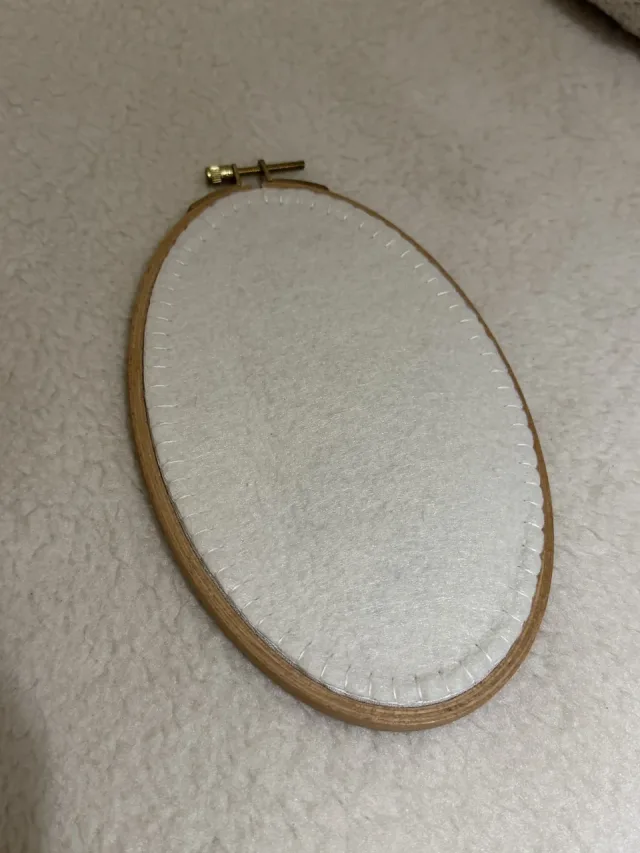
On the back of the same modern hoop, the felt cover hides the folded fabric edge. The cloth is held at the rim. When framing a flat embroidery, ask the framer for a fabric-covered support that carries the piece across its full area. Discuss a reversible mount with a textile conservator for an older or fragile work.
Sources: BeenEast · How felt finishes the back of an embroidery hoop · Canadian Conservation Institute · Conservation framing of embroideries and other flat textiles (13/17)
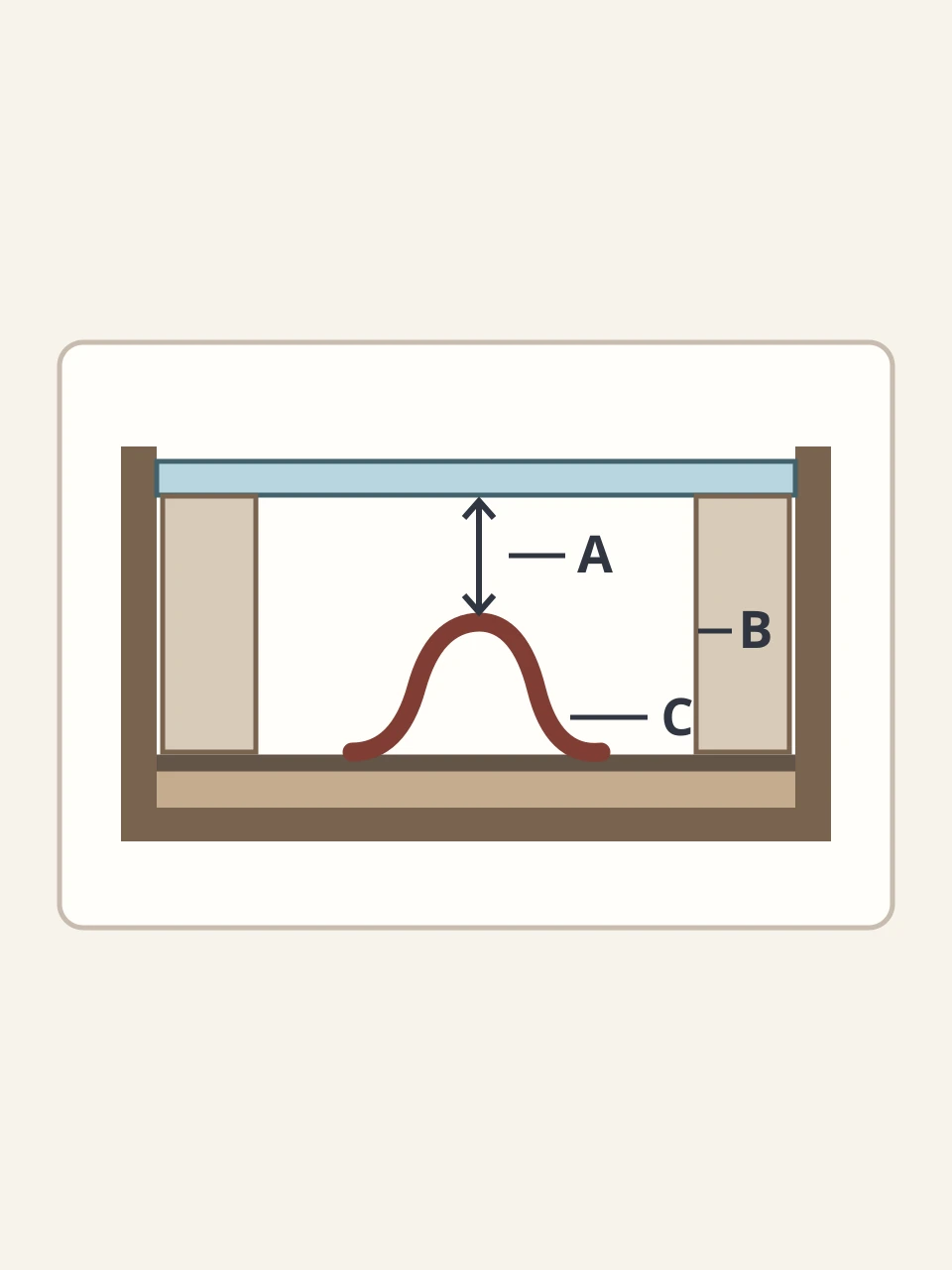
Look across the framed surface from the side in soft light. Check the tallest knot, bead, or raised stitch. If it touches the glass or acrylic, ask for a deeper frame or a spacer, a strip or mat that holds the glazing above the embroidery. UV-filtering glazing still leaves the work exposed to visible light.
Store delicate embroidery flat
Use a shallow archival box large enough to hold the embroidery face up. Keep it in a dark interior closet with stable conditions. For silk, wool, or an unknown fiber blend, choose unbuffered, acid-free tissue. “Unbuffered” means no alkaline reserve has been added to the paper. If a sound, flexible textile must be folded, pad the bend with a soft roll of tissue. If the fabric or raised decoration resists bending, use a larger box. Keep other pieces and heavy objects off the embroidery.
Sources: Canadian Conservation Institute · Flat storage for textiles (13/2) · Smithsonian Museum Conservation Institute · Acid-free tissue for textile and costume storage
Check before cleaning
For a modern item made to be washed, follow the maker’s care instructions. If the embroidery is old, its fibers or dyes are unknown, or threads are already lifting, pause before wet cleaning and ask a textile conservator. For a piece you rotate between wall and box, use that changeover to check the hoop edge or frame gap again.
Sources: Canadian Conservation Institute · Basic care for textiles
Continue reading
References
Canadian Conservation Institute · Basic care for textiles
Canadian Conservation Institute · Caring for textiles and costumes
Canadian Conservation Institute · Flat storage for textiles (13/2)
Smithsonian Museum Conservation Institute · Acid-free tissue for textile and costume storage