

Why Does Indigo Rub Off on Clothes and Furniture?
Learn why indigo can leave blue marks, how rubbing differs from bleeding in the wash, and what to check before it touches light fabrics.
By BeenEast Editorial · Published · Reviewed
Why the blue rubs off
Indigo can leave a blue mark when rubbing transfers color from the surface of dyed cloth to another material. This is called crocking. It can happen when the fabric is dry or damp. If you find a mark, separate the two surfaces and note where they touched.
Sources: AATCC — Colorfastness to Crocking (TM8) · Cotton Incorporated — Colorfastness of Cotton Textiles
Start with the shape and position of the mark. A narrow streak on a light shirt that lines up with a blue shoulder strap gives you a contact point to inspect. The streak alone cannot tell you how the cloth was dyed or finished.
Tell rub-off from bleeding in water
First, check how the blue appeared. A mark that follows a rubbed area points to contact transfer (A). Blue rinse or wash water shows color entering the water (B). A damp strap can still leave a mark by rubbing, so record both the contact and the moisture.
Sources: AATCC — Colorfastness to Crocking (TM8) · Cotton Incorporated — Colorfastness of Cotton Textiles
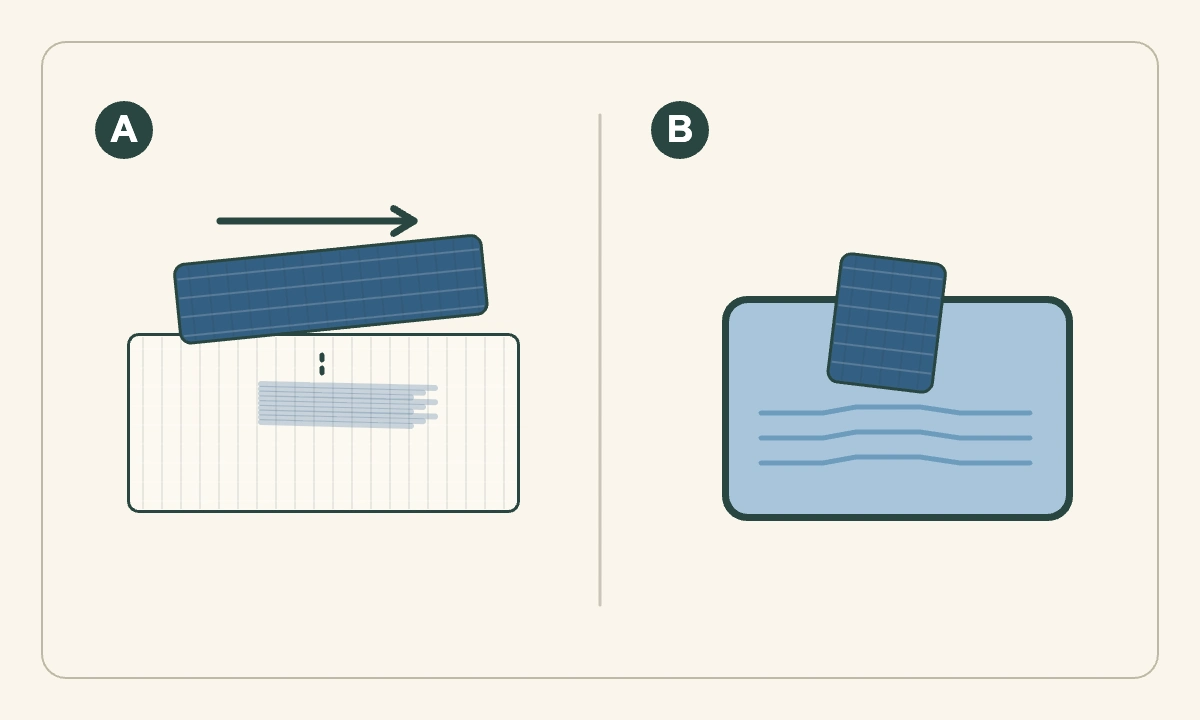
Judge the two observations separately. Even after the rinse water runs clear, a strap can still leave blue where it rubs. Use the contact mark to decide where to protect light fabric.
Sources: AATCC — Colorfastness to Crocking (TM8) · Cotton Incorporated — Colorfastness of Cotton Textiles
Check the piece’s finishing and care directions
Next, check what has already been done. For a home-dyed piece, compare your rinse and wash with the instructions for the method you used. If you missed a step, complete it as directed before checking again. For a purchased item, follow its care label and ask the maker if the instructions are unclear.
Sources: Jacquard — Indigo Tie Dye Kit Quick Start
Then, if you have a matching scrap, use it to check for visible dry transfer. Lightly rub a clean, dry white cotton scrap over the dry dyed sample (1). Compare the rubbed area with an unused part of the white cloth in even light (2).
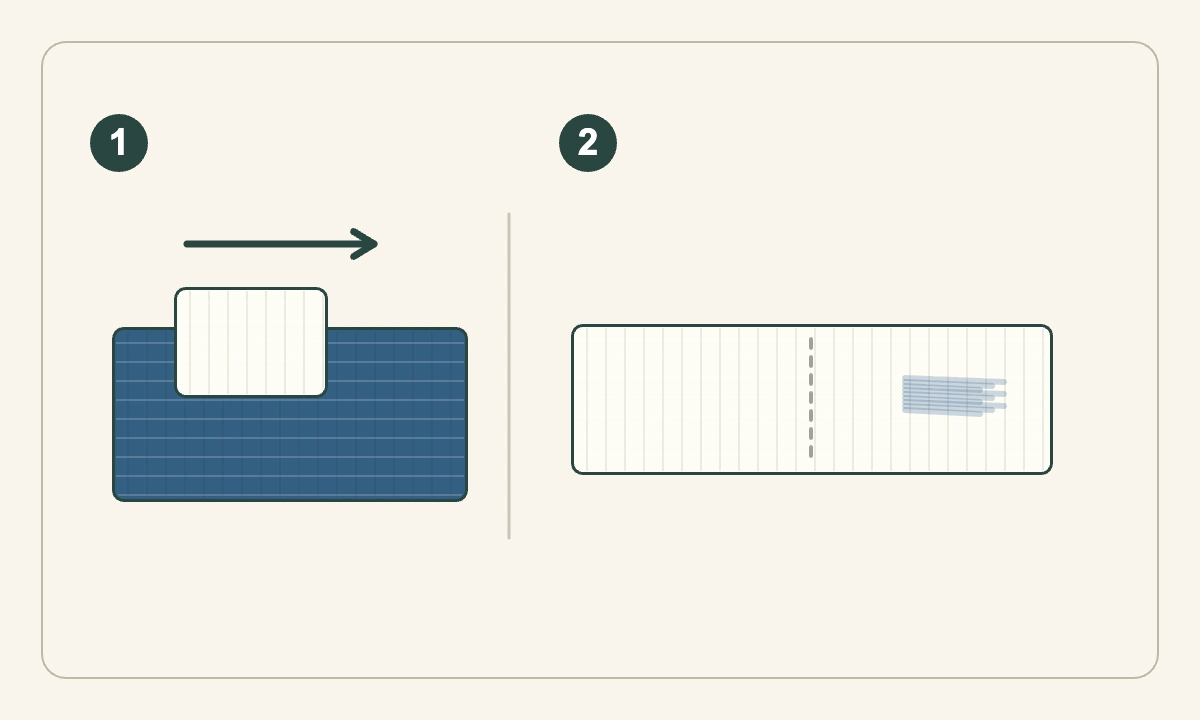
Visible blue is a reason to keep the piece away from light fabrics in similar use. A clean white scrap only describes that spot under those dry conditions. Damp contact, heavier rubbing, or another area may behave differently. AATCC TM8 measures dry and wet rubbing separately under controlled conditions.
Plan around the places that rub
Keep a rubbing strap away from pale clothes. If a dyed textile leaves blue on a light seat, move it away or use a washable cover that stays in place between the two surfaces. Check the cover for blue and wash it separately as its label directs. Keep damp dyed textiles away from light items while they dry.
Sources: Levi’s — Dark denim and dye transfer
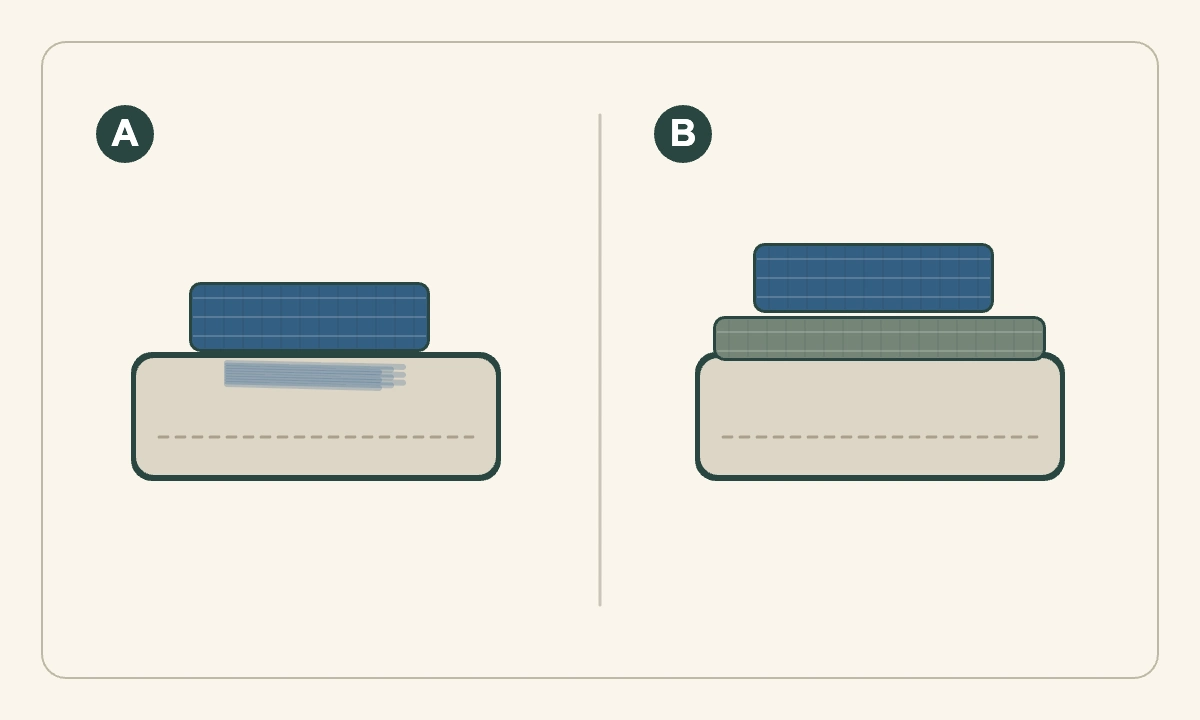
If something has already picked up blue, check the care instructions for the stained item. Wash a washable garment promptly as its label allows. For upholstery, use the furniture maker’s instructions for that surface.
Sources: Levi’s — Dark denim and dye transfer
Give the maker an example they can use
If transfer continues after the recommended care, photograph the mark and the matching contact area. Record whether each surface was dry or damp, which part rubbed, and how the dyed piece was last washed. Keep the textile away from the affected surface while you check the next step.
For a purchased item, send those details to the maker and ask how they recommend using and caring for it. For a home-dyed piece, add the dye product and the rinse and wash steps you followed so you can compare future samples under the same conditions.
Continue reading
Reuse and citation
English PDF and Markdown contain the text; their photo links open the illustrated guide.
BeenEast Editorial. Why Does Indigo Rub Off on Clothes and Furniture?. Version 1.0 (2026-11-13). https://community.beeneast.com/guides/hand-dyeing-indigo-transfer
References
AATCC — Colorfastness to Crocking (TM8)
Cotton Incorporated — Colorfastness of Cotton Textiles