

How to Slow Light Fading in Hand-Dyed Textiles
Choose a dimmer spot, shorten display time, and track color changes to help protect hand-dyed textiles from light fading.
By BeenEast Editorial · Published · Reviewed
Use dimmer light and shorter display times
Keep hand-dyed textiles out of direct sun, choose a dimmer place, and shorten the time they spend on display. Light damage accumulates. Moving a faded textile into shade limits further exposure, and the color already lost will stay faded.
Sources: Canadian Conservation Institute — Caring for Textiles and Costumes
Lightfastness means how well a color holds up under light. It depends on the dye and the textile. With an unfamiliar piece, ask the maker what they know about the dye and its display history. Start with a dimmer location and check the color again before extending the display.
Sources: Canadian Conservation Institute — Caring for Textiles and Costumes
Check the display spot through the day
Check the exact spot in the morning and again in the afternoon. If direct sun reaches the cloth, try an interior wall or close a blind that blocks the beam. Check the new spot at the same time of day. Repeat when the season changes, since the patch of sun can move.
Sources: Canadian Conservation Institute — Caring for Textiles and Costumes
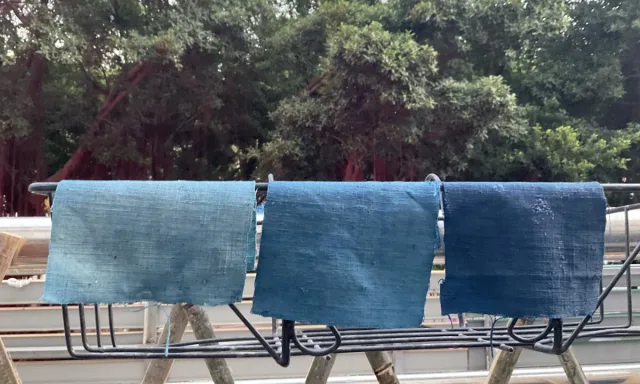
The right-hand cloth on the rack shows bright reflections. At home, take a reference photo with the textile dry and evenly lit. Pick a recognizable point, such as the edge of a motif, so you can frame the same area next time.
Treat UV filtering as one part of the plan
UV is ultraviolet radiation, an invisible part of daylight that can weaken fibers and contribute to fading. UV-filtering glass or film reduces that part of the exposure. Visible light still reaches the textile and can fade dyes.
Sources: Canadian Conservation Institute — Ultraviolet Filters
If you use a display lamp, turn it on when you want to see the piece and switch it off when you leave. Dimming the lamp reduces the light reaching the cloth while it is on. Switching it off reduces the time the cloth is lit.
Sources: Canadian Conservation Institute — Ultraviolet Filters
Rotate the textile out of the light
Note the date you put the textile up and set a date to review it. When you take it down, put it in dark storage with support for its weight. A small textile can often rest flat in a suitable box. Larger textiles may suit supported rolling if their construction and condition allow it. Ask a conservator about fragile pieces or raised decorations before rolling.
Sources: Canadian Conservation Institute — Basic Care of Textiles · Myotus — Rolled textile storage at Anoka County Historical Society · Creative Commons Attribution 4.0

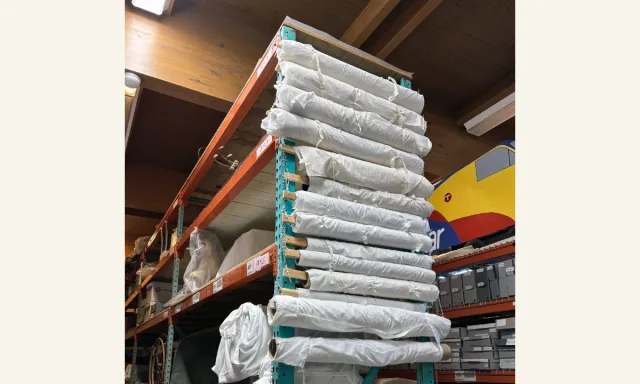
Write down where the textile hung and the dates it went up and came down. If the wall gets direct sun in another season, move the textile before that period. Putting a different piece on display reduces the light exposure of the one you store.
Sources: Canadian Conservation Institute — Caring for Textiles and Costumes
Compare color under the same conditions
Compare the same dry area under even light. If you are using photos, match the background, angle, and lighting as closely as you can and turn off filters. An exposed area and a nearby sheltered area can be compared if they started the same color and you can see both without taking the piece apart.
Sources: Canadian Conservation Institute — Caring for Textiles and Costumes
Check what happened between observations. A change that follows the edge of a frame or cover is a clue to light exposure. If the piece was also washed, check the wash history before deciding what caused the change. In the experiment below, compare the left and right halves within one panel. The orange samples show a clearer difference in later columns.
Sources: Canadian Conservation Institute — Caring for Textiles and Costumes · Wąs-Gubała, Sarnowska, and Feigel — Cotton fabrics after light exposure, Figure 1 (2026) · Creative Commons Attribution 4.0
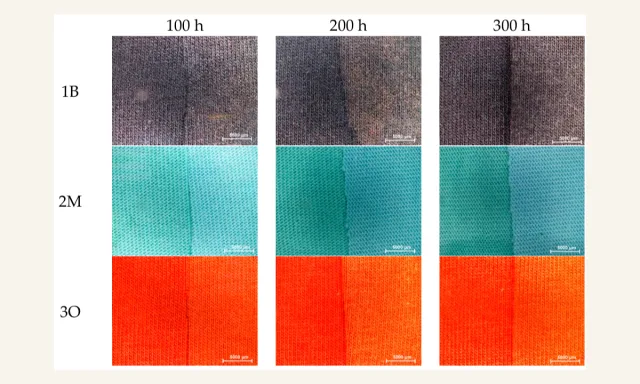
If the difference remains under matched viewing conditions, take the textile down from the brighter spot and keep the dated photos. If you display it again, use a dimmer location for a shorter period, then compare the same area. Ask a textile conservator before moving or unfolding a fragile or valuable piece.
Sources: Canadian Conservation Institute — Caring for Textiles and Costumes · Canadian Conservation Institute — Basic Care of Textiles
Continue reading
Reuse and citation
English PDF and Markdown contain the text; their photo links open the illustrated guide.
BeenEast Editorial. How to Slow Light Fading in Hand-Dyed Textiles. Version 1.0 (2026-11-13). https://community.beeneast.com/guides/hand-dyeing-light-fading
References
Canadian Conservation Institute — Caring for Textiles and Costumes
Canadian Conservation Institute — Ultraviolet Filters
Canadian Conservation Institute — Basic Care of Textiles
Myotus — Rolled textile storage at Anoka County Historical Society
Wąs-Gubała, Sarnowska, and Feigel — Cotton fabrics after light exposure, Figure 1 (2026)