

How to Overdye Colored Cotton
Dye colored cotton a new shade by checking the base color, choosing a dye made for cotton, and comparing a dry test swatch with the original.
By BeenEast Editorial · Published · Reviewed
Treat the existing color as part of the result
To overdye colored cotton, choose a dye compatible with the fabric and test it on a matching scrap. Keep an original swatch beside it. Compare both after the dyed swatch has been washed and dried, then decide whether to dye the full garment.
Sources: Rit — Dyeing colored and printed fabrics · Jacquard — Procion MX and Compatible Fibers
Overdyeing adds color over the existing shade. A deep blue is a plausible target for pale blue cotton. To get a lighter result, start with a lighter fabric.
Choose a shade that works with the base
Look at the dry base color in even light. In the illustration, the same blue dye could deepen pale blue cotton (1) or push pink cotton toward purple (2). Use the direction of the change to pick a dye to test.
Sources: Rit — Dyeing colored and printed fabrics
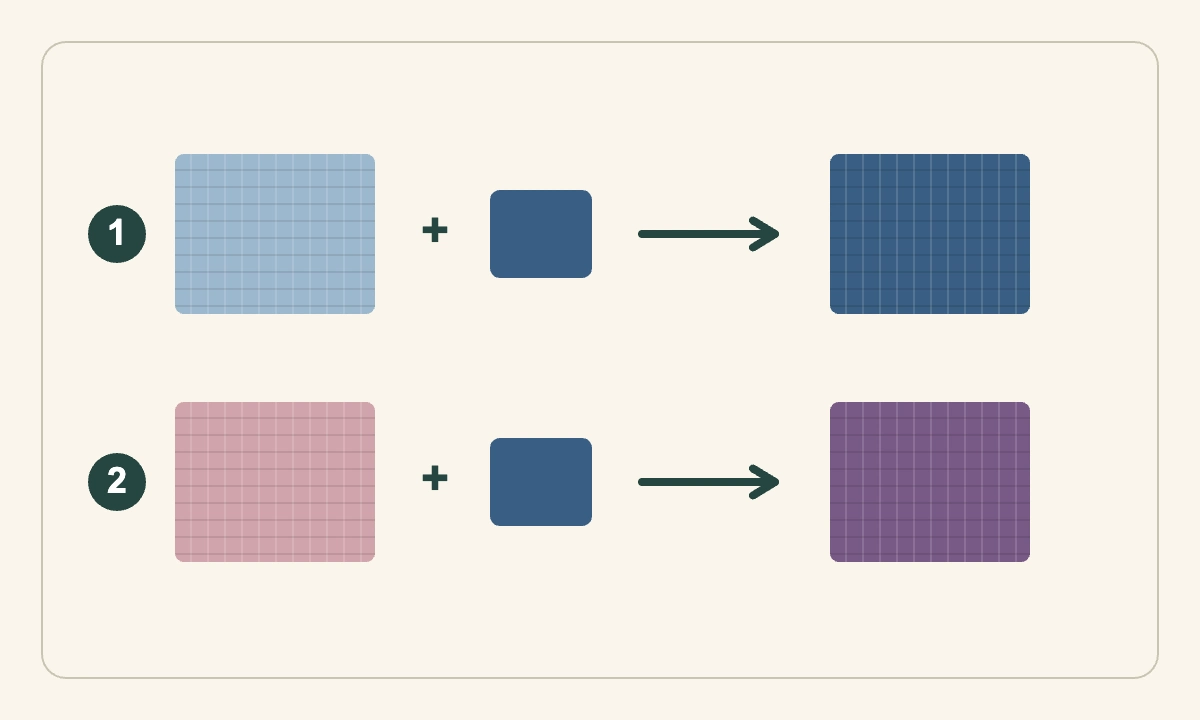
Before using a manufacturer’s color chart, check what fabric and base color it shows. Your original color and the dyeing conditions affect the dry result.
Check prints, seams, and trims separately
Read the fiber and care labels. On a garment with a print, check both the ground color and the printed areas. Test a matching scrap that includes both when possible. The print may still be visible, with a different hue or contrast.
Sources: Rit — Dyeing colored and printed fabrics
Check stitching and trims separately from the cotton body. Polyester thread can retain its original color with a dye that colors cotton but does not dye polyester. A scrap of plain body fabric can only tell you how that part behaves.
Sources: Rit — Dyeing sewing thread
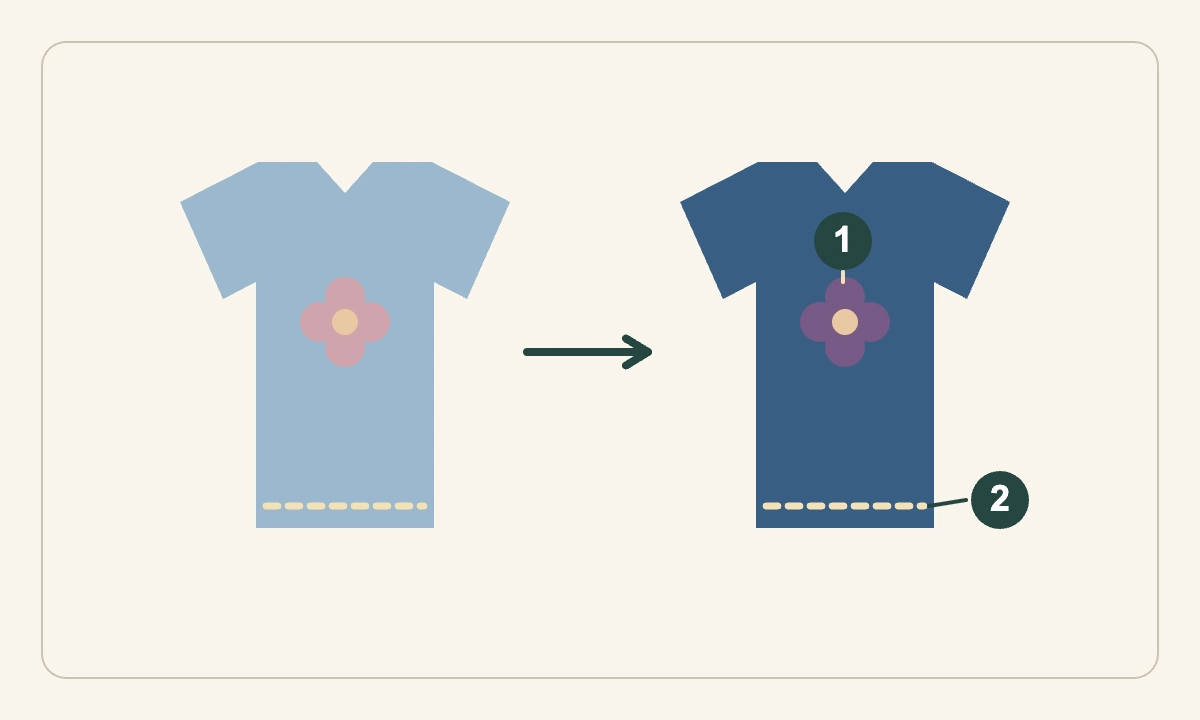
Keep an original swatch and dye a second one
Cut two separate swatches from the same piece of cotton. Keep A undyed as your original and dye only B, following the product instructions. Record the dye shade, dry fabric weight, amounts, temperature, and timing called for by the method.
Sources: Jacquard — Procion MX immersion instructions
Rinse, wash, and dry B as directed. At C, lay A and B side by side and compare the same areas in the same light. If you only have similar fabric, use the test to shortlist dye shades. The color on the garment itself is still uncertain.
Sources: Jacquard — Procion MX immersion instructions
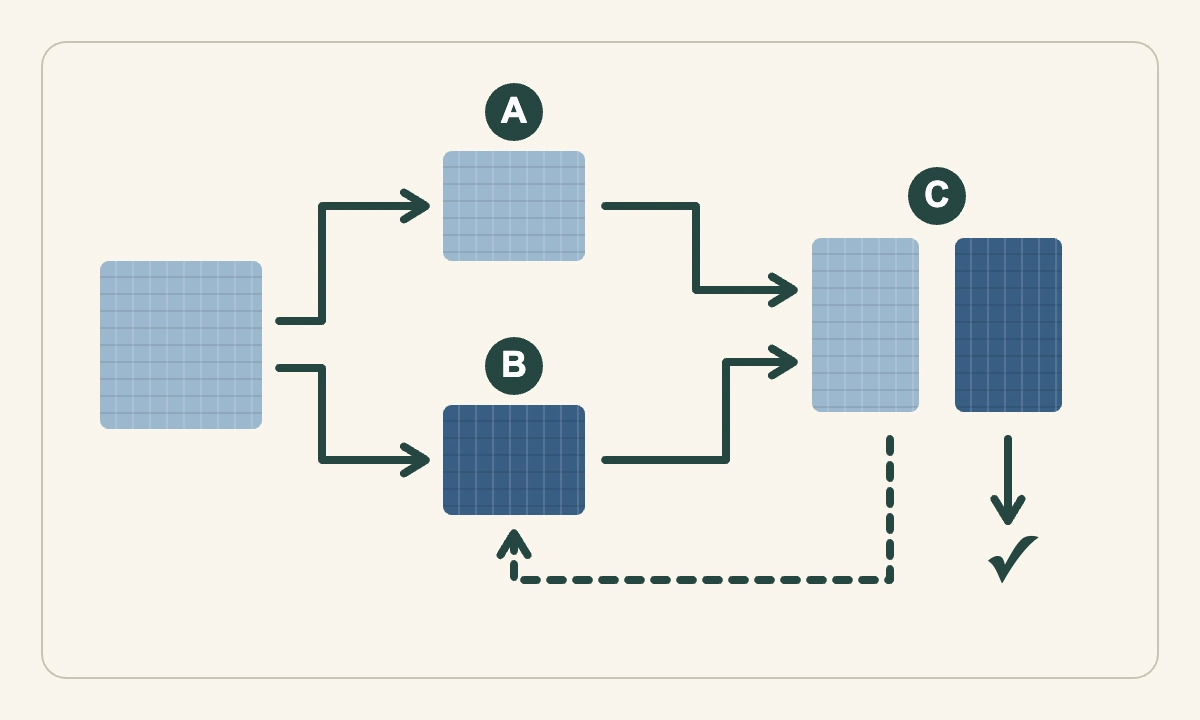
If the color is off or uneven, pause and follow the checks in the next section. Change one thing and return to B with a fresh matching swatch. Keep A for the next comparison.
Repeat the tested method on the garment
First, check the comparison. Wash and fully dry the dyed swatch, lay it flat beside the original, and compare corresponding areas in the same light. Decide whether the whole swatch is too dark or off hue, or whether only certain spots or edges differ.
Next, check your notes against the dye instructions. Verify the amounts for the dry fabric weight, the bath temperature, and the time. For uneven patches, check whether the fabric was evenly wetted and could move freely in the bath.
Sources: Jacquard — Procion MX immersion instructions
Finally, check the material. Look for preexisting stains or a finish on the cloth, and check the fiber label and any stitching or trim. If you find a preparation or process problem, correct it and retest a fresh matching scrap. If the whole swatch still shifts too far from the target, test a different dye shade on a fresh scrap.
Sources: Jacquard — Procion MX immersion instructions · Jacquard — Procion MX and Compatible Fibers
Before dyeing the whole garment, check three things. The washed, fully dry test on matching cotton should be close to your target color. The contrast of the print, stitching, and trim should be acceptable wherever those features are present. The whole garment should have room to open out and move freely in the dye bath.
Sources: Jacquard — Procion MX immersion instructions
When all three checks pass, follow the tested method and scale the amounts to the garment’s dry weight using the product instructions. Keep the original, the accepted dry swatch, and your notes together.
Continue reading
Reuse and citation
English PDF and Markdown contain the text; their photo links open the illustrated guide.
BeenEast Editorial. How to Overdye Colored Cotton. Version 1.0 (2026-11-13). https://community.beeneast.com/guides/hand-dyeing-overdye-cotton
References
Rit — Dyeing colored and printed fabrics