

How to Choose Your First Piece of Lacquerware
Use a tray for two cups to compare usable space, construction, condition, and everyday handling.
By BeenEast Editorial · Published · Reviewed
Start with how you’ll use the piece
A first piece of lacquerware earns its place through use. This guide uses a serving tray as an example of how to choose a piece that fits your everyday needs. For a tray that carries two cups, the useful details are the level space inside the rim, how securely it rests on a table, and where your hands can grip it. A finish you love matters most when the tray also fits that everyday task.
Separate the body, the coating, and the decoration
The body gives a piece its shape. The coating covers its surface, and the decoration can be painted, inlaid, or carved into the coating itself. Those details may be documented separately. The Met records its Yuan dynasty tray as carved red lacquer. The close view shows the pattern cut into the surface, while the record leaves the material beneath the lacquer unspecified.
Sources: The Met: Tray with Women and Boys on a Garden Terrace
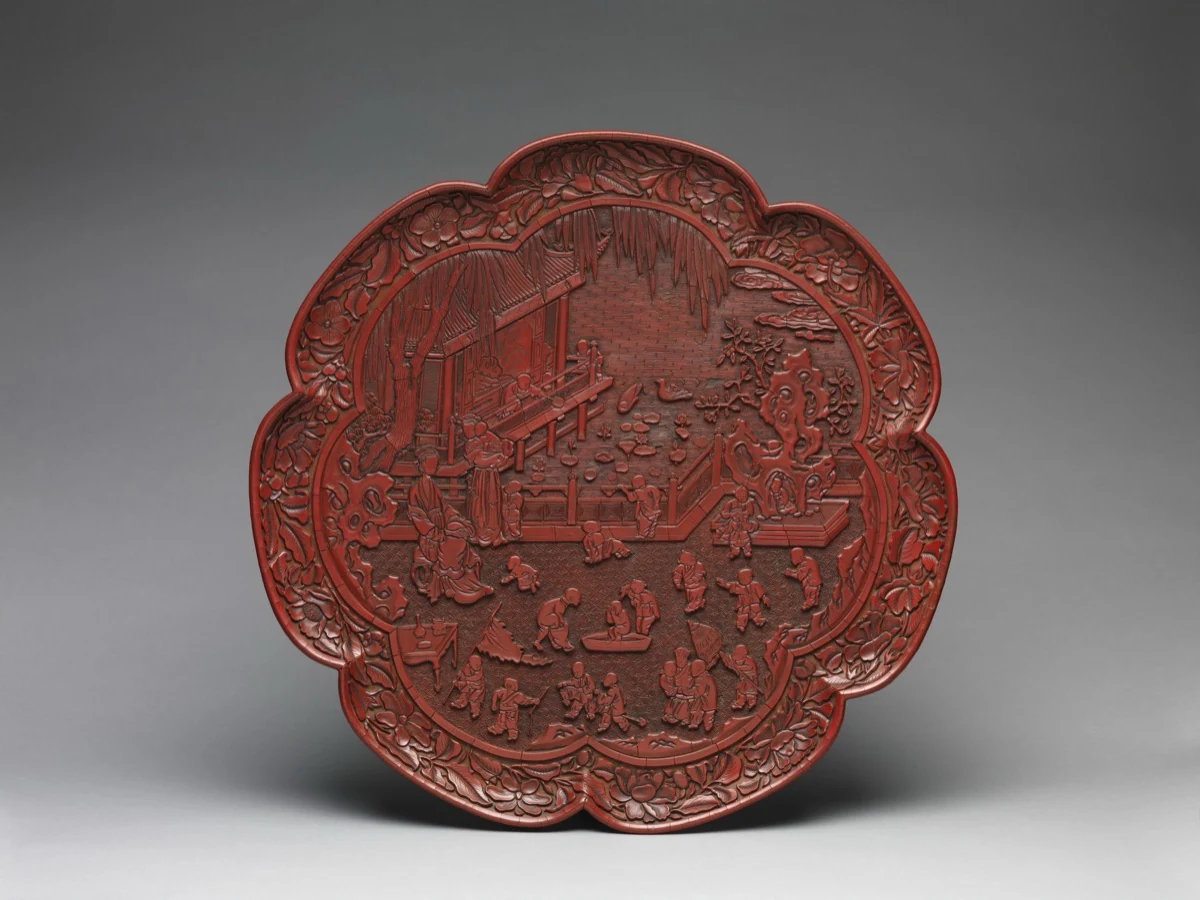
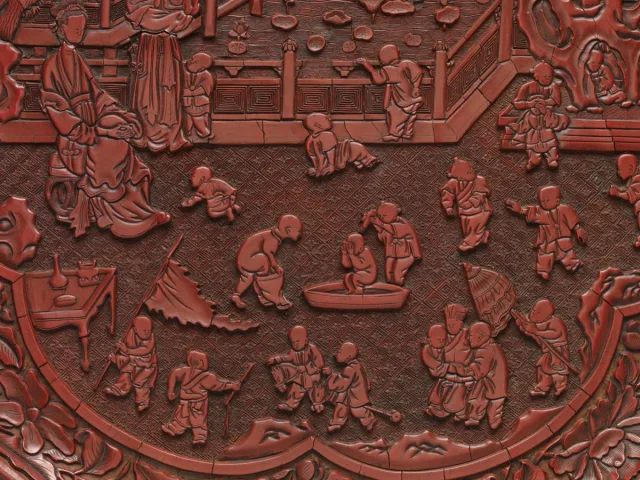
If a listing says “lacquered wood,” you have a description of the body and a broad label for the finish. Ask which coating the maker used if tree-sap lacquer matters to you. A red or glossy surface alone cannot answer that question.
Measure the part you will actually use
Start with a piece you already like using. Lacquerware maker Tōru Uchida suggests using a familiar bowl as a reference for diameter, height, and how it feels in the hand. For a tray, arrange your cups and saucers on a table with room to lift each one. Measure the width and depth of that arrangement. Include any handles that extend beyond the saucers.
Sources: Nakagawa Masashichi — Choosing lacquerware with Shitsurindo maker Tōru Uchida
The Met lists the tray’s overall diameter as 21⅞ inches (55.6 cm). Its broad scalloped rim and raised decoration show why an outside measurement alone cannot tell you where a cup will sit flat. This historical piece illustrates the distinction between overall size and a usable surface. For a contemporary serving tray, the dimensions you need are those of the continuous level area inside the rim.
Sources: The Met: Tray with Women and Boys on a Garden Terrace
Check where the cups will sit and where you’ll grip the tray
A view from above shows how much of a tray the rim occupies. A low side view helps reveal raised decoration in the area where the saucers would sit. An underside photo can show the foot and its contact points. In person, a level table lets you check whether the tray rocks. When buying online, ask the seller to check that for the exact piece.
On a secondhand tray, a raised repair under a saucer may keep it from sitting flat. A split or lifting finish where you grip the rim needs a closer look before you carry cups on it. Position tells you what to check, while the extent of damage and the repair history help determine whether the piece is suitable for that use.
The maker’s stated use and care instructions complete the comparison. Confirm that the tray is intended to carry cups and that its cleaning requirements fit your routine. If food will touch the surface directly, ask whether the maker specifies that use for the exact item.
Compare two trays for the same job
Suppose two cups and saucers, with space to lift them, occupy a rectangle 10 inches wide and 6 inches deep. You are comparing two rectangular trays whose makers confirm they are intended to carry cups. These are illustrative measurements.
Tray A measures 12 by 8 inches overall, with a continuous level area of 9 by 6½ inches. Tray B measures 11 by 8 inches overall, with a level area of 10½ by 6½ inches. Tray A is too narrow inside the rim. Tray B accommodates both the width and depth of your arrangement, even though its outside dimensions are smaller. You’ll still need to check that the cups sit flat, the tray rests evenly, and you can hold it securely.
Both saucers sit flat inside the rim, with enough room to lift each one.
Continue reading
Prepared by BeenEast Editorial. The earrings come from the BeenEast product archive. The museum tray illustrates how to read a photograph and its dimensions.
References
The Met: Tray with Women and Boys on a Garden Terrace
Nakagawa Masashichi — Choosing lacquerware with Shitsurindo maker Tōru Uchida