

Choosing Lacquerware for Serving, Wearing, or Display
Choose between the feel of a wooden bowl in daily use, patterned lacquer on the wrist, and a larger piece displayed at home.
By BeenEast Editorial · Published · Reviewed
Choose the experience you want
A lacquer bowl brings the material into a daily meal; a bracelet lets you enjoy its patterned surface in motion; a display piece gives a larger design room to be seen. Choose the use you would actually enjoy repeating. A wooden bowl can be appealing to hold but require hand-washing. A bracelet puts its finish into frequent contact with other things. A display piece needs a suitable place as well as a design you like.
The body beneath the lacquer matters. Yamada Heiando describes wood as lightweight and insulating, and also makes lacquerware with other materials. A glossy red bowl is therefore not necessarily a wooden bowl, and lacquer jewelry is not necessarily light. The material description and the finished piece’s weight help you judge the handling experience; color and shine cannot supply either.
Sources: Yamada Heiando — Wood and other lacquerware materials
At the table: a bowl you enjoy holding
Wood’s low heat conductivity slows the transfer of heat from hot food to your hand. That is a reason to consider a lacquered wooden bowl if you like lifting a bowl to eat or sip: the material contributes to how the meal feels in use. Heiando emphasizes low weight and insulation in its description of wood. Wall thickness, the serving temperature, and the finished bowl’s weight still affect the experience; the material name alone does not guarantee a cool rim.
Sources: Yamada Heiando — Wood and other lacquerware materials
The wood gives the bowl its shape; the lacquer provides the surface that meets the food. The Met describes repeated lacquer layers making Edo-period wooden soup bowls suitable for liquids. Urushi is lacquer made from tree sap. Its use on wood combines a shaped, insulating body with a coated interior, rather than turning the whole vessel into a solid mass of lacquer.
Sources: The Met — Wooden bowls originally used for soup
This contemporary Wajima lacquer rice bowl makes the inside and outside easy to see in one view. The photographer identifies its wood as Japanese zelkova. Its broad opening and plain red interior offer a useful contrast with the decorated, covered soup bowl farther down. It is a separate rice bowl, not an open view of the Smithsonian object.
Sources: Yuuki — Wajima-nuri red rice bowl, photograph and object description · Photograph license — CC BY-SA 4.0

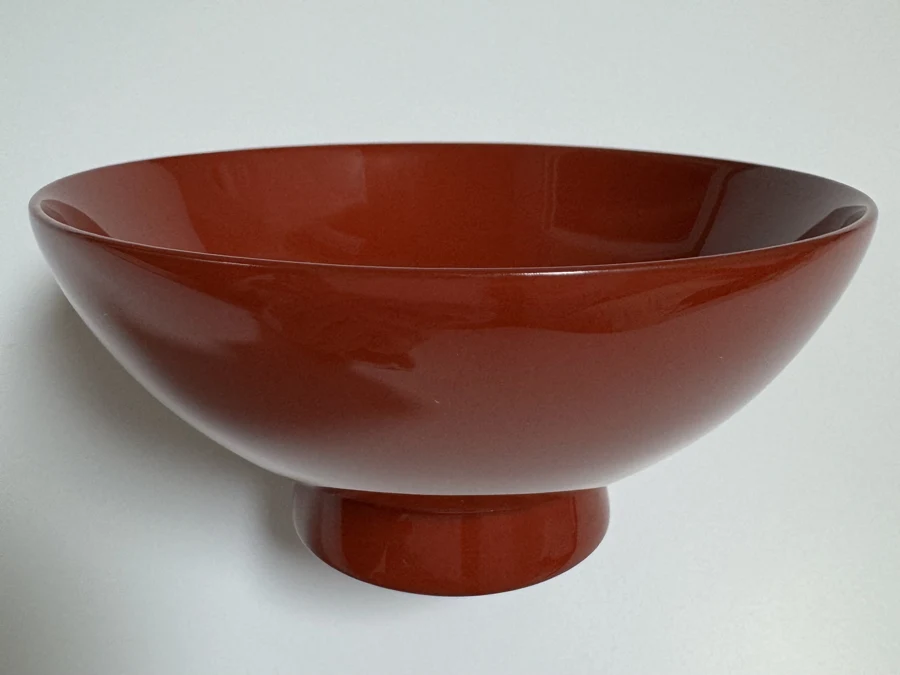
Bowl shape changes access to the food. In Heiando’s Byakudan pair, the rice bowl is wider and shallower; the soup bowl is narrower and deeper, which the maker associates with reduced exposure to air and better heat retention. If you want a bowl for a particular serving, capacity is more useful than outside diameter alone. The opening must also suit the way you eat: a spoon needs room to move, while a bowl lifted to the lips needs a rim and grip that feel comfortable.
Sources: Yamada Heiando — Byakudan Rice and Soup Bowls
Decoration can coexist with that practical interior. On the Smithsonian soup bowl below, the catalog places gold-and-silver thistles on the lid and one side, with red lacquer inside. The metal powder is applied to a lacquer design, a technique called maki-e. The covered bowl presents its ornament before the meal; opening it brings the eating surface into use. This archival photograph shows the closed form, while the catalog supplies the colors and materials.
Sources: Smithsonian — Artifacts of Diplomacy, pp. 14–15 (ECC 6)
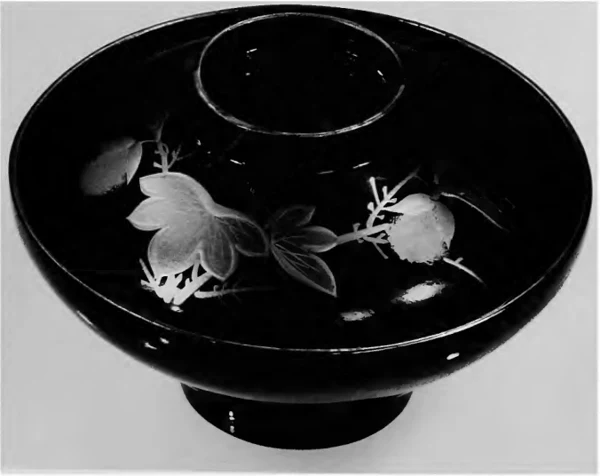
For everyday use, the tradeoff is the cleaning routine. Heiando’s instructions call for a soft sponge and lukewarm water and exclude the microwave and dishwasher. A modern bowl made for soup is a good candidate if you want to hold and use it regularly and are willing to wash it by hand. If reheating in the bowl and dishwasher cleanup are essential, this maker’s wood-and-urushi bowls do not fit that routine. The historical example illustrates design; it is not a recommendation to eat from an antique.
On the wrist: pattern at close range
A lacquer bracelet offers a different pleasure from a bowl: small areas of color pass through the light as the wrist turns. Here red, black, and gold-colored patterns cover rounded beads. Larger beads give each pattern more visible area, but also project farther from the wrist. The coating is part of what you wear against sleeves and nearby objects, so bead size changes both the visual effect and daily contact.
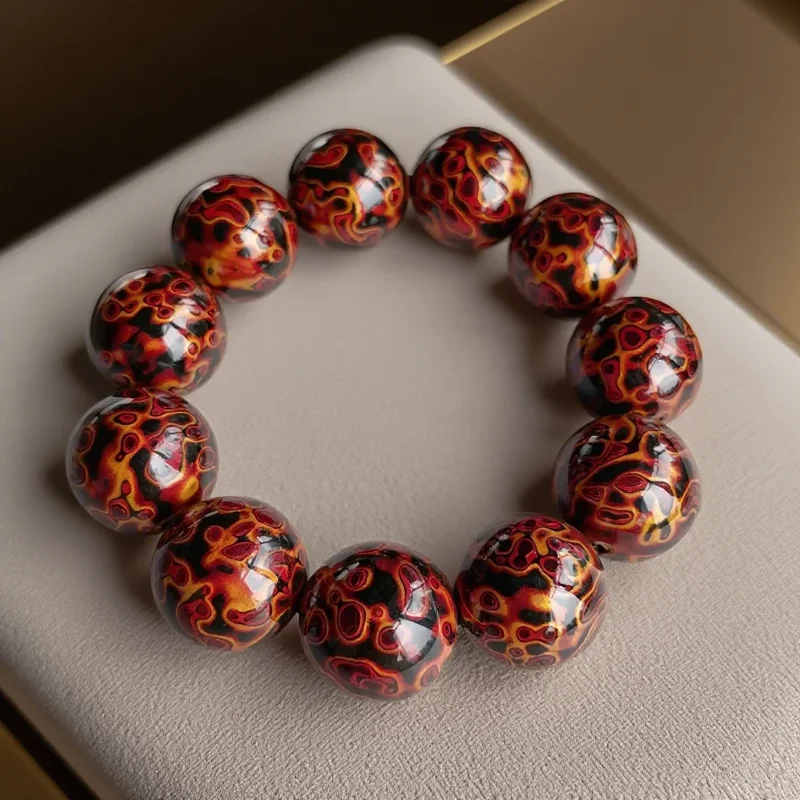
Choose this format if you enjoy seeing the pattern up close and can keep it from repeatedly rubbing against a watch or metal bracelet. If your wrist rests on a desk much of the day, try a similar-sized strand in that position before choosing large beads. Cured lacquer is hard, yet its surface can still scratch; Denver Art Museum distinguishes that surface vulnerability from damage to the underlying structure.
Sources: Denver Art Museum — The Craft and Care of East Asian Lacquer
The useful size is the opening around the wrist, not just the length of the strand: larger beads occupy more of the loop. The photo does not identify these beads’ core or weight. For a lightweight bracelet, a stated wood core and an actual weight are more informative than an assumption that all lacquer beads feel alike.
On display: give the lacquer a place to be seen
Display suits a piece whose main attraction is a larger painted or patterned surface. On the Met’s Footed Tray with Figures in a Landscape, the decorated red dish rises above an open basketry base. The open weave makes the supporting structure visible beneath the coated dish. The upper surface carries the scene while the base supports it.
Sources: The Met — Footed Tray with Figures in a Landscape
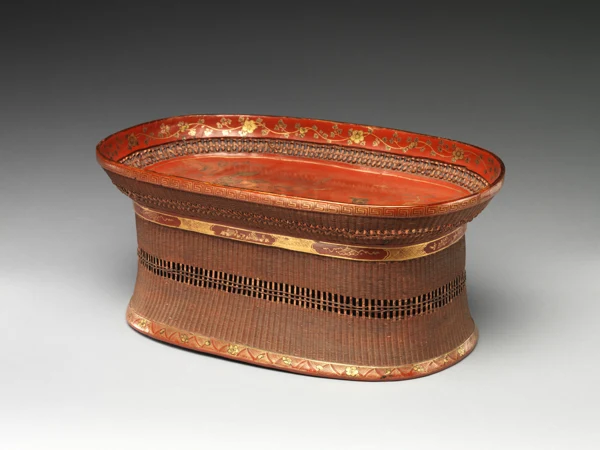
A low shelf or table lets you see more of the dish from above; near eye level, the woven base becomes more prominent. Choose the location before choosing a broad, shallow design. The tray’s overall width of 16¼ inches and depth of 10⅛ inches describe the space it occupies, including the overhang, rather than the size of the base. A level support must accommodate the base while leaving room around the dish.
Sources: The Met — Footed Tray with Figures in a Landscape
A sunny windowsill is a poor trade for a better view. Denver Art Museum explains that strong direct light can discolor lacquer and dull its sheen, and that fluctuating temperature and humidity can affect both the body and coating. An indoor position away from direct sun and heating or cooling vents better suits this kind of display.
Sources: Denver Art Museum — The Craft and Care of East Asian Lacquer
For a piece with a broad upper scene like this tray, a lower position lets the painted surface open into view. The choice of furniture becomes part of how much of the lacquerwork you get to enjoy.
Continue reading
Prepared by BeenEast Editorial. Material and care explanations draw on the cited maker and museum sources. The Wajima rice bowl and historical soup bowl are separate examples; no hands-on product testing is claimed.
References
Yamada Heiando — Wood and other lacquerware materials
The Met — Wooden bowls originally used for soup
Yuuki — Wajima-nuri red rice bowl, photograph and object description
Photograph license — CC BY-SA 4.0
Yamada Heiando — Byakudan Rice and Soup Bowls
Smithsonian — Artifacts of Diplomacy, pp. 14–15 (ECC 6)
Yamada Heiando — Lacquerware Care Instructions
Denver Art Museum — The Craft and Care of East Asian Lacquer