

Reading Cracks and Surface Changes in Lacquerware
See how an open joint and a broken corner reveal damage beneath the finish of a black lacquered box.
By BeenEast Editorial · Published · Reviewed
A bright lid, an open joint
A lacquered surface can still shine when the structure beneath it is damaged. On this black writing box, an opening underneath exposes wood along a joint. That calls for pausing use, even though the lid still looks intact from above.
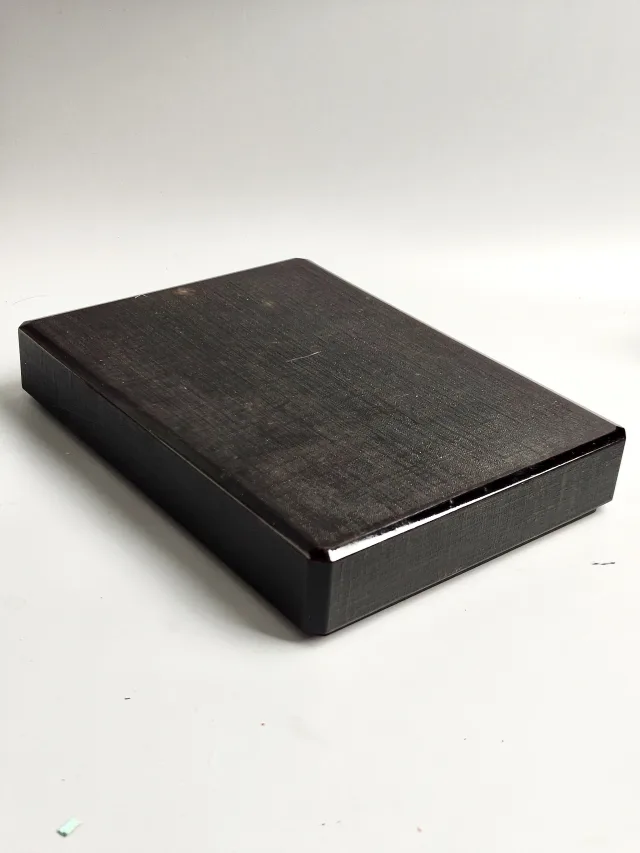
The overall view establishes the textured lid and smooth border. Underneath, the open joint reveals a problem hidden from this angle.
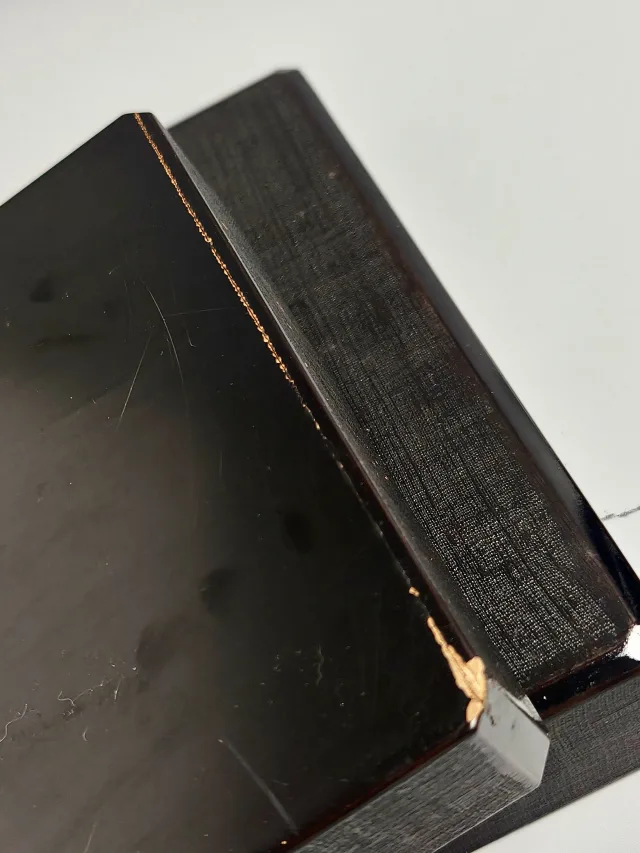
The opening follows the edge of a panel, so the damage involves how parts of the box fit together. “A crack in the lacquer” would describe only part of what is visible here.
What the broken corner reveals
The underside shows the length of the opening. At the corner, another view shows what the dark coating conceals.
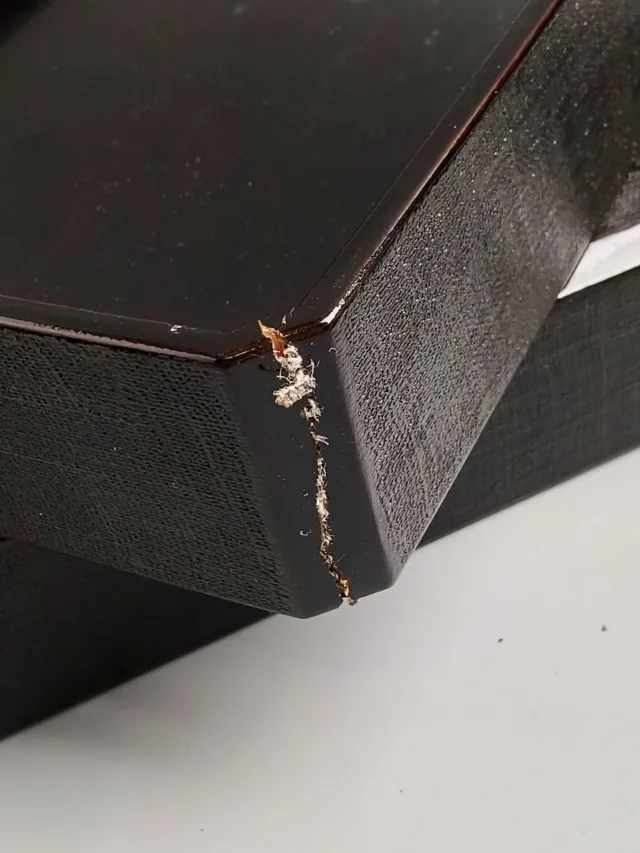
Together, the exposed wood underneath and the fibers at the corner show that the damage reaches below the coating. The photographs do not identify the fibers or reveal every layer.
A surface crack is a fracture in the coating. Lifting is a coating edge rising away from the layer beneath it. An open joint is a gap between structural parts. These conditions can occur together, but the clear evidence in this box is the open joint. The photos do not establish which part failed first.
These views come from one seller’s condition record. The box’s age, exact coating, and earlier repairs have not been independently verified.
Why the coating and wood can separate
Wood expands and shrinks as its moisture content changes. A coating attached to it may respond differently, putting stress on the layers and joins. That helps explain why construction matters when examining a crack; it does not identify what caused this box to break.
Sources: Canadian Conservation Institute — Care of Furniture Finishes
In a 2020 study, Smithsonian scientist Blythe McCarthy used X-rays to examine a late Ming lacquered box, F1956.4a–b. The images revealed three wood pieces in the lid and textile beneath the lacquer. Seeing those hidden layers helped explain its cracks.
Wood moves more across its grain than along it, while lacquer responds more evenly in different directions. The important difference is how the attached layers move relative to each other. For the black writing box, that hidden structure has not been examined: movement, impact, or an earlier repair remain possible explanations, not findings.
Shine and condition tell different stories
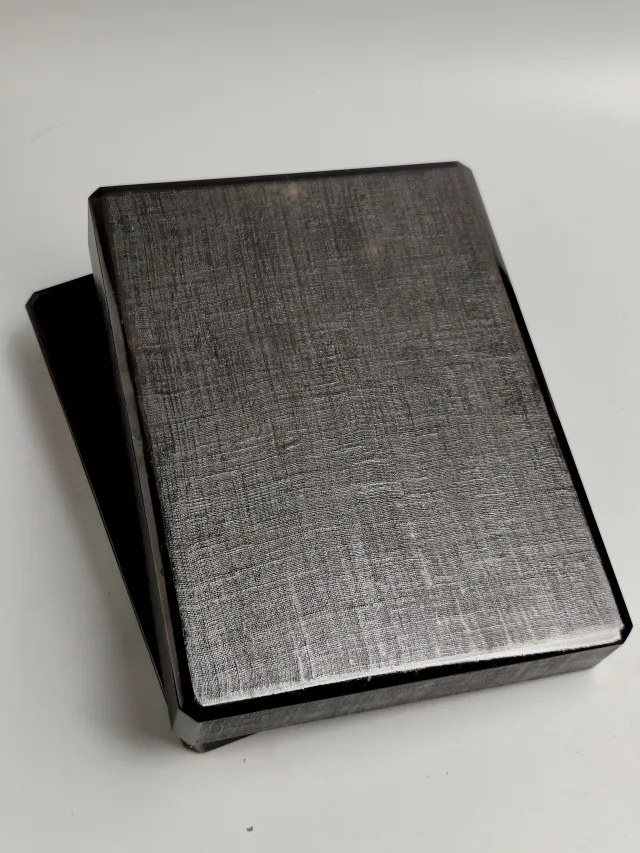
The smooth border around the textured lid identifies the box seen at the start. Here, a broad reflection brightens its near edge. This is another angle, not evidence of polishing or repair.
For a dull patch on a stable object, keep the object still and move the light or camera. A reflection shifts with the angle; a patch that stays beside the same scratch or corner gives you a location to record. Getty research links tiny cracks caused by light exposure to reduced gloss, but dullness alone does not identify the cause.
Sources: Getty Conservation Institute — Mechanical Degradation of Asian Lacquers
An open joint or loose edge needs a different response: pause use, avoid pressing the gap closed, and keep cloths and brushes away from the break. The Canadian Conservation Institute recommends experienced conservation advice for cleaning Asian lacquered furniture; deteriorated lacquer can become more sensitive to water.
Sources: Canadian Conservation Institute — Care of Furniture Finishes
When seeking advice, send an overall view and close views of the damage, with the date you noticed it and any known recent move or treatment. Repeat photographs under the same light if a conservator recommends monitoring.
The bright border belongs to the same box as the exposed wood and broken corner. Its shine survives where the joint has opened.
Continue reading
Prepared by BeenEast Editorial from a photographic condition record and conservation research. The box photographs show visible condition, not a verified treatment sequence.
References
Canadian Conservation Institute — Care of Furniture Finishes
Getty Conservation Institute — Mechanical Degradation of Asian Lacquers