

How Lines Connect in Zhang Xiufang’s Paper Cuts
Read petals and leaf veins in Hundred Chrysanthemums, then follow the fishing line to the water in A Lone Angler on the Spring River.
By BeenEast Editorial · Published · Reviewed
Trace the paper around a petal
Zhang Xiufang is a sixth-generation paper-cutting artist from Yangzhou, China. She began learning at 13 and was among the first artists officially recognized as carriers of Yangzhou paper cutting, a national intangible cultural heritage tradition. In her Hundred Chrysanthemums, narrow paper outlines the petals and openings draw dark veins inside the leaves. In A Lone Angler on the Spring River, a fine strip of paper runs from the rod to a ripple. To read these lines, look at what borders each one and where its ends lead.
Sources: China Intangible Cultural Heritage Network · Zhang Xiufang
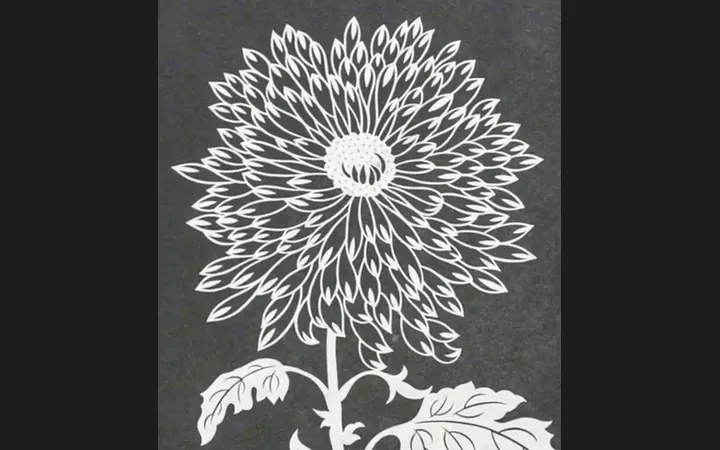
Start with the chrysanthemum with a dotted center. Pick one pointed petal and follow its two white edges to the tip. Between those edges, a narrow opening lets the dark backing show through. The paper around that opening gives the petal its shape.
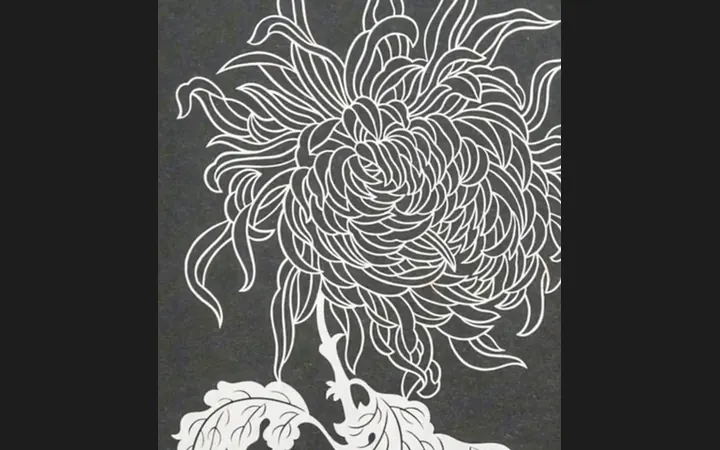
Another flower in the series leaves room for much longer curves. Start at its crowded center and move toward the edge. The white lines stretch and curl back at their tips. The openings between them widen as the petals fan out, giving each long curve a visible edge.
Read the openings inside a leaf
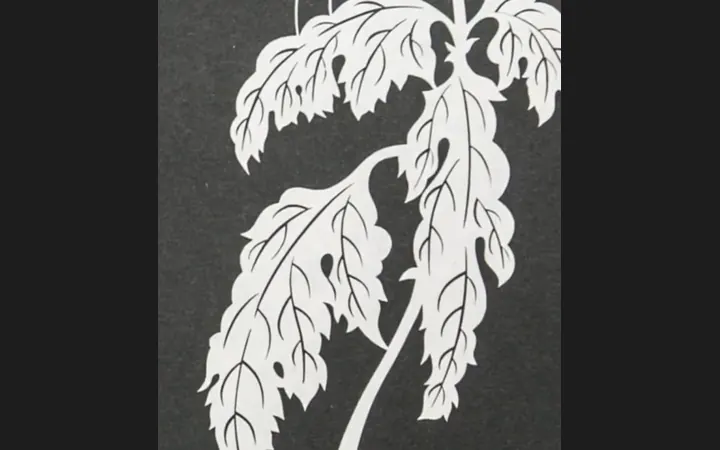
Now look at the leaves in another design from the series. The white stem broadens into the leaves. A dark vein runs through a leaf and forks, with white paper on both sides. Here the opening itself makes the line. Compare it with the flower above, where the light line is the paper that stayed in the cut.
See where a willow leaf stays attached
In the documentary’s drawing of the river scene, look for the round rim and the branch that bends across the center. Pen lines show where foliage will go. The spaces between the twigs become clear later, once Zhang opens them with scissors.
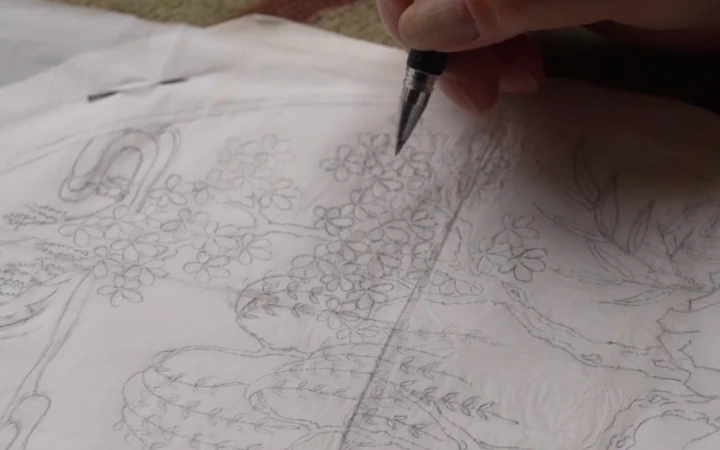
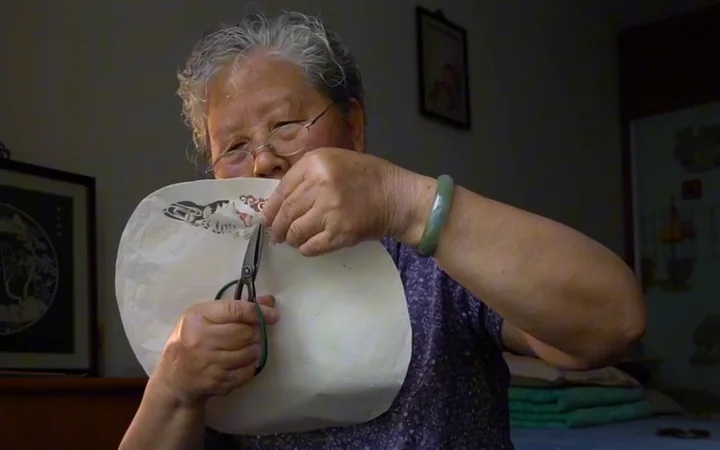
The wider view shows how Zhang holds the work. She lifts the round sheet toward her eyes and supports it with her free hand near the small area she is cutting. Most of the sheet is still intact, with the first openings clustered near the scissors.
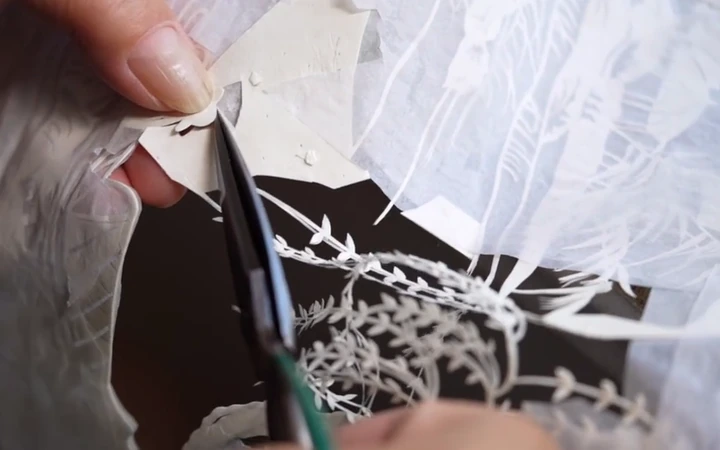
In the river scene, the dark spaces around the willow help you see where each narrow piece of paper goes. Look to the right of the scissor tip in the documentary still. The openings separate the pointed leaf tips, while the base of each leaf stays attached to its twig. Follow one leaf from tip to base, then continue along the twig.
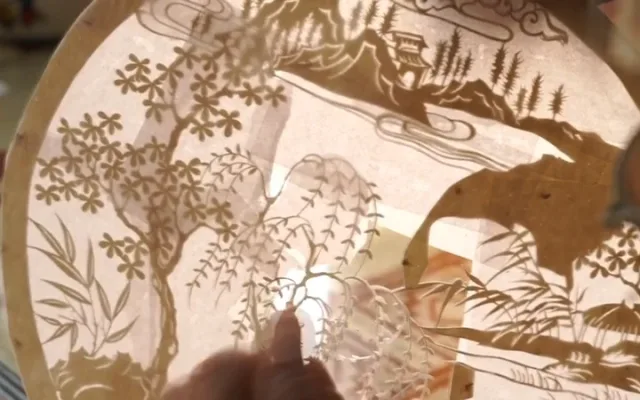
Once the sheet is open, light behind it shows how much paper has been removed. Look near the pointing finger for the drooping twigs. Light comes through the gaps, and the twigs lead back up to a larger branch. The change in lighting makes those thin connections easier to follow.
Follow the line down to the water
The China Paper Cutting Museum dates the finished A Lone Angler on the Spring River to 2007. In the detail, the rod slopes left from the angler’s hand. From the rod tip, a fine strip drops almost straight down. It meets a nearly horizontal ripple, which continues left to the round rim. The changes in direction distinguish the rod, line, and water, even though the paper connects them.
Sources: China Paper Cutting Museum · Zhang Xiufang exhibition
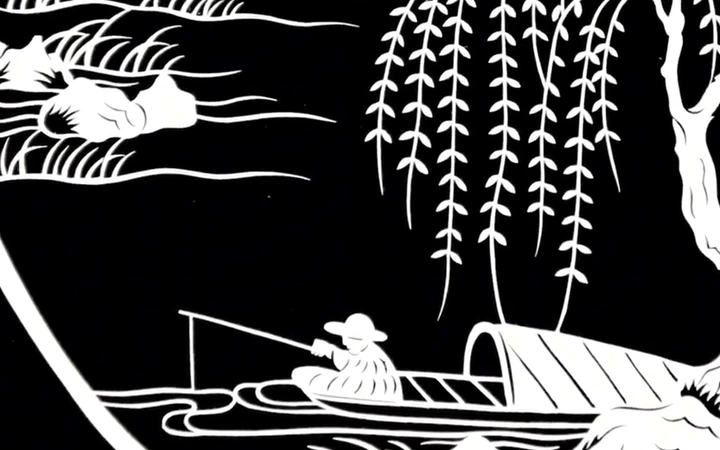
Try tracing from the angler’s hand to the rim, staying on the light paper. Where the line touches the water in the scene, the two strips of paper also meet. That junction carries the detail into the rest of the cut.
BeenEast Editorial. The images come from the Jiangsu Intangible Cultural Heritage Protection Center’s documentary. The film identifies Zhang Xiufang’s Hundred Chrysanthemums as cut in 1980 and shows stages of the river composition. The museum dates the finished river scene to 2007.
References
China Paper Cutting Museum · Zhang Xiufang exhibition
China Intangible Cultural Heritage Network · Zhang Xiufang
China Intangible Cultural Heritage Network · Yangzhou paper cutting