

What Is Chinese Paper Cutting Used For?
Compare Ningbo embroidery patterns and textiles with a mounted Yangzhou paper cut to see how cut paper serves different purposes.
By BeenEast Editorial · Published · Reviewed
A paper design for work in thread
Paper cutting can supply an embroidery design or be presented as a finished picture in its own right. Surviving paper patterns from Ningbo show small motifs kept for textile work. A mounted composition from a Yangzhou studio shows another purpose: arranging cut-paper shapes as the picture itself. The distinction lies in what the paper is meant to do next, not simply in whether it depicts a flower or a butterfly.
The account accompanying these photographs identifies the group as having been kept by an unnamed elder in Xiwu, Fenghua, Ningbo. It describes shoe and hat patterns together with embroidered fragments. An embroidery pattern is a design used to guide work in thread. Its paper outline and internal lines give the embroiderer a motif to follow; the cut paper is a reference for making something in another material. The accompanying account gives no maker names or dates for the objects.
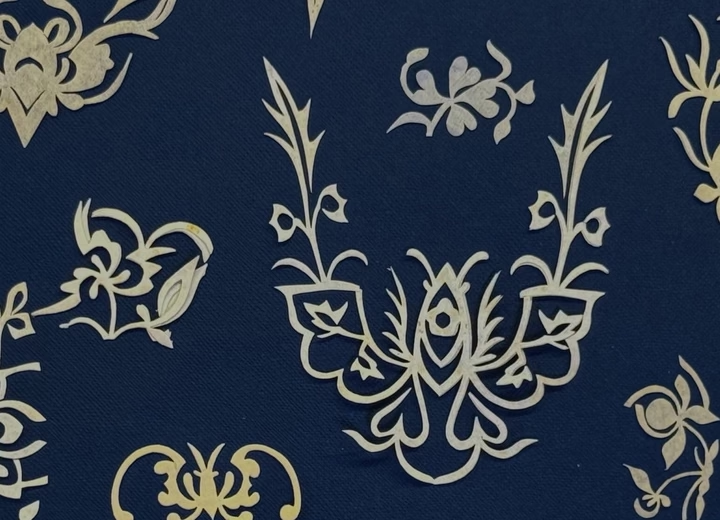
The pale butterfly just right of center has a narrow body between two broad wings and curls below it. The dark blue in its openings comes from the display surface beneath the paper. The paper gives the embroiderer an outline and interior details to follow. Stitch and color choices can vary.
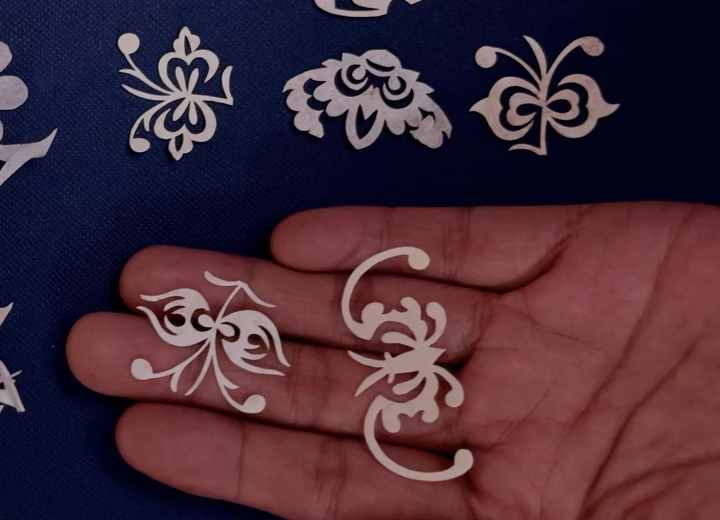
The hand-held examples show how small, separate motifs could be kept together as a set of designs. Their role is also documented beyond this particular collection: the national heritage record for Yangzhou lists paper patterns for embroidered curtains, bedding, handkerchiefs, and pouches. That is evidence for a regional practice, rather than a label assigning every loose motif here to one particular garment.
Sources: China Intangible Cultural Heritage: Yangzhou paper cutting
What the textile adds
The same preserved group includes embroidered pieces. The photograph below shows pink butterfly outlines on blue fabric, small floral roundels, and orange embroidered pieces. Here color comes from thread and cloth, and the design has to occupy the surface of a textile. A paper pattern and an embroidered piece can share a motif while remaining different kinds of objects.
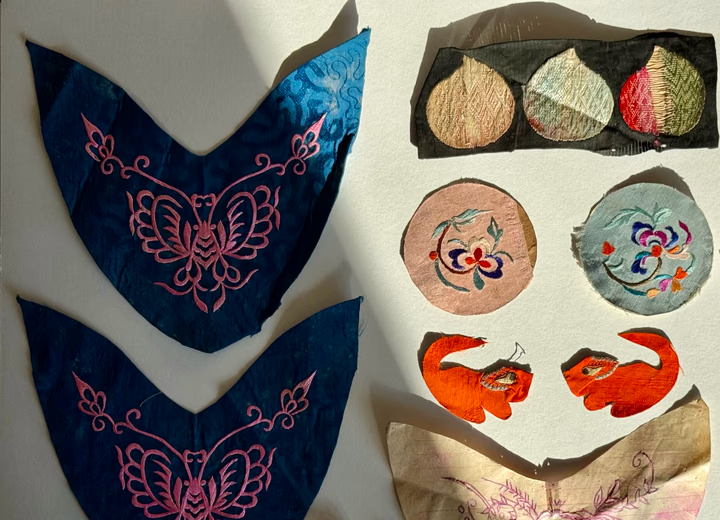
On the cut-paper butterfly, the tall leaves rise well above the wings. Open spaces separate the fine paper lines and expose the blue display surface. On the upper fabric panel, pink stitches trace the wings and antennae over an unbroken field of blue cloth.
The photographs record paper patterns and textiles kept together. To link a particular pattern to a particular textile, you would need a record that connects the two, along with a match in outline, proportions, and internal details. The accompanying account gives no transfer method.
When the paper is the finished picture
Zhang Xiufang is a Yangzhou paper-cutting artist and a nationally recognized inheritor of the local tradition.
Sources: China Intangible Cultural Heritage: Zhang Xiufang
Her studio identifies the fan-shaped work below as one of the pieces completed in 2024 by Zhang working with her granddaughter. A pale mount surrounds white cut-paper forms on a dark fan-shaped ground. No individual title is supplied for this panel.
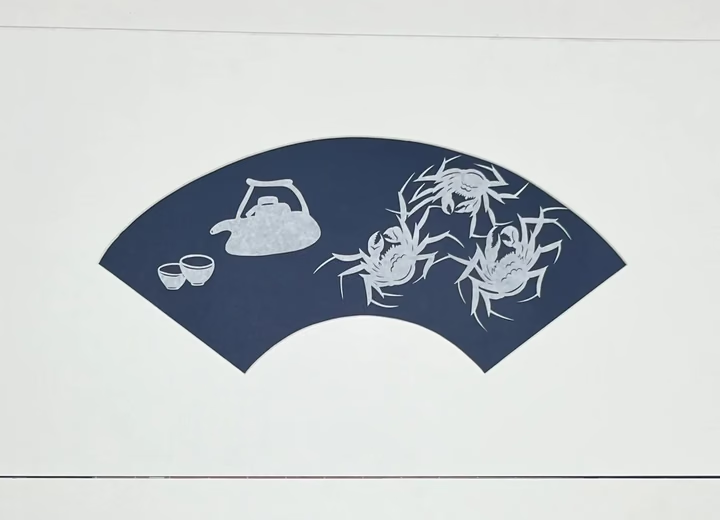
A band of dark blue remains visible between the pot and cups on the left and the crabs on the right. The backing brings the separate cut-paper groups into one picture. The photograph shows their arrangement. The adhesive, cutting order, and number of original sheets are unknown.
The national heritage account describes Zhang Yongshou, an earlier Yangzhou maker, moving from practical embroidery designs toward decorative works built around a subject. That account concerns his practice in Yangzhou. The Ningbo patterns and this later studio composition show uses that can exist alongside each other: paper can help make a textile, and paper itself can be arranged for viewing. A floral or animal motif alone does not tell you which role an object served.
Sources: China Intangible Cultural Heritage: Yangzhou paper cutting
The Ningbo paper butterfly records a design for needlework. In the Yangzhou fan-shaped piece, the cut forms and the spaces between them are already the finished picture.
BeenEast Editorial. The account accompanying the photographs supplies the Ningbo location; its objects have no recorded maker or date, and no exact pattern-to-textile pairing is established. The studio identifies the fan-shaped pieces as a 2024 collaboration. Institutional references provide regional and biographical context. The photographs show objects, not a documented transfer or cutting sequence.