

How Bamboo Becomes Weaving Strips
See how makers split the wall of a bamboo stalk into strips, then size their width and thickness for the weave.
By BeenEast Editorial · Published · Reviewed
Split the stalk into long pieces
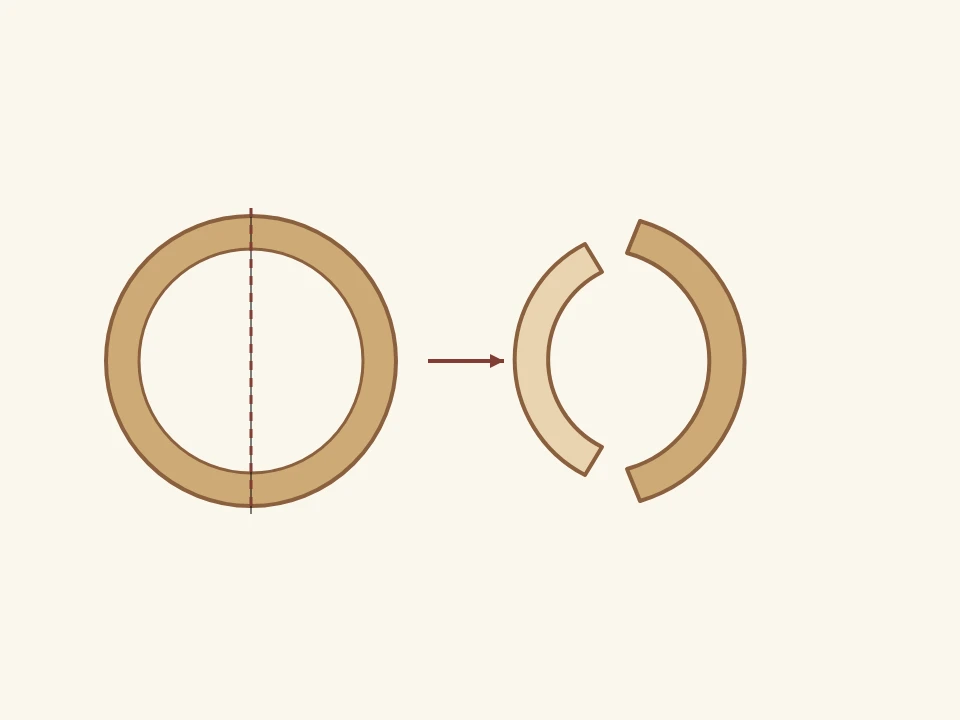
A bamboo stalk becomes weaving material through cuts in two directions across its wall. Makers divide the hollow stalk lengthwise into narrower pieces. They can also split a piece through its thickness to separate layers of the wall. Trimming the edges sets the strip's width, while shaving a broad face controls thickness. The two dimensions affect different things when the strips cross.
The wall of a hollow bamboo stalk looks like a ring in cross section. A lengthwise split opens that ring into curved sections, each still carrying part of the outer surface and part of the inner wall. Splitting those sections further produces narrower stock. The sections can still be thick at this point, so narrowing a piece alone does little to make it behave like a thin weaving strip.
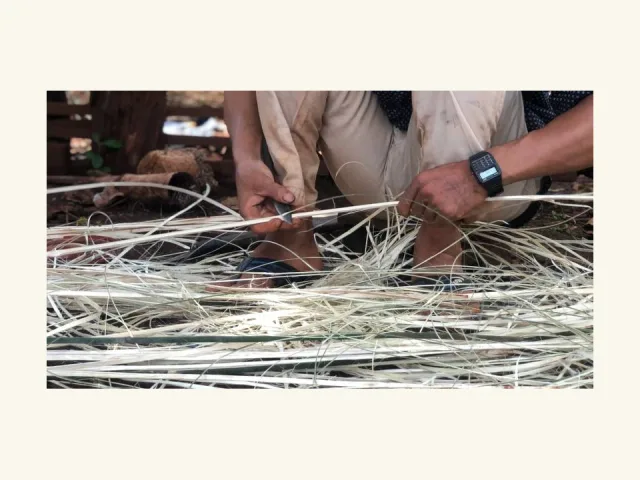
In Daoming, a bamboo weaving center in Chongzhou, Sichuan, the national heritage record describes selecting bamboo with long, smooth sections between its nodes and preparing it before weaving. The documented sequence includes scraping the surface, trimming the nodes, splitting, drying, and producing thin strips or finer strands. A node is the joint that interrupts the length of the stalk. Preparing that raised area helps the maker work along the piece. The Daoming sequence describes one tradition, with the order and tools depending on the material and the kind of strip being made.
Separate layers through the wall
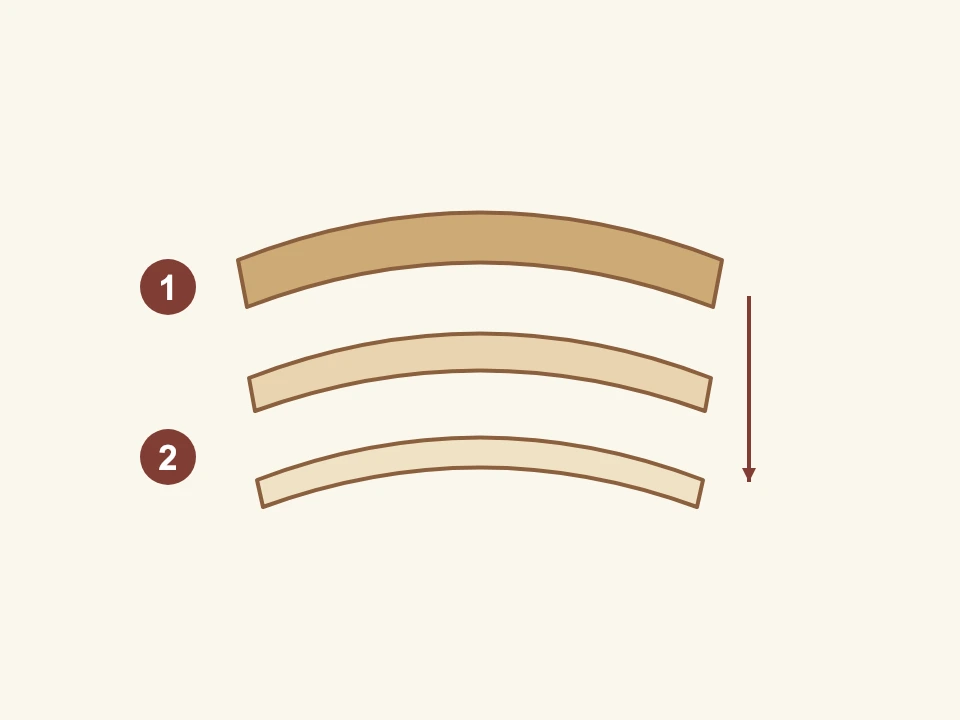
A cut that follows the broad face of a split piece separates the wall into thinner layers. Think of the cross section again: narrowing reduces the span from one edge to the other, while separating layers reduces the distance between the broad faces. A strip can keep much the same width after a layer has been split away.
This distinction matters when the strip has to pass over one neighbor and under the next. With the material and width held roughly constant, a thinner strip bends more easily across its broad face. A thicker strip from the same batch may be useful where the design needs a firmer part. The Guanmiao Bamboo Handicrafts Portfolio distinguishes thicker strips used in utilitarian bamboo weaving from fine strips for other work. The thickness needs to suit the part, the pattern, and the bamboo used.
Size the edges and shave the faces
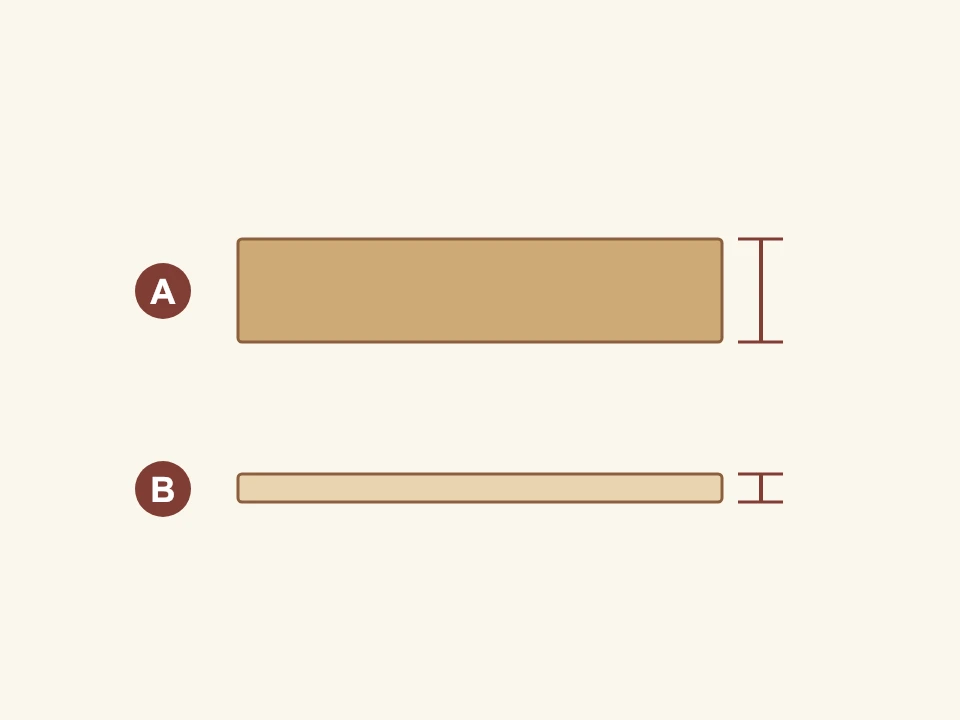
The Guanmiao portfolio documents a pair of width-setting knives used to trim strip edges, along with other knives used to shave bamboo and a caliper for checking thickness. Width is easiest to compare from above. Thickness is easier to see from the side or at the cut end. Checking one dimension gives only part of the picture.
In a tight weave, a strip that broadens partway down takes up more room between its neighbors. A thick spot can also rise at a crossing and make it harder to seat the next strip against it. Both may show up as an irregular patch in the panel. Seeing the difference requires examining the stock or the edge of the weave, since a top view chiefly shows strip width and spacing.
For a first flat practice piece, start with prepared strips intended for weaving. Lay several side by side and check for a strip that widens or narrows sharply. Compare their ends and set aside pieces with conspicuous splits or raised fibers. When the strips are similar in size, a gap that opens during the practice piece is easier to trace back to the spacing or the order of the crossings.
Continue reading
References
China Intangible Cultural Heritage, Daoming Bamboo Weaving
Guanmiao Bamboo Handicrafts Portfolio
