

What Is Botanical Weaving?
Read a grapevine bag, a square woven box, and a rattan rim to see how plant strips form walls and finish edges.
By BeenEast Editorial · Published · Reviewed
Start where two strips cross
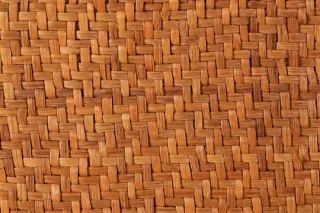
Botanical weaving turns plant strips or strands into a surface by passing them over and under one another. On the brown wall of this grapevine bag, pick a flat strip and follow it until it disappears under the next strip. Find where it comes back into view. Repeat on the neighboring strip to see how the crossings shift across the wall.
Sources: BeenEast · Sunset Basket handwoven grapevine handbag
Follow the horizontal strips around the uprights
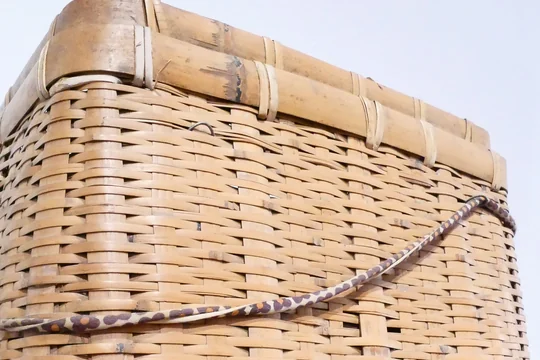
On the square woven box, compare the broad upright strips with the narrower horizontal ones. The photographer describes the object as a rattan box. The photo lets you trace the weave, while the material identification comes from the photographer’s description. Follow a narrow row across the front and toward the corner. It alternates in front of and behind the wider strips, and the row changes direction where the wall turns. Looking at a single row makes the roles of the two sets easier to distinguish.
Sources: 氏子 · Original photograph (cropped here) · CC0 1.0 · Photo license

Look for the binding at the edge
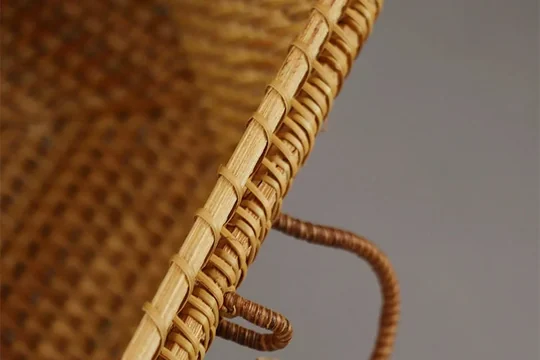
At the rattan box rim, repeated loops wrap around the edge. Compare the rounded band with the flatter rows just inside it. The wrap gathers and holds the rim together. This view shows the wrapping where it is exposed.
Sources: BeenEast · Eightfold handwoven rattan storage box
The Daoming bamboo weaving record describes forming a base, weaving, and closing the rim. In a separate example at The Met, Iizuka Shōkansai used bundled bamboo strips lower on a flower basket and separated them into individual strips toward the rim. These examples show why the base, wall, and edge are worth reading separately.
Sources: China Intangible Cultural Heritage · Daoming bamboo weaving (VII-51) · The Met · Calm Heart Flower Basket
Continue reading
References
BeenEast · Sunset Basket handwoven grapevine handbag
BeenEast · Eightfold handwoven rattan storage box
China Intangible Cultural Heritage · Daoming bamboo weaving (VII-51)
The Met · Calm Heart Flower Basket