

What Is Hand Dyeing? Fiber, Color, and Pattern
See how an indigo-dyed cotton square gets its blue color and pale rings, then compare patterns made with clamps, ties, and stitches.
By BeenEast Editorial · Published · Reviewed
What is hand dyeing?
Hand dyeing means coloring fiber, yarn, or fabric by hand. A dyer can color the whole cloth or shield parts of it to make a pattern. Shielding selected areas from the dye is called resist dyeing.
A clamp-resist indigo square
Dark fold lines cross this cotton square from a Chinese dyeing experiment. The maker folded the cloth back and forth into a strip, then into a stack of triangles, and clamped it with two crossed wooden slats before dyeing.
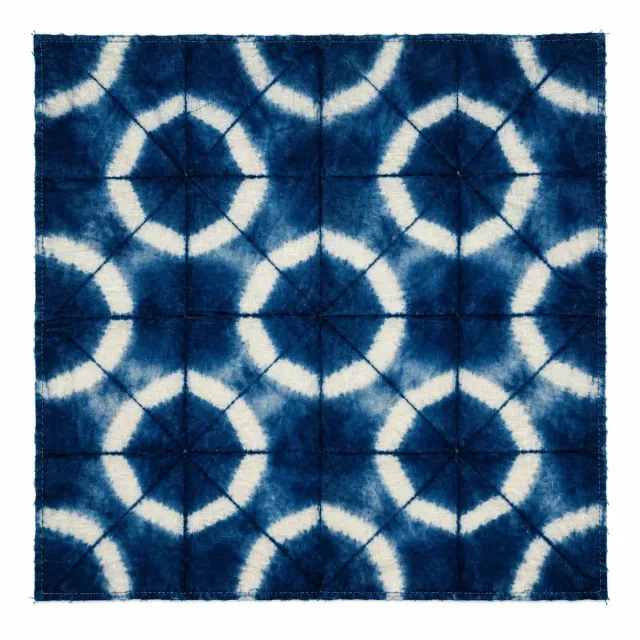
The slats squeezed several layers at once, limiting how far the dye could reach. Unfolding the cloth spread those protected areas into repeating pale rings. Along each ring, a soft blue border marks where dye reached farther into the compressed cloth.
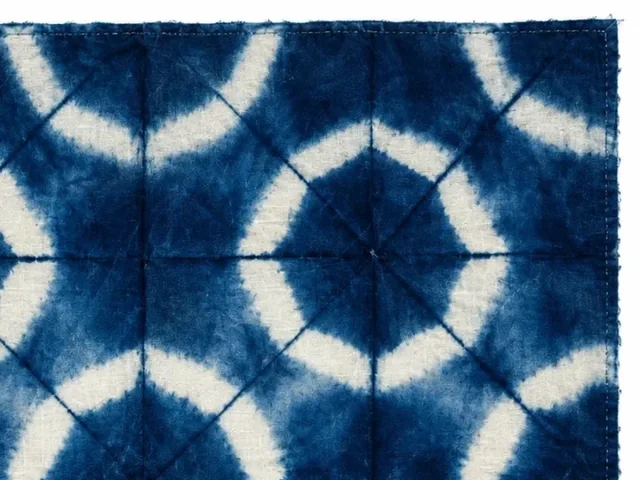
The tool matters. This square was clamped with plain slats; traditional Chinese jiaxie uses matching carved boards. Two dyed fragments attached to a Tang dynasty textile at the China National Silk Museum illustrate that method. Raised parts of the boards press the cloth shut, while recessed parts let dye through. The carving helps shape the pattern.
Sources: China National Silk Museum — Clamp-resist Dyed Gauze with Embroidered Flowers and Birds
How fiber and dye work together
Indigo supplies the blue in the square. It does not dissolve in water until a reaction called reduction changes it into a soluble form. Cloth can leave the vat greenish; oxygen in the air turns the dye back into insoluble blue indigo. Repeated dips, with air exposure between them, can deepen the color.
Sources: Jacquard Products Demo Handbook — Indigo Dye Demos, pp. 5–7
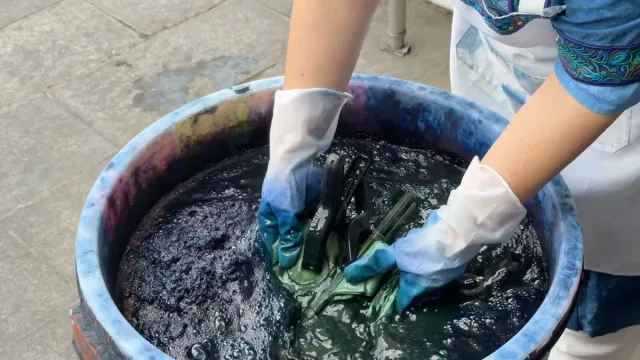
Cotton can also be colored with a fiber-reactive dye such as Procion MX. With soda ash, this dye bonds chemically to cellulose, the main substance in cotton and linen. The two dyes color the fiber differently; folds and clamps determine where the color reaches.
Sources: Jacquard — Procion MX: fiber compatibility and soda ash
How folds, ties, and stitches make patterns
The square’s rings came from pressure applied by wood. Binding and stitching apply pressure in other ways: a tight wrap compresses a bundle, while a drawn thread gathers cloth along its stitch path.
Sources: Museum of Fine Arts, Boston — Shibori: folding and using wood blocks
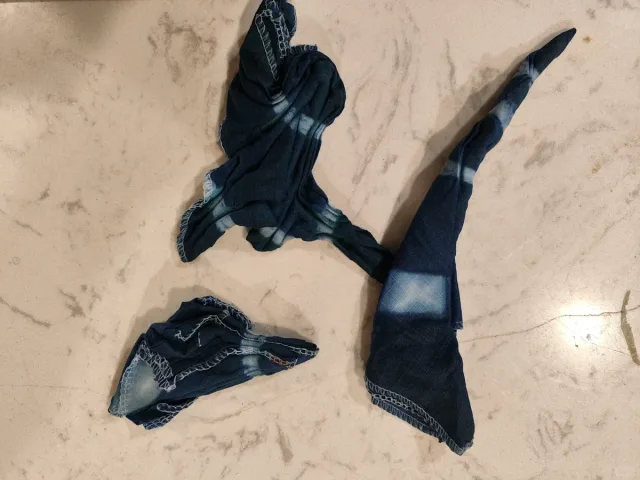
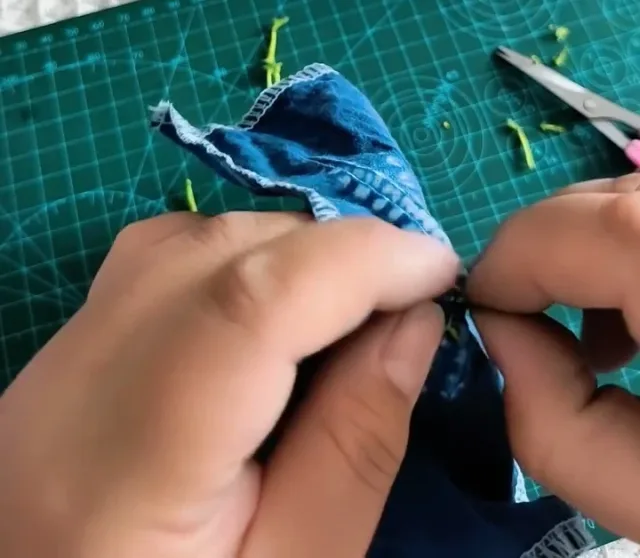
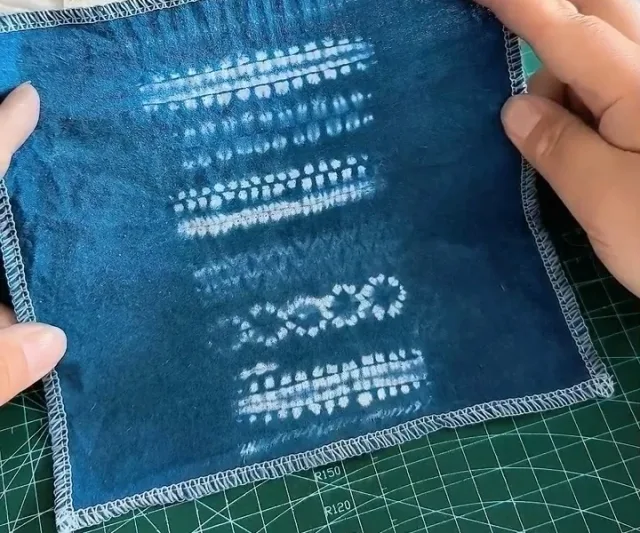
In the Chinese stitch-resist demonstration below, one swatch is shown during thread removal and after opening. As the gathers relax, rows of pale marks emerge along straight and curved paths. The change from a compressed bundle to an open surface makes the role of the thread visible.
| Technique | What the maker does | What blocks the dye | What you may see after opening |
|---|---|---|---|
| Clamp resist | Fold the cloth into layers and clamp the stack between pieces of wood. | Pressure where the wood presses the folded layers together. | Repeated pale shapes aligned with the folds. |
| Bound resist | Gather a section of cloth and wrap it tightly with thread or bands. | The tight wrap and the folds it compresses. | Pale rings or bands where the wrap squeezed the cloth. |
| Stitched resist | Sew a line of running stitches, then pull the thread tight to gather the cloth. | The folds packed together by the drawn thread. | Pale dashes or lines that follow the stitch path. |
Keep a simple observation note
For a first observation note, compare one ring on the square with one row on the stitched swatch. Record the visible shape beside the documented method: repeated rings with folded, clamped layers; pale dashes along a gathered stitch path. The finished cloth preserves the arrangement it held in the dye bath.
Continue reading
Resources and citation
English PDF and Markdown contain the text; their photo links open the illustrated guide.
BeenEast Editorial. What Is Hand Dyeing? Fiber, Color, and Pattern. Version 1.2 (November 12, 2026). https://community.beeneast.com/guides/hand-dyeing-start
References
China National Silk Museum — Clamp-resist Dyed Gauze with Embroidered Flowers and Birds
Museum of Fine Arts, Boston — Shibori: folding and using wood blocks