

What Is Bodiless Lacquerware?
See how a temporary mold shapes a cloth-and-lacquer shell, and what an underside photograph reveals about the finished piece.
By BeenEast Editorial · Published · Reviewed
The mold comes out. The shell stays.
Bodiless lacquerware takes its shape over a temporary mold. In the cloth-based Fuzhou method, layers of cloth bonded with lacquer form a shell strong enough to stand on its own. The mold is then removed. “Bodiless” refers to that removal; the cloth-and-lacquer shell remains as the body of the piece.
Sources: Fuzhou cultural history — Bodiless lacquerware
A clay or plaster mold holds the cloth in place while it is still flexible. As the lacquer hardens, it binds the layers together and fixes their contours. Removing the mold leaves a hollow interior within those walls.
Sources: China Intangible Cultural Heritage Museum — Fuzhou bodiless lacquerware
How the shell becomes a finished surface
After the mold is removed, the shell needs a smooth foundation for its finish. Fuzhou makers apply a ground—a preparatory layer over the cloth—and sand it to level the surface. The finish coats and decoration follow.
Sources: Fuzhou cultural history — Bodiless lacquerware · China Intangible Cultural Heritage Museum — Fuzhou bodiless lacquerware
Lacquer serves both structure and surface: it binds the cloth within the walls and forms the finish over the ground. The weave that helps support the piece can disappear beneath a smooth exterior.
A look inside a hollow lacquer sculpture
An eighth-century Chinese bodhisattva in the Cleveland Museum of Art offers a view inside such a shell. The museum describes cloth saturated with lacquer laid over a clay mold, which was removed once the layers had set. This earlier sculpture illustrates a structural principle also found in the Fuzhou method.
Sources: Cleveland Museum of Art — Bodhisattva, 1983.86
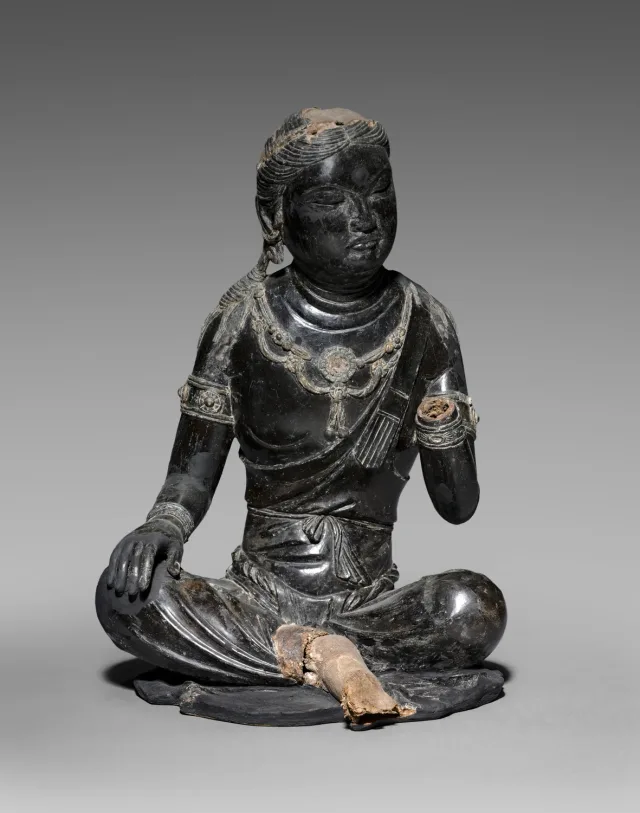
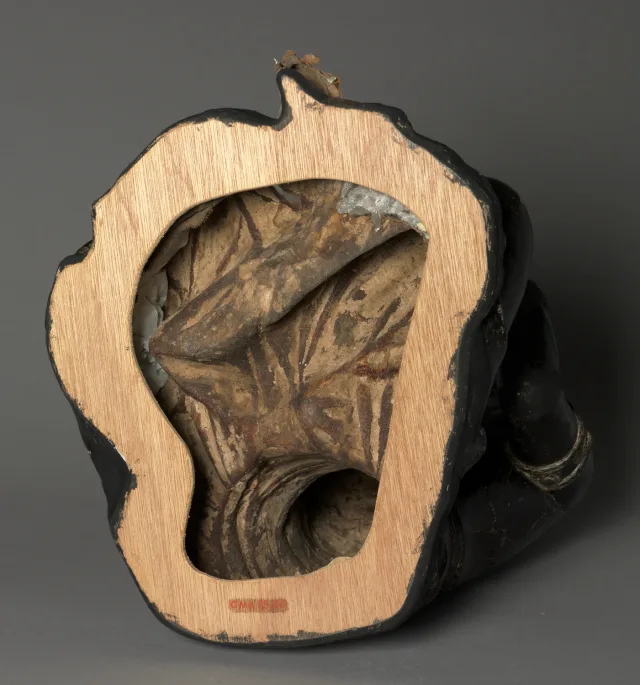
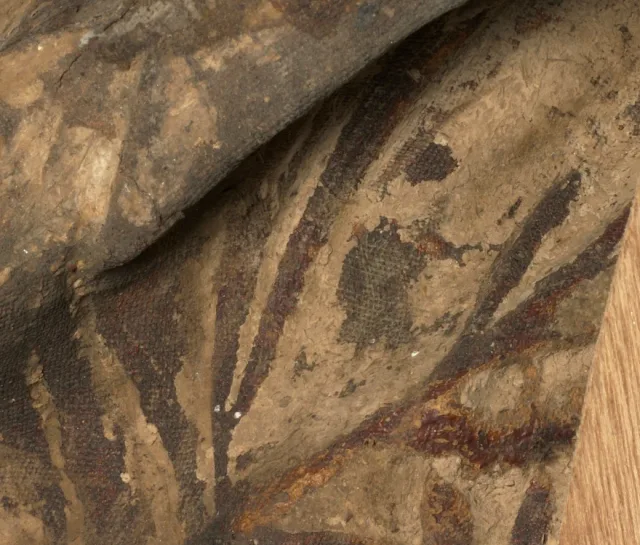
From the front, the robe’s folds give the figure a continuous, dark surface. Beneath it, the open base reveals the hollow interior. Just inside the right edge of the opening, patches of woven cloth follow the curved wall; the detail below brings their crossing threads into view.
What distinguishes a cloth shell from a wood core?
The difference lies beneath the finish. Fuzhou’s craft account also describes lacquerware with a wood core: a wooden support that remains inside the finished piece.
Sources: Fuzhou cultural history — Bodiless lacquerware
A Smithsonian study provides a revealing comparison. The Walters Buddha was built from joined pieces of wood, covered with cloth and lacquer, and hollowed out at the back. Both cloth and a cavity are present, yet the wood core carries the shape. Those visible features alone do not establish that a piece is bodiless.
Sources: Smithsonian National Museum of Asian Art — Construction from the Inside Out
An object’s construction record resolves what a polished exterior may conceal: whether a wood core remains or a cloth-and-lacquer shell supports the piece. In the latter, the mold’s role is temporary, but its contours endure in the shell. The finished shape preserves the work of something no longer there.
Continue reading
References
Fuzhou cultural history — Bodiless lacquerware
China Intangible Cultural Heritage Museum — Fuzhou bodiless lacquerware
Cleveland Museum of Art — Bodhisattva, 1983.86
Smithsonian National Museum of Asian Art — Construction from the Inside Out