

How blue cloth mats organize a tea setting
yincheng ·
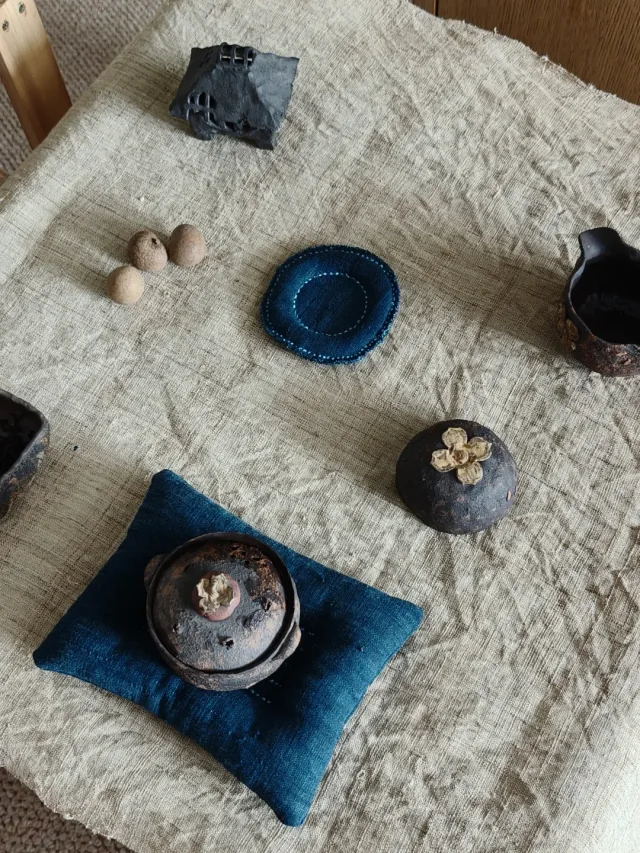
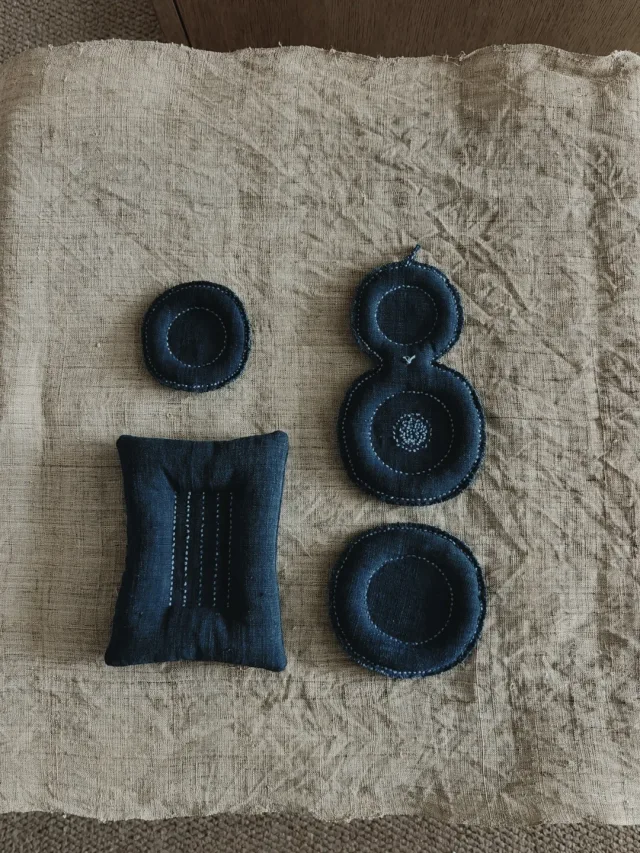
Small blue cloth mats create separate places for individual vessels, instead of covering the table with one continuous strip. Here, round pads and a larger rectangular pad stand out against a pale, textured cloth, making their different sizes and positions easy to follow.
Compare the arrangement with the separate pieces
In the wider setting, a lidded vessel rests on the rectangular pad, while a round blue mat sits nearby. The view of the pieces on their own shows several circular forms, a joined pair, and the rectangular cushion. Comparing the two photographs helps explain which shapes belong to the textile set and which belong to the vessels.
Look at the stitched circles
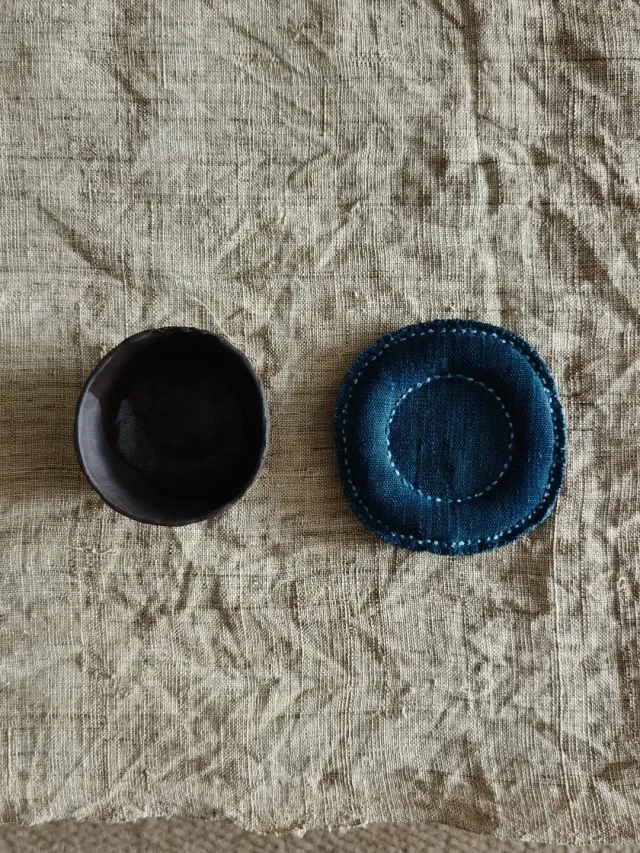
The closer view places a dark cup beside one round pad. Pale stitches trace a ring inside the edge, while another line follows the outer contour. These small marks give the blue surface a second scale of detail: the shape reads from a distance, and the stitching becomes visible as you move closer.
Choose the textile by the role it plays
For a tea setting, compare the footprint of each vessel with the cloth beneath it. Small individual mats create distinct resting places; a long runner creates a continuous band across the table. These photographs show arrangement and visual scale; they do not establish heat resistance, absorbency, washability, or the exact dye used.