

What to notice before unfolding blue-dyed cloth
yincheng ·
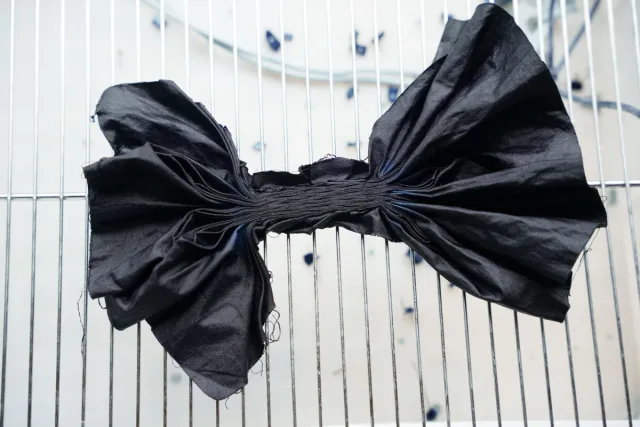
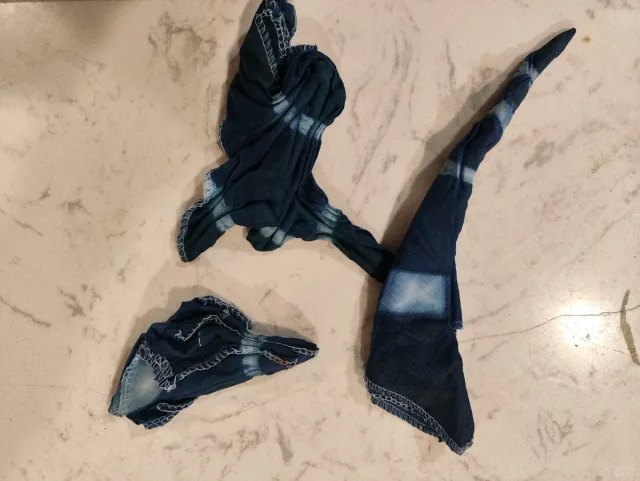
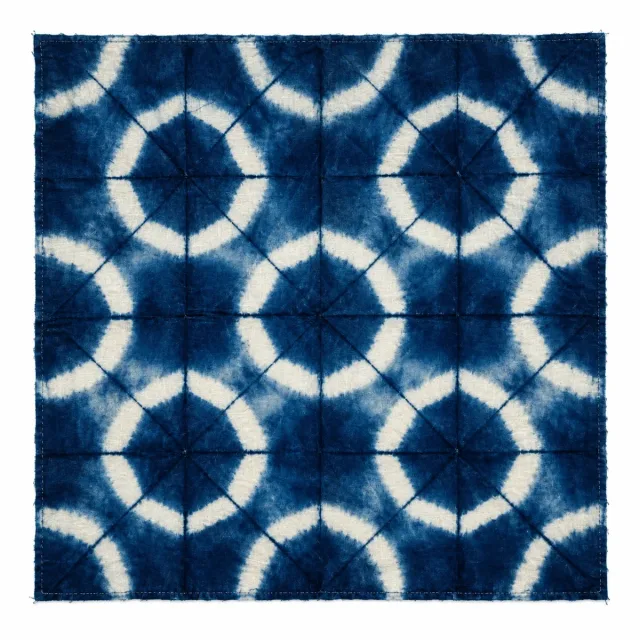
Before blue-dyed cloth is spread flat, look at the thickness of the folds and any pale bands already visible on the surface. These details show where the layers are still gathered and where a small part of the pattern has come into view.
Follow the layers across the rack
On the metal rack, dark fabric fans out at both ends while the layers stay close together through the middle. Follow the parallel ridges along the center to see how much cloth is still packed into that narrow section.
Look for a band on the exposed cloth
In a separate workshop photograph, three bundles rest on a pale surface. A light band crosses the longest bundle, and smaller light areas show between folds on the others. Resist dyeing uses folds, ties, or pressure to limit where dye reaches the cloth. The exposed bands give you a place to look when the layers are opened.
See how the pattern reads when the cloth is flat
The third photo shows a separate finished square laid flat. Follow a pale arc to see how it joins a ring, then look for that ring across the cloth. The first two photos show other pieces while still folded. To see how a particular band becomes part of a pattern, photograph the same cloth before and after you open it.