

How can you read the pattern on a lacquer tea tray?
guoguo ·
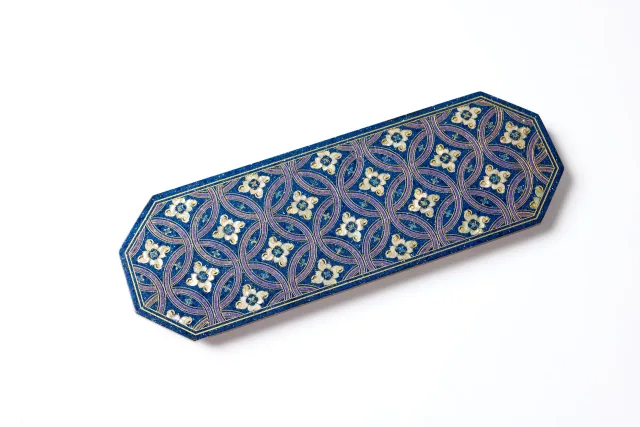
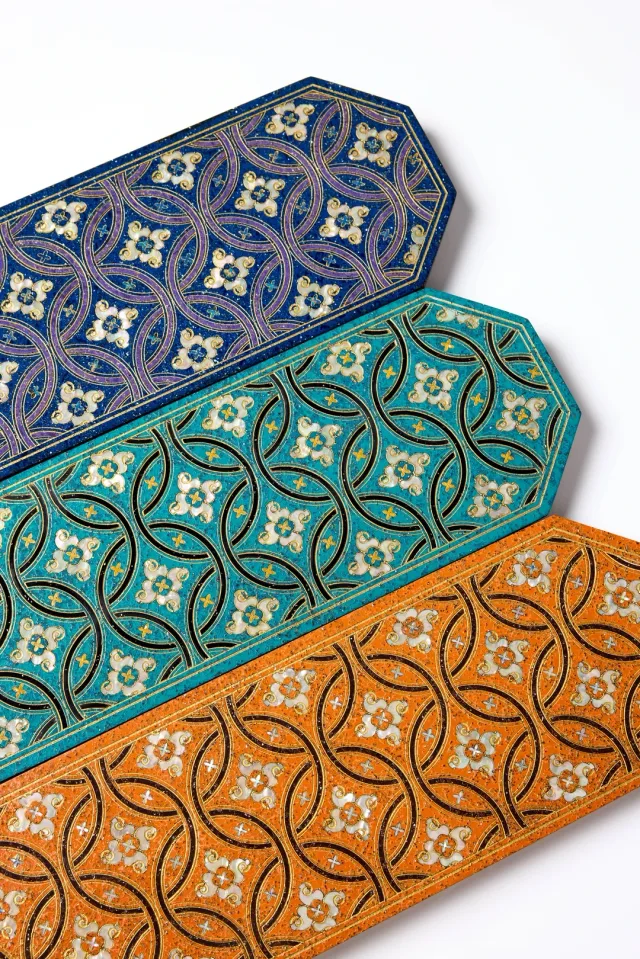
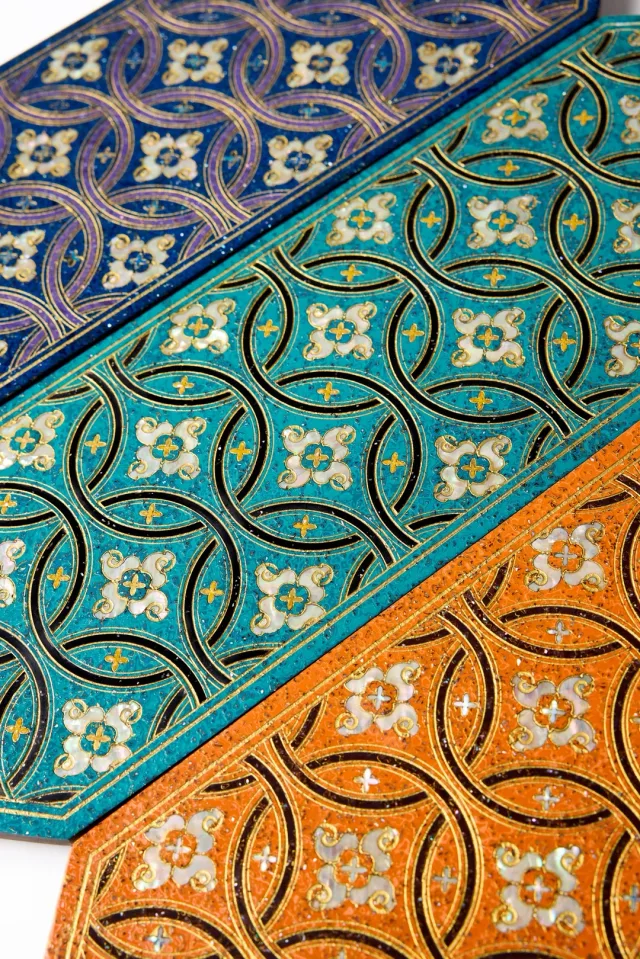
Look at the outline first, then follow one repeated motif, and finally compare the ground color. On these lacquer tea trays, pale motifs and gold-colored lines repeat across blue, turquoise, and orange surfaces. Separating shape, pattern, and color makes the busy decoration easier to read.
Follow the outline and repeating bands
The whole blue tray shows a long, narrow shape with clipped corners. A fine border follows that outline, while curved bands cross the central field. The pale motifs repeat inside the spaces between those bands, giving the eye a regular path along the tray.
Compare the same design in three colors
The grouped view lets you compare colors without changing the basic design. Blue makes the pale motifs stand out sharply; turquoise brings the dark curved bands forward; orange draws the eye to the warm ground. These are visual comparisons within this set of photographs, where lighting and angle also affect the surface.
Connect the detail to the whole tray
The close-up answers a different question: how do the details meet? Follow the small pale pieces, the narrow gold-colored outlines, and the textured color between them. Keep an overall view beside the detail so the repeated ornament remains connected to the tray's shape.
 Lacquerware
Objects and guides on lacquer.
Explore Lacquerware Looking at a piece →