

How turning a cloisonné vase changes the view
linlin ·
A turn can trade a dense spray of blossoms for a single flower, or bring a bird into view. In this pair of blue cloisonné vases, the shape and border bands stay consistent while the main scene changes around the body. To choose a display angle, compare the largest motif and the amount of blue surrounding it. Cloisonné enamel uses thin metal partitions to outline areas filled with colored enamel.
Follow the branching flowers
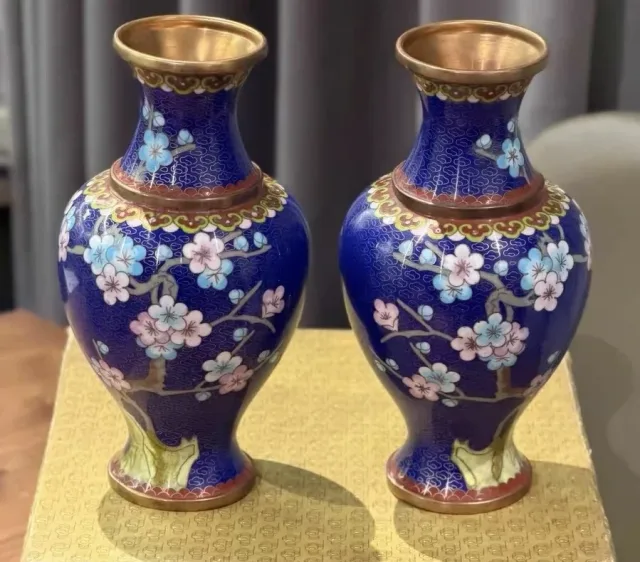
In the first photo, flowering branches spread across both vases. Pink, white, and pale blue blossoms gather near the shoulders and continue down the curved bodies. The branches give your eye several paths to follow, so this view feels busy even though some blue ground remains visible between them.
Compare the open blue ground
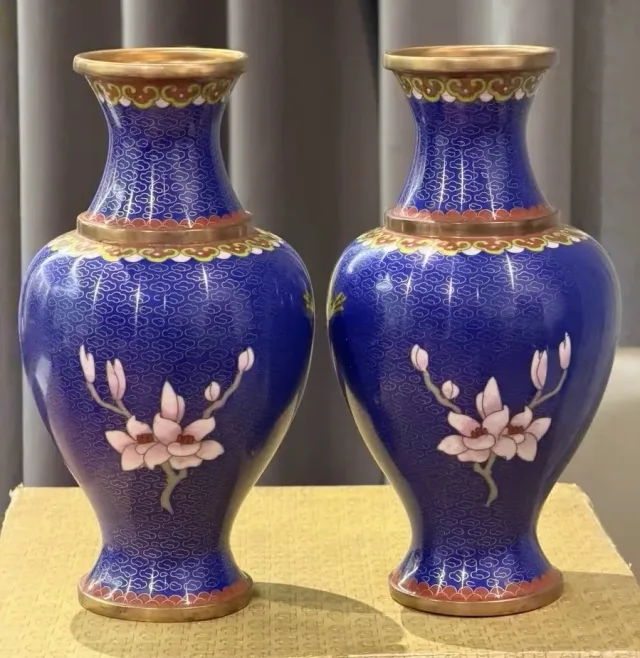
The second photo shows the same pair from another side. A single pink flower and a few buds sit lower on each body, with a much broader area of blue above them. That blue is not completely plain: fine looping outlines continue across it. Compared with the branching view, the larger open area makes the individual flower easier to isolate.
Find the bird near the edge
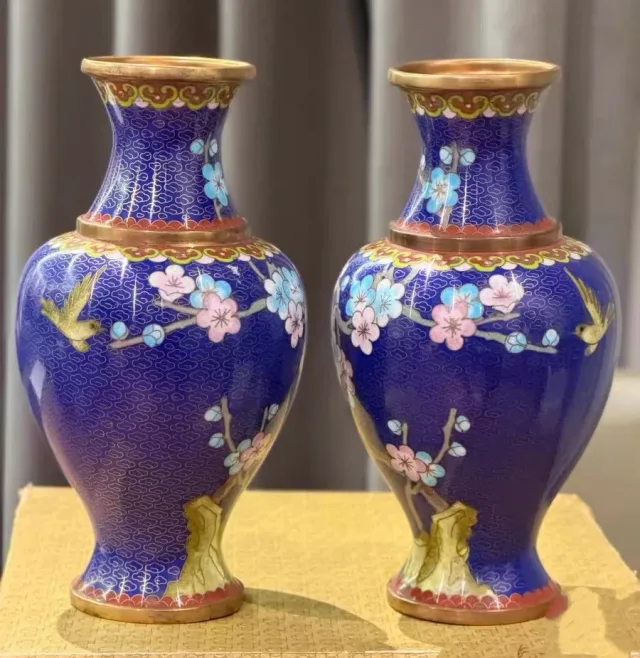
In the third photo, a yellow bird appears beside a flowering branch on each vase. The bird sits toward the outer edge of each visible scene, rather than directly in the middle. The change of angle therefore changes more than the number of flowers: it brings a different subject into the composition.
Look down at the repeating borders
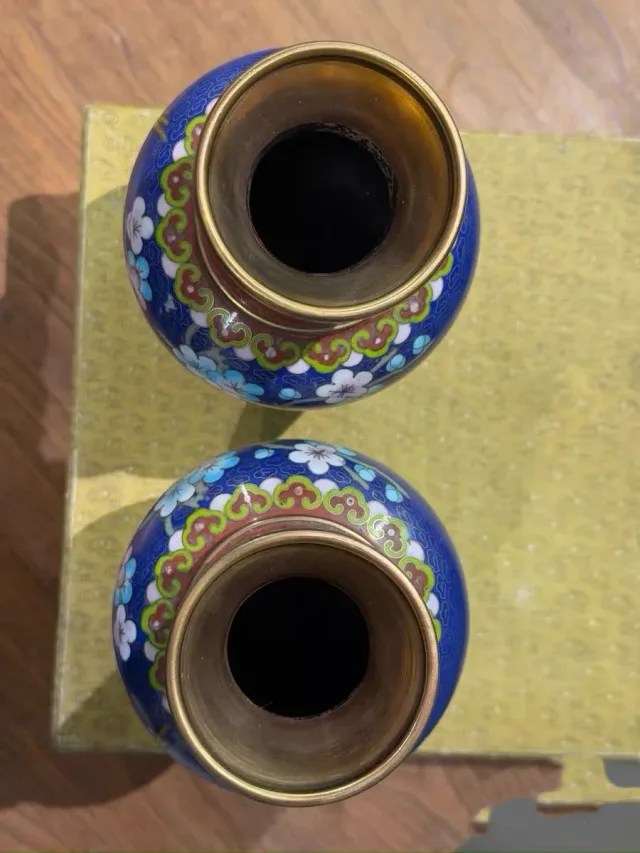
The overhead view helps connect these changing scenes. Gold-colored rims and red-and-green borders repeat around the openings and shoulders, while blossoms continue beyond the narrow slice visible from the front. Those repeated bands hold the views together without making each side identical.
Choose the detail you want to see first
When comparing display angles, follow one motif as it approaches the curved edge, then compare the next view. Ask whether you want branching flowers, an isolated bloom, or a bird to catch the eye first. These photographs document the views of this pair; other cloisonné pieces may repeat one pattern all the way around.