

What openwork adds to a cloisonné incense burner
linlin ·
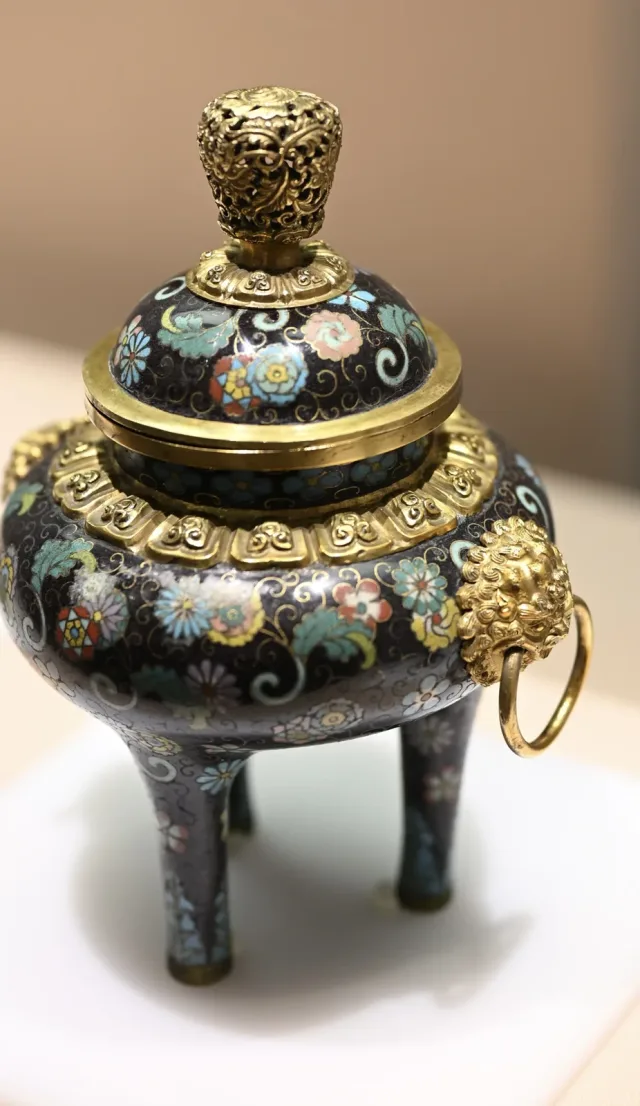
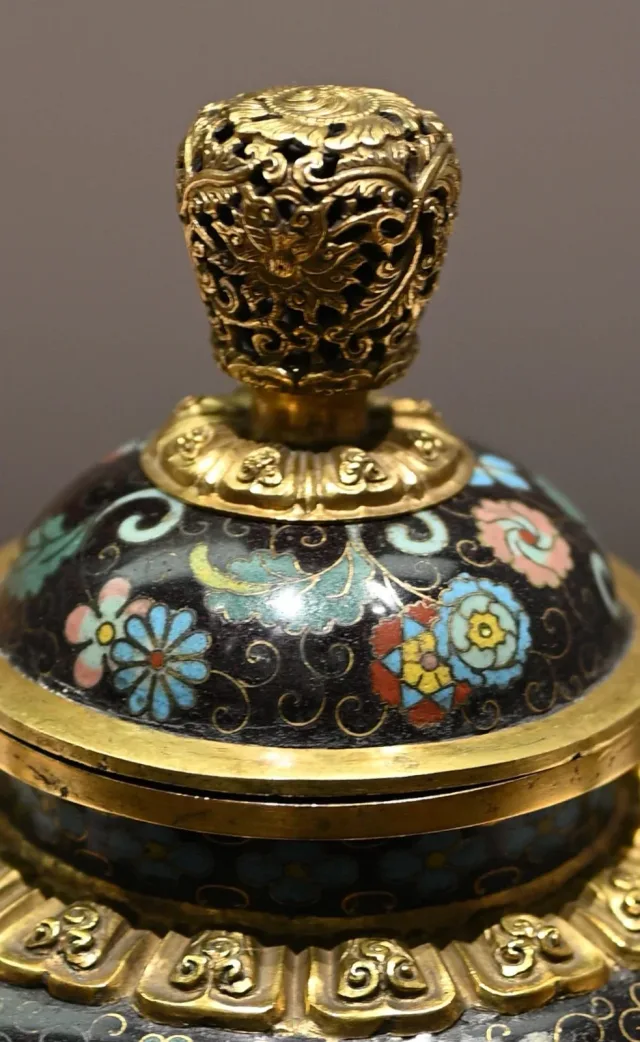
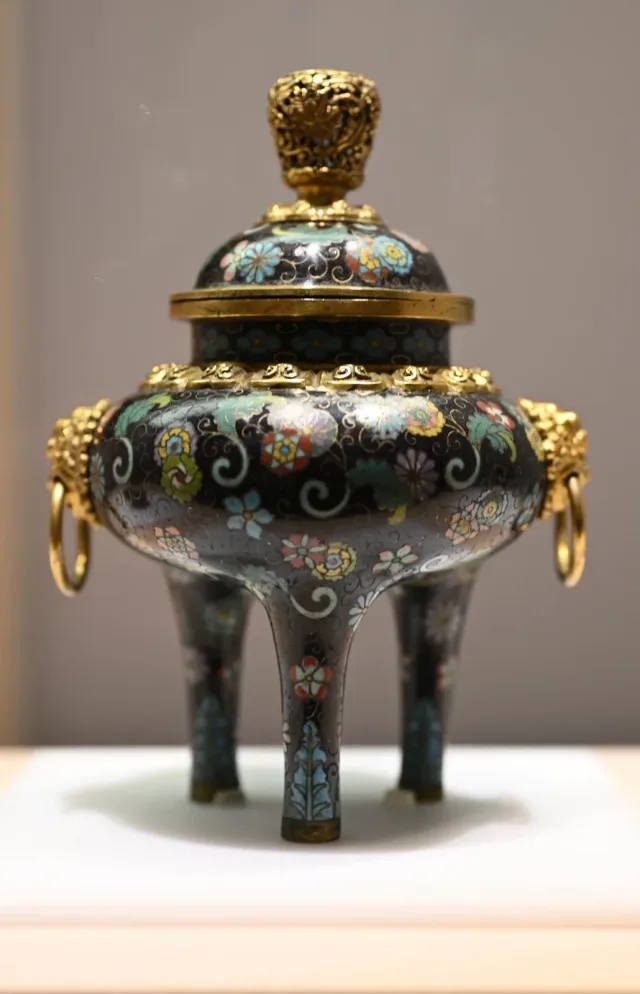
Openwork gives an incense burner both openings and ornament. The term means metal shaped into a pattern with gaps through it; pierced covers allow incense smoke to escape. On this cloisonné burner, the openwork is concentrated in the raised ornament at the top, above a dome covered in floral enamel. Three views help separate those openings from the dark background of the decoration.
Start with the whole shape
The first photo shows the whole object. Its rounded body, domed lid, and narrow top form three distinct levels. Cloisonné is enamel decoration held within wire outlines on metal. Here, flowers spread across a nearly black ground, while the gold-colored top stands clear of that dense colored surface.
Look between the metal curls
In the second photo, look between the raised curls of metal at the top. The irregular dark gaps are openings, rather than black enamel enclosed within a pattern. This pierced ornament is called a finial: the decorative feature crowning the lid. The flowers on the dome below sit on a continuous surface, making the difference easier to see.
Check the front view
The third photo returns to a frontal view of the same burner. The openwork finial reads as a small, airy shape above the broader dome. The narrow lid rim and the raised band below it are separate details; a dark line between fitted parts should not automatically be read as a purpose-made smoke opening. These photographs show an unlit display object and do not reveal its internal smoke path.
Find the openings, then the pattern
When you look at a covered incense burner, start with the outline, then find the actual openings. Compare them with dark enamel and with shadows at the joins. That small distinction makes it easier to see how a maker combines a decorated surface with metalwork that has space through it.