

What should you photograph on a damaged lacquer bowl?
guoguo ·
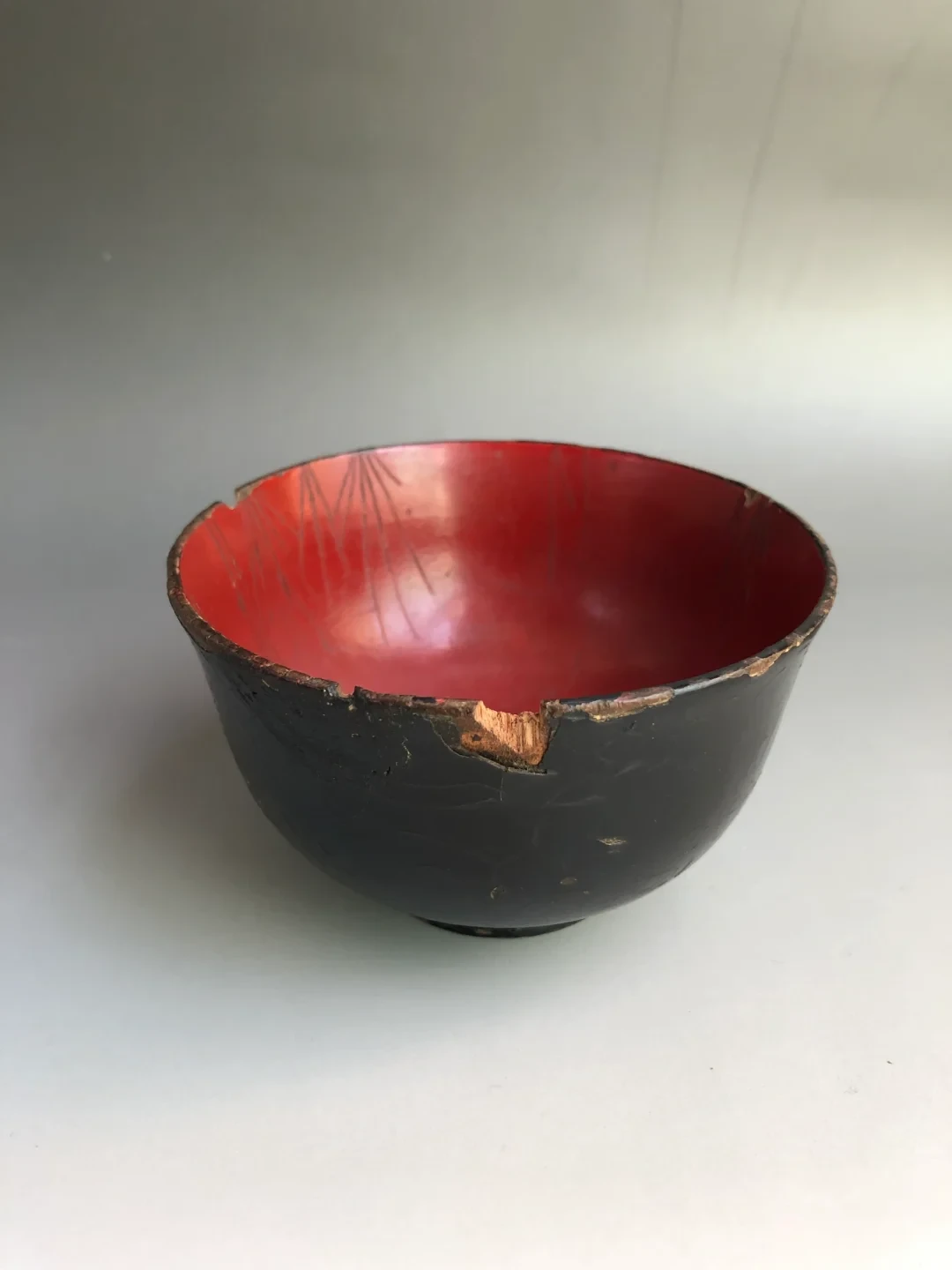
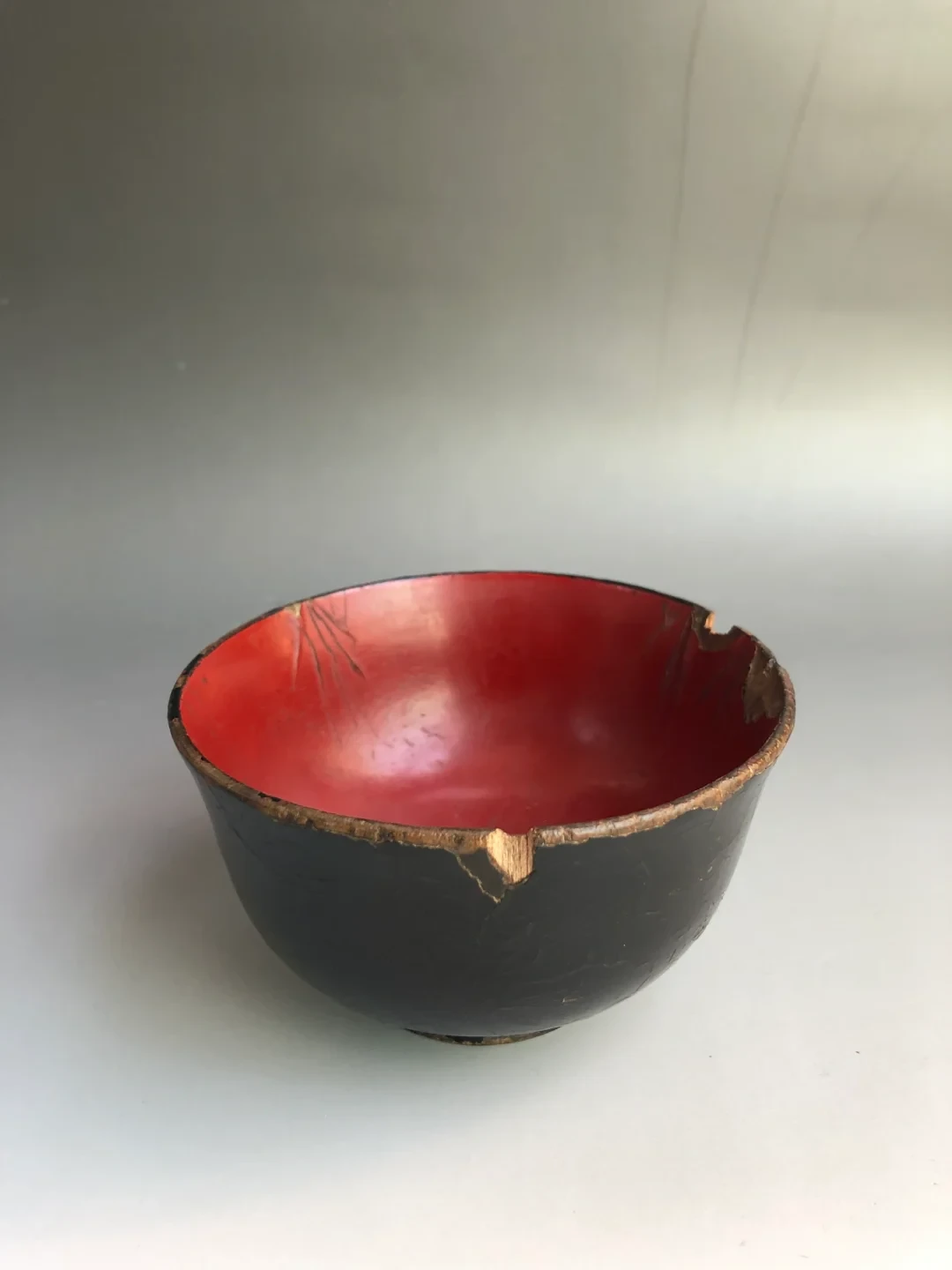
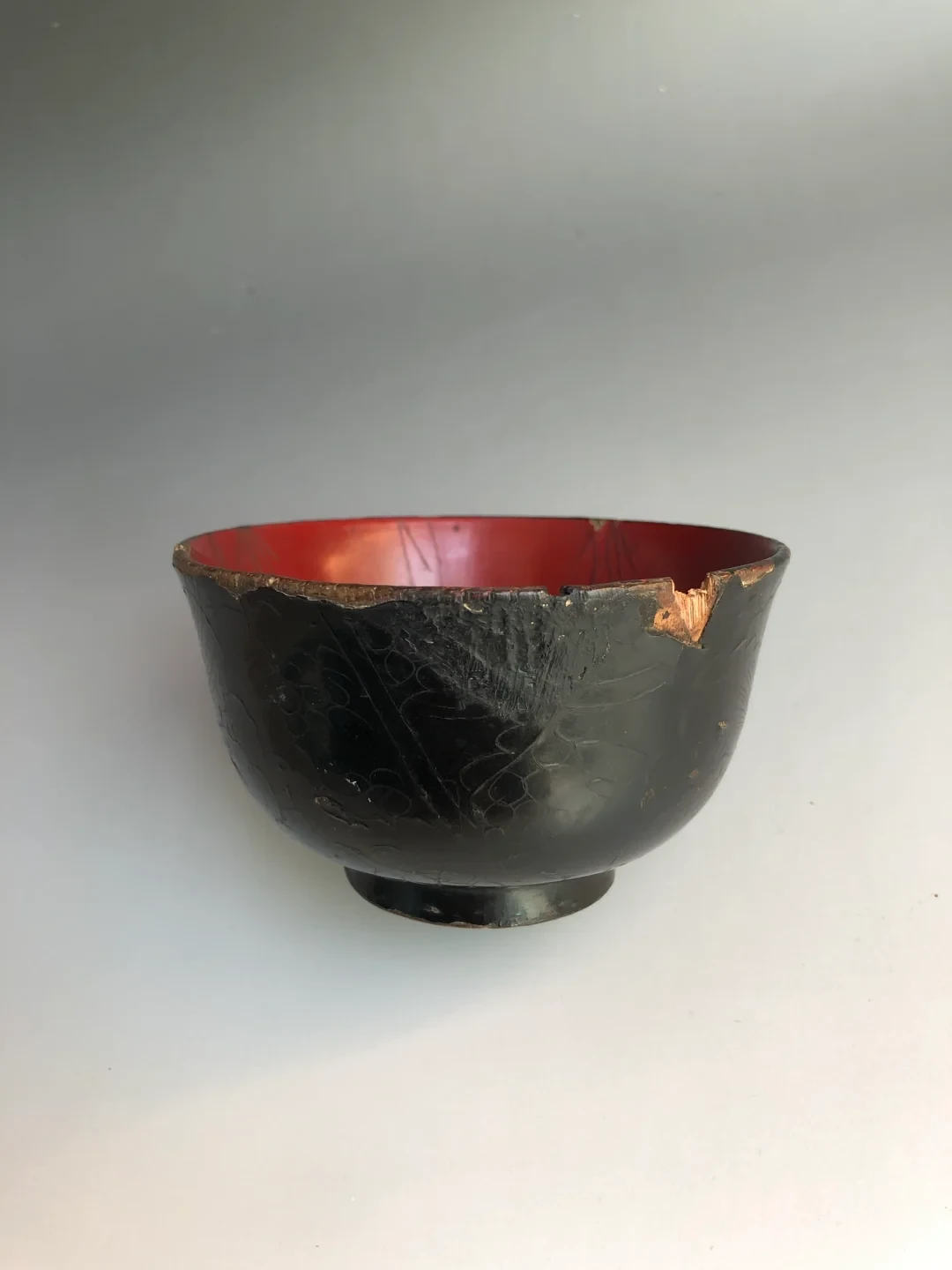
Start with the whole bowl, then record its rim and any chipped or cracked areas from several angles. Include the interior and exterior so a small detail can be located on the object. These three views show why one photograph rarely tells the whole story.
Compare the rim from different angles
In the first view, a broad loss interrupts the front edge. The higher angle reveals more of the red interior and other breaks around the rim. From the side, the short foot, dark exterior, and network of fine surface lines become easier to see.
Make a useful condition record
For a useful condition record, keep an overall view beside each close-up. Note which side you are photographing and use similar lighting when you return to the object. A picture that clearly locates a chip is more useful than a dramatic reflection that hides the edge.
What these photographs establish
Read this gallery as different views of a damaged surface. The photographs document visible condition; they do not establish the bowl's age, its exact coating, or a sequence of repair steps.
 Lacquerware
Objects and guides on lacquer.
Explore Lacquerware Looking at a piece →