

What wax leaves on blue-dyed cloth
yincheng ·
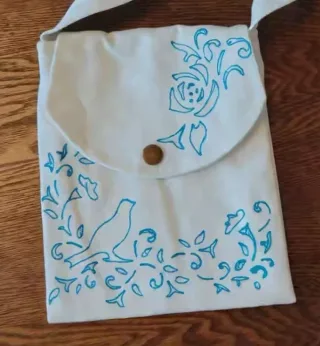
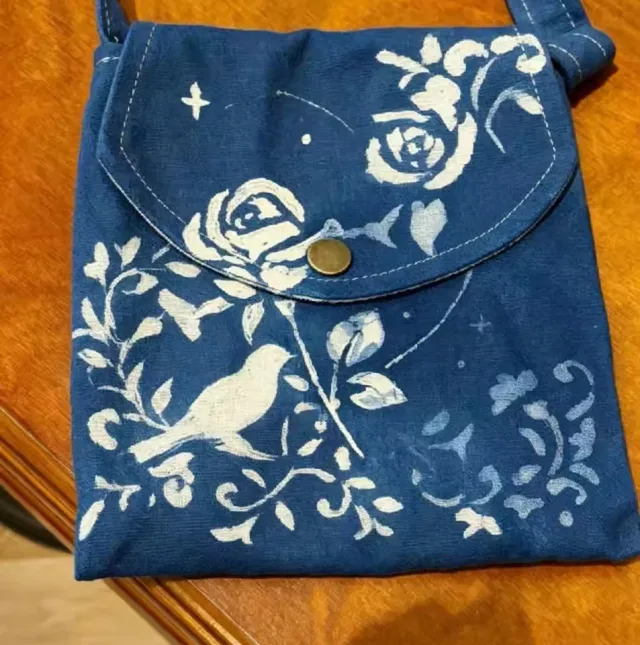
The bird on this blue bag is pale because wax covered that part of the cloth before it went into the dye. This is wax resist, a way of making a pattern by keeping dye from reaching selected areas. The same bird silhouette is easy to spot before dyeing and after the wax comes off.
Find the bird before the dye
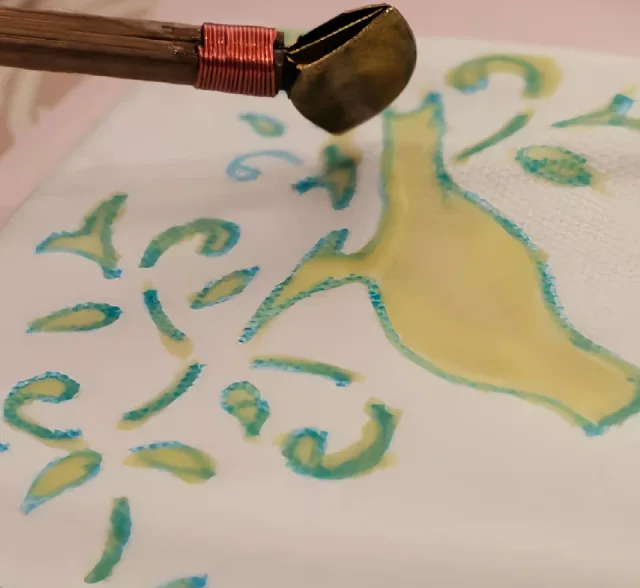
Start with the white bag. The bird sits low on the front, among small leaves and curls, while a rose sits on the flap above the snap. In the close-up, yellow wax fills the body of the bird. The maker also paints wax into some of the smaller shapes around it.
Watch the bag go into dye and then hot water
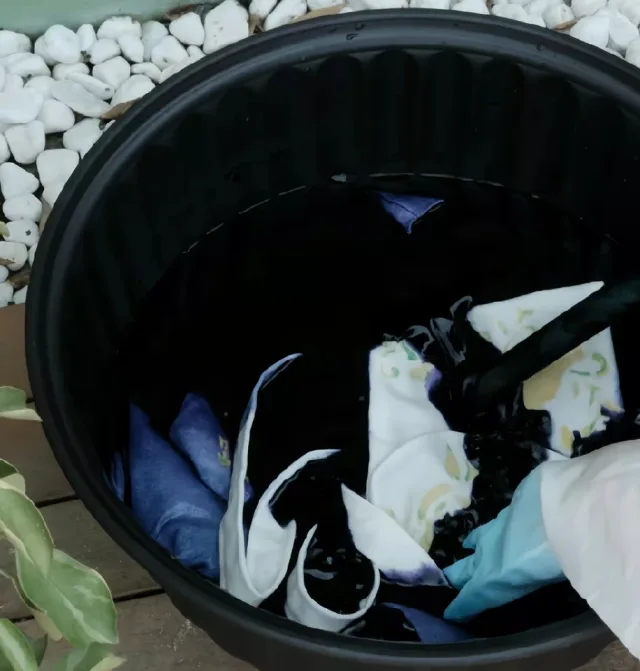
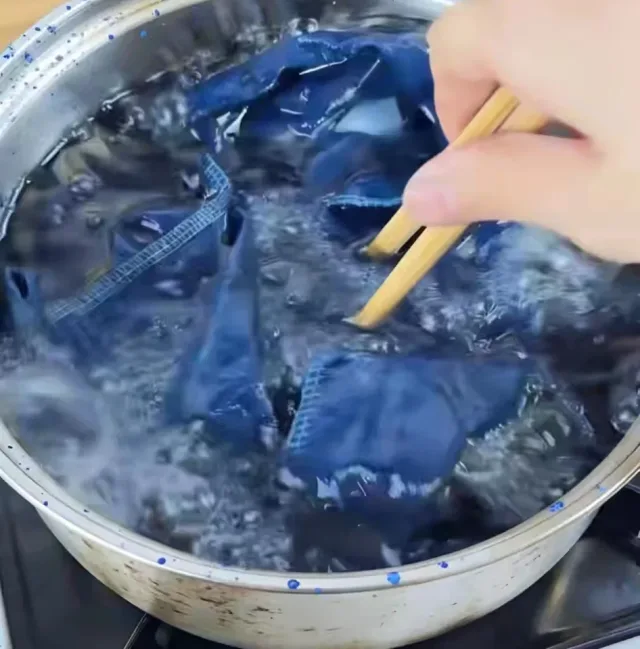
The bag folds in on itself as it goes into the indigo vat. Its straps and a few pale areas are still visible above the dark liquid. In the next step, the blue bag goes into hot water to loosen the wax. You can see the seams and straps before the bag lies flat again.
Compare the bird with the smaller marks
On the finished bag, the filled-in bird reads as one pale shape against deep blue. Around it, separate leaves and curls leave bits of blue showing between them. Follow the bird from its waxed body to its pale silhouette, then look for the rose and its curled stem above the snap.