

What Fabric Should You Start With for Hand Dyeing?
Start with white, lightweight cotton. Learn what the fiber label tells you and how two swatches can separate a color problem from a pattern problem.
By BeenEast Editorial · Published · Reviewed
Read the fiber label
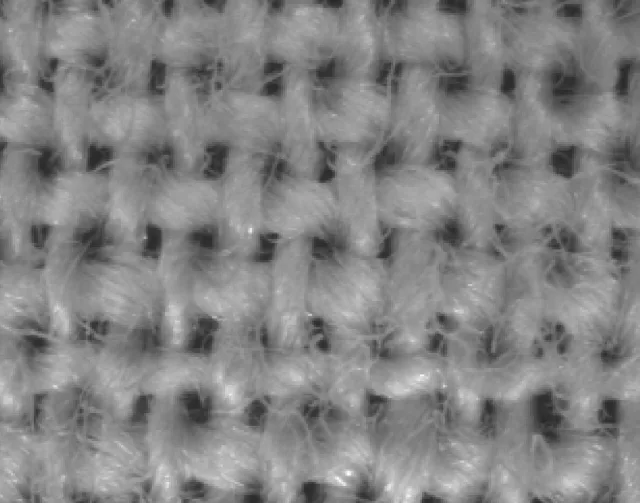
For a first hand-dyeing project with a fiber-reactive dye such as Procion MX, start with white, lightweight fabric labeled 100% cotton. Plain weave is easy to fold, and white gives you a clear starting color. Check the fiber label before buying the dye or cutting into a garment.
Sources: Jacquard — Procion MX fiber compatibility
Plain weave describes how the yarns cross. “100% cotton” tells you what those yarns are made of. On a garment, check whether the label gives a separate fiber content for the lining. The main fabric can be cotton even when the lining, stitching, or elastic is made from something else.
Match the dye to each fiber
Cotton and linen are rich in cellulose, the material that makes up much of a plant fiber. Under the conditions specified by the maker, a fiber-reactive dye can form a chemical bond with cellulose. Jacquard lists both cotton and linen for Procion MX. The same dye can still look different on two fabrics, even when both are cotton.
Sources: Jacquard — Procion MX fiber compatibility · Dharma Trading — What changes fiber-reactive dye results
Imagine a label that reads “60% cotton, 40% polyester.” In a Procion MX process for cotton, the cotton portion can take color while the polyester stays close to its original shade. That can soften the overall color or leave lighter threads visible. The percentages identify the blend, but the yarn and fabric construction affect where you see the lighter fibers.
Sources: Jacquard — Procion MX fiber compatibility · Jacquard — iDye Poly for synthetic fibers
If the whole blend needs to take color, check for a method that covers both fibers and fits the garment’s care limits. Polyester dyes such as iDye Poly call for high heat. For silk or wool, check the product’s directions for that fiber before using the preparation you learned on cotton.
Sources: Jacquard — Procion MX fiber compatibility · Jacquard — iDye Poly for synthetic fibers
Cut two swatches from the same cloth
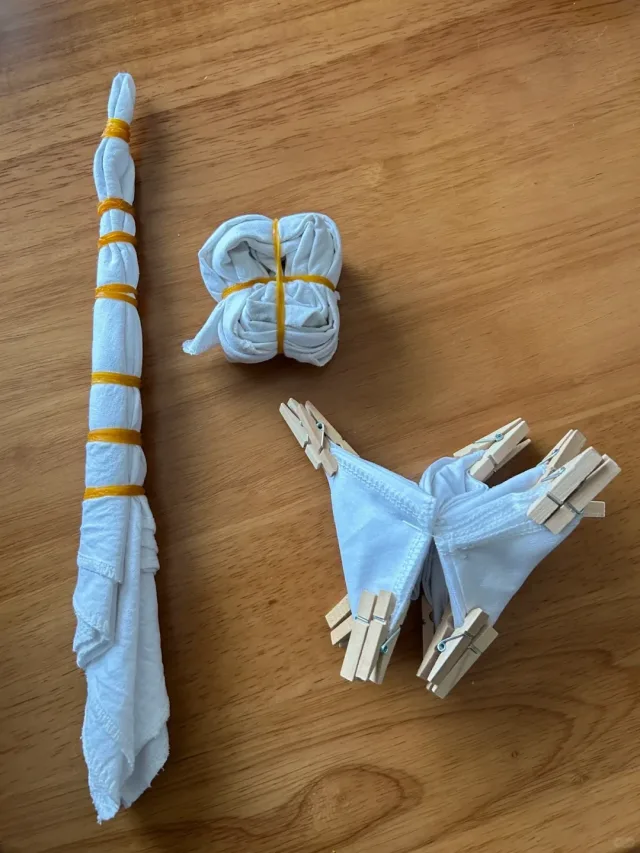
Cut two similar scraps from one piece of cloth. Leave one open to see how the fabric takes color. For the other, fold it once and tie one band where you want a pale mark. This is a simple resist: pressure at the binding limits how much dye reaches that part of the cloth.
Sources: Dharma Trading — Tie-dye preparation and washout
The photograph shows several ways to gather or compress cloth. For your first comparison, use just one binding so you can locate the mark after you open the swatch.
Prewash before you bind the cloth
Wash both scraps while they are open, following the dye maker’s preparation instructions and the fabric’s care limits. Sizing, an applied finish that can make new cloth feel crisp, and residues such as oils can interfere with even wetting and dyeing. If water still beads in one area, take that as a reason to recheck preparation before tying the cloth.
Sources: Dharma Trading — What changes fiber-reactive dye results · Dharma Trading — Tie-dye preparation and washout
Work the two swatches through the same dye method, keeping the preparation and finishing conditions the same. Use the equipment and protection specified for that product, and keep dye containers and utensils separate from kitchen tools.
Compare the two swatches after washing and drying
Once both swatches have been washed as directed and dried, compare the open swatch with the exposed areas of the tied one. If both are pale or patchy, revisit the fiber, preparation, and dye process first. If the open swatch has the color you wanted but the tied swatch has little contrast, repeat the test with one change to the binding or fold.
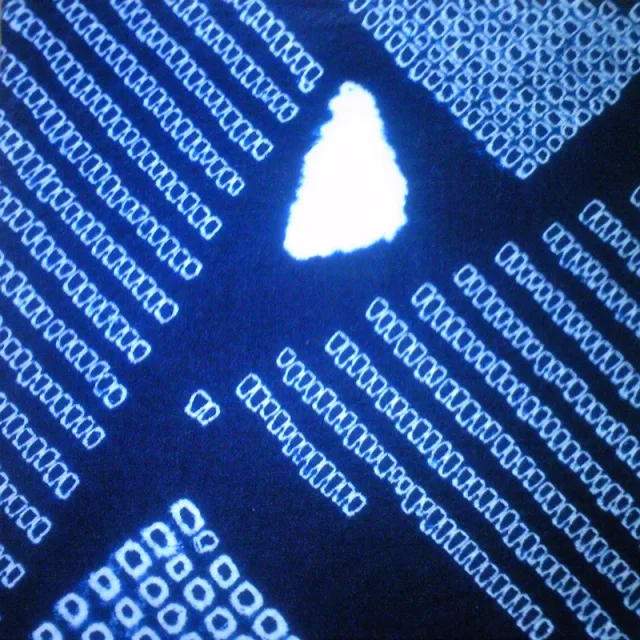
Keep the pair with the fabric label and the dye product name. A level ground color on one swatch and a pale line where the other was tied give you a result you can compare with the next piece of cloth.
Continue reading
Reuse and citation
English PDF and Markdown contain the text; their photo links open the illustrated guide.
BeenEast Editorial. What Fabric Should You Start With for Hand Dyeing?. Version 1.0 (2026-11-13). https://community.beeneast.com/guides/hand-dyeing-fabric
References
Jacquard — Procion MX fiber compatibility
Jacquard — iDye Poly for synthetic fibers
Dharma Trading — What changes fiber-reactive dye results
Dharma Trading — Tie-dye preparation and washout
Ikiwaner — Cotton plain-weave micrograph on Wikimedia Commons

