

How an indigo gradient builds in the vat
yincheng ·
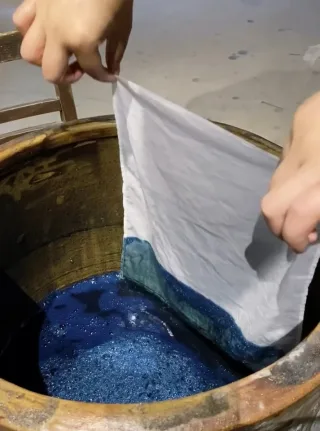
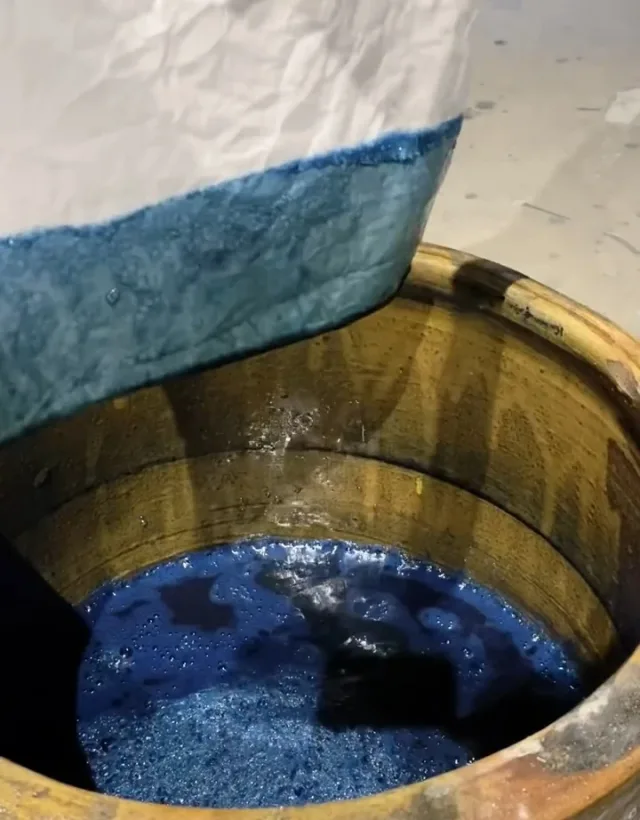
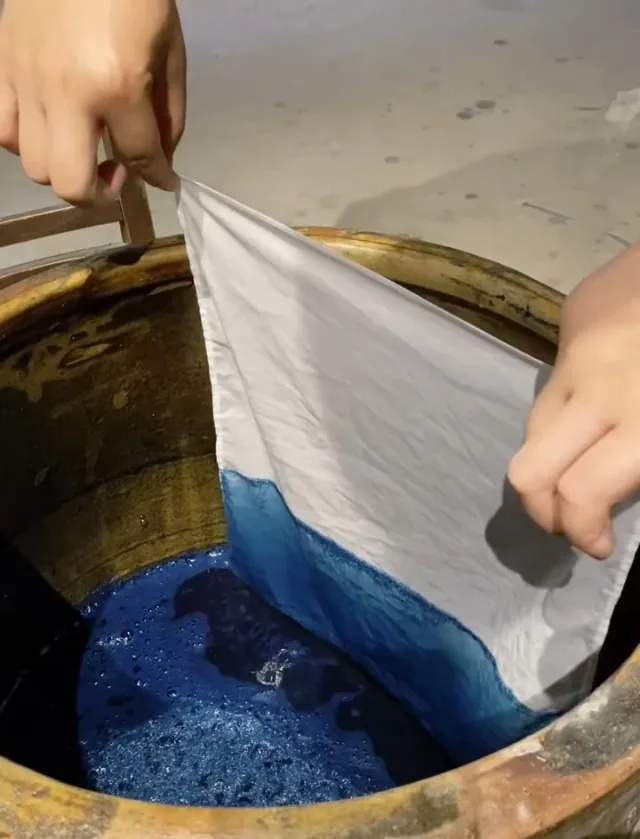
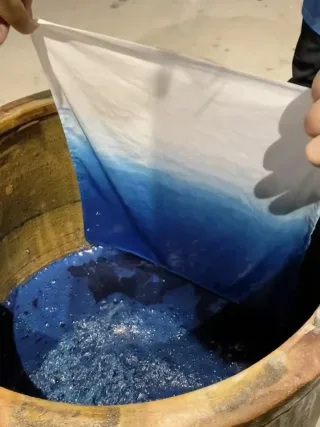
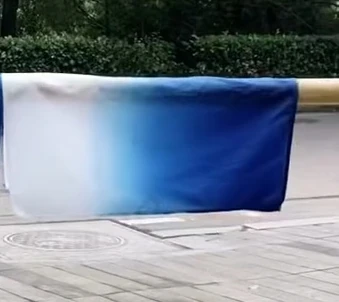
An indigo gradient forms when different parts of the same cloth get different amounts of dye. The end that keeps going back into the vat builds up a darker blue. A section that gets less dye stays lighter, and the end held clear of the bath stays white.
Watch the first band appear
In the first dip, the maker holds two corners so only the lower edge meets the bath. When the cloth comes up, the wet band is narrow and has a green-blue cast. Most of the square is still white.
Compare the early and later lifts
Watch where the cloth meets the liquid as it goes back in and comes up again. The maker changes how much cloth enters the bath and keeps working the blue end. On the later lift, the hem is deep blue and the color softens as it reaches the white area. Repeated dips build color where they overlap.
Read the fade on the drying pole
On the drying pole, the same fade runs from side to side because the square is hung sideways. Start at the white end and follow the cloth through pale blue to the darkest edge. The middle is a transition zone, where the color changes across the fabric instead of stopping at a single line.