

Why indigo cloth can look green at the dye vat
yincheng ·
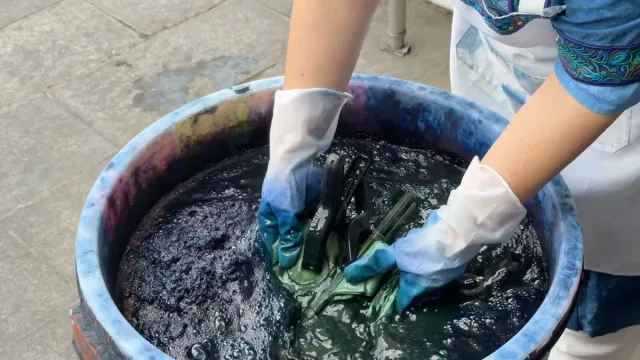

Indigo cloth can look green as it comes out of the dye vat because the dye is still changing. In the vat, indigo is in a form that dissolves in water and can enter the cloth. Once the cloth meets oxygen in the air, the dye changes back to its insoluble blue form. That change is called oxidation.
Look at the fabric beside the clips
The first thing you might notice is how dark the liquid looks. Look closer at the wet fabric between the gloves instead. Its exposed folds have a green cast, while the fingertips of the gloves are already stained blue. Those are three different surfaces in one frame. The shade of the liquid tells you little about the shade the finished cloth will have.
Follow one fold as it meets the air
If you are watching a dyeing demonstration, pick a fold you can identify and look at that same spot as the maker lifts the cloth clear of the liquid. A before-and-after pair is most useful when it shows the same fabric in similar light. Label when each view was taken, especially if you also show the cloth after it has dried. The photograph here captures the bundle at the surface of the vat, so the next view to look for is that same bundle held in the air.
Compare the blues on finished textiles
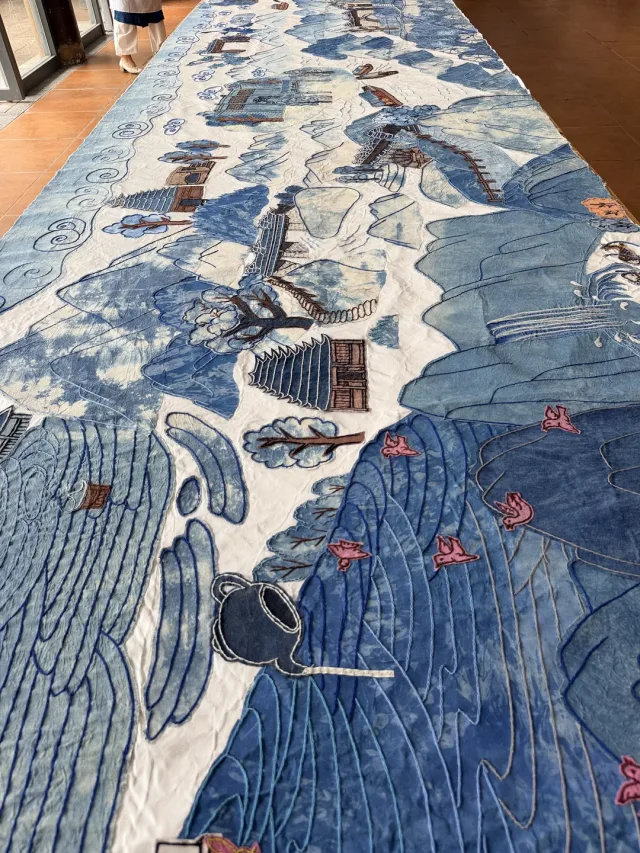
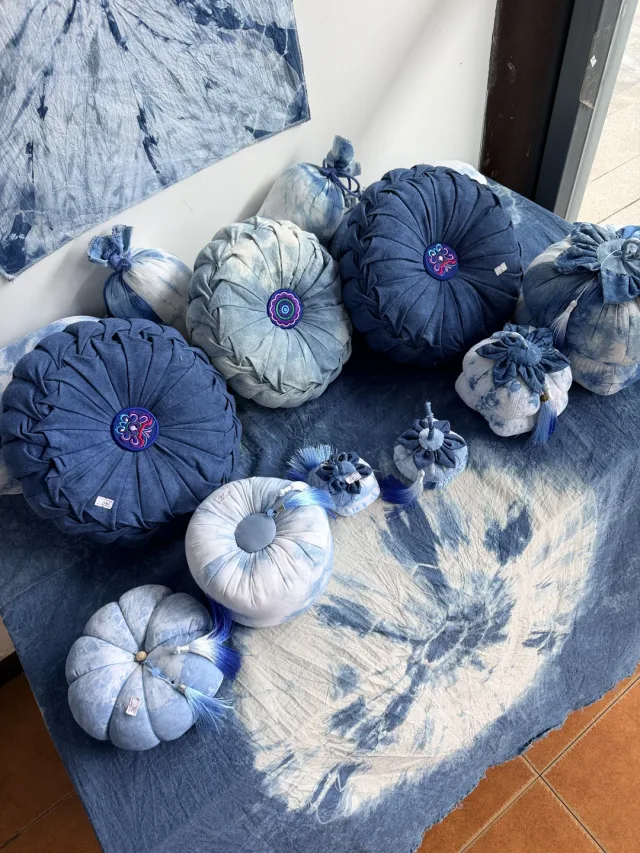
The other three photos show separate pieces from the same workshop visit. On the long illustrated panel, pale areas help the deeper blues stand out. Up close, the gathered fabric pieces range from a nearly white blue to a deep navy. Step back to the workshop view and notice which patterns you can still pick out across the room. These finished pieces show a range of blues; the photos don’t track the cloth in the vat.