

How gold thread defines a shape without an outline
max ·
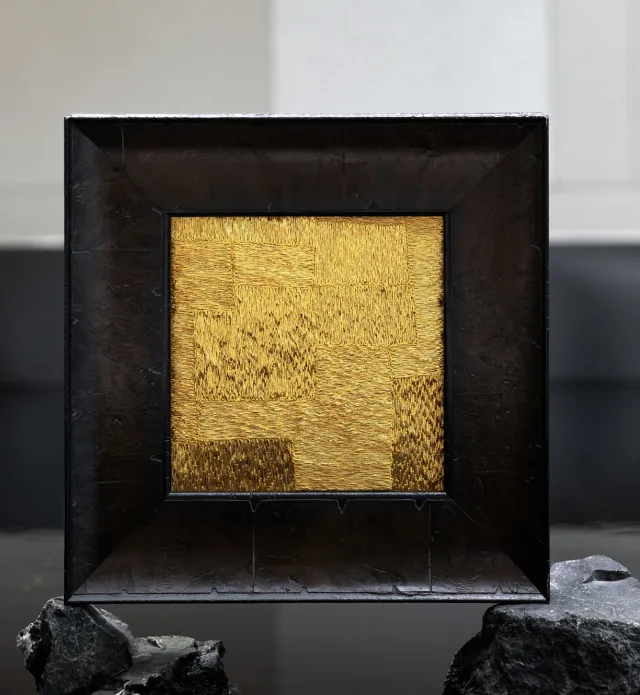
In the all-gold embroidery, you can see where one rectangle ends because the rows of thread change direction at its edge. Look near the bottom center of the first photo. Side-to-side rows meet a darker patch of upright rows, and that change gives the patch an edge without a separate outline.
Follow the gold rows
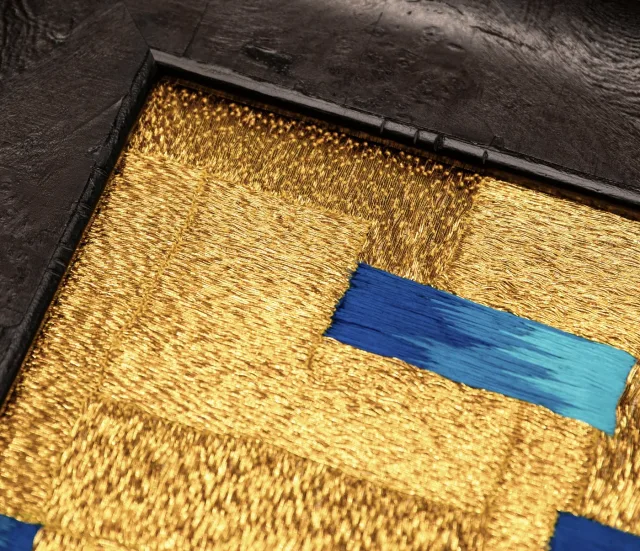
The close-up comes from a different piece in the same series. Follow the gold-colored strands just above the blue band, then look to its left. The strands run across one patch and up and down the next. The maker describes the technique as panjin embroidery, a form of couching in which small stitches hold a decorative thread on the surface. Those long surface runs give you a direction to follow.
Compare thread direction with a color change
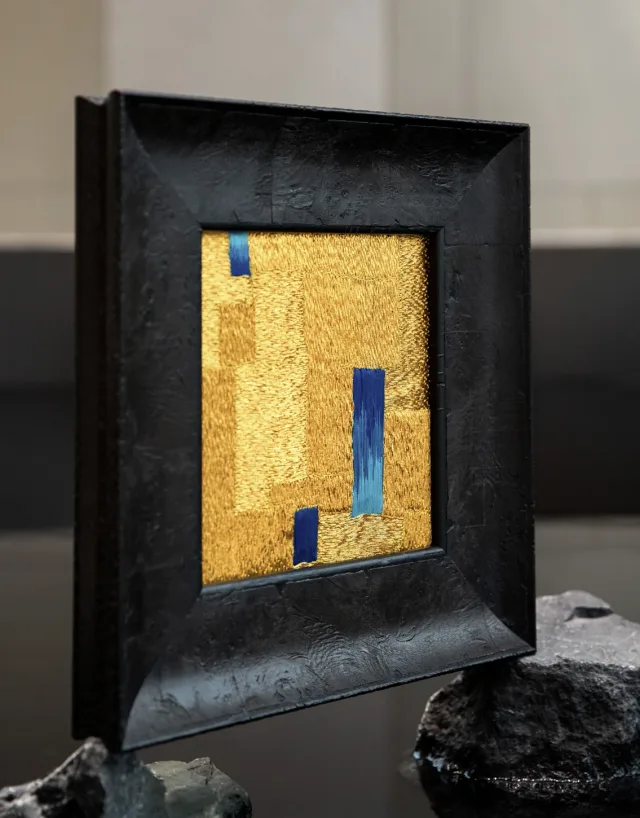
Step back to the full view of the blue-accented piece. The blue bars are easy to pick out because the color changes. In the surrounding gold areas, the transition is quieter. Where one set of rows meets the next, the highlights and texture change at the same edge.
Trace the edge across the series
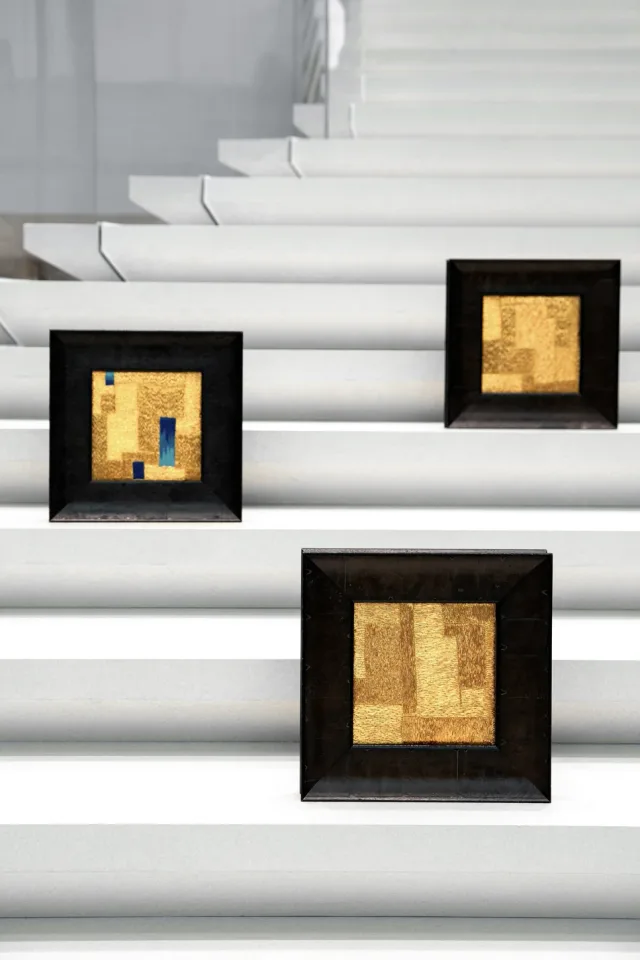
In the group photo, compare the two all-gold pieces with the one that has blue bars. Pick an edge inside any gold area and trace the rows on both sides. If you see a turn where the shades change, you’ve found a boundary made by the thread itself. The strength of that contrast can change with the light.
 Embroidery
Inspiration and guides on embroidery.
Explore Embroidery