

How stitch length and angle separate feathers, blossoms, and bamboo
max ·


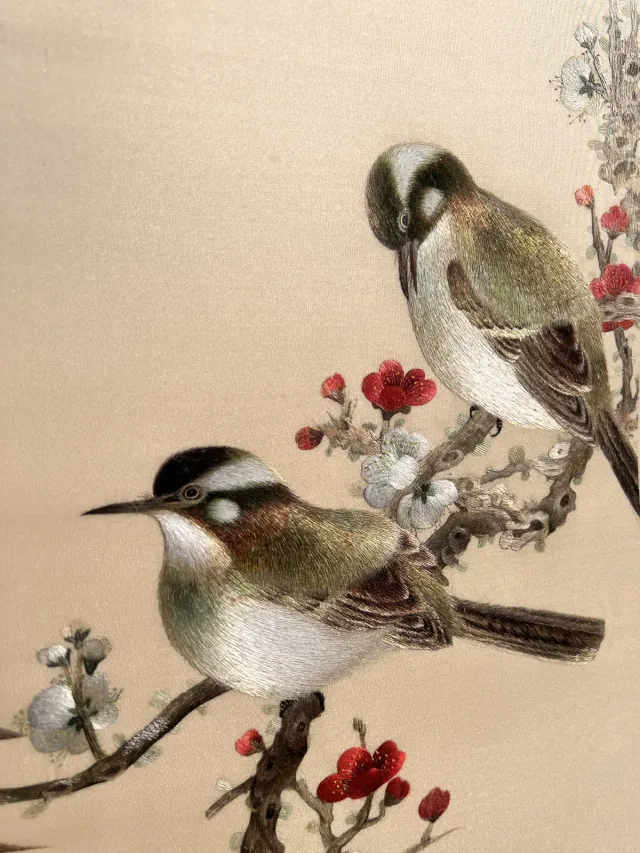

In this Su embroidery panel, made in the silk embroidery tradition of Suzhou, short, overlapping stitches soften the birds’ plumage. The stitches fan out across the plum petals and run in long, nearly parallel lines along the bamboo leaves. The four photographs show how those changes in length and direction give each part of the same panel a distinct texture.
Overlapping stitches round the bird's plumage
In the second photo, follow the fine stitches from the olive back toward the pale breast. Where stitches of different lengths meet, the colors change gradually along the curve of the body. On the nearby red and white plum blossoms, the petal stitches fan out from the center, and small yellow dots mark the ends of fine stamen lines.
Compare two postures on the same branch
The third photo shows both birds on the same branch. The lower bird faces left, and the stitches on its breast sweep back along its body. On the upper bird, the lines near the neck turn downward with the bowed head. Darker bands on the wings make the layers of feathers easier to see.
Long angled stitches give bamboo leaves a crisp edge
In the fourth photo, look for the long, nearly parallel lines that run toward the bamboo leaf tips. Silvery highlights near the bases give way to darker greens farther along the leaves. When looking at another embroidered piece, follow the stitch lines where two shapes meet. A change in direction or length can help you tell the surfaces apart.
 Embroidery
Inspiration and guides on embroidery.
Explore Embroidery