

The two sides of a blue lacquer comb
guoguo ·
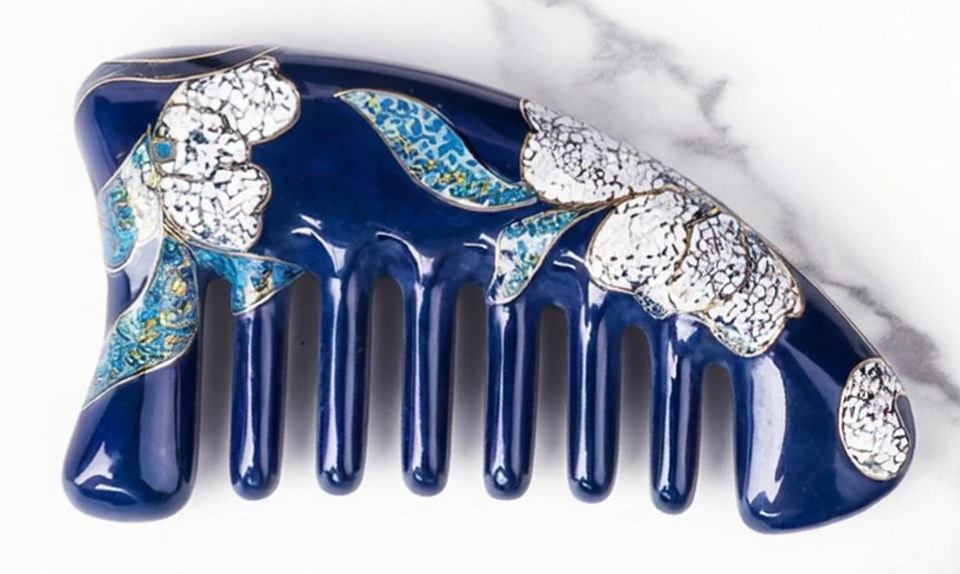

The wide part above the teeth gives a comb room for decoration. Women at the Tang court tucked ornamental combs into their hair, leaving the carved tops visible. An eighth- or ninth-century mother-of-pearl comb top at The Metropolitan Museum of Art has birds and scrolling flowers on one face and a motif of overlapping petals on the other. The modern blue lacquer comb shared by Tang Tian also rewards a look at both faces to see how the flowers are arranged.
Tiny seams inside the petals, fine lines around them
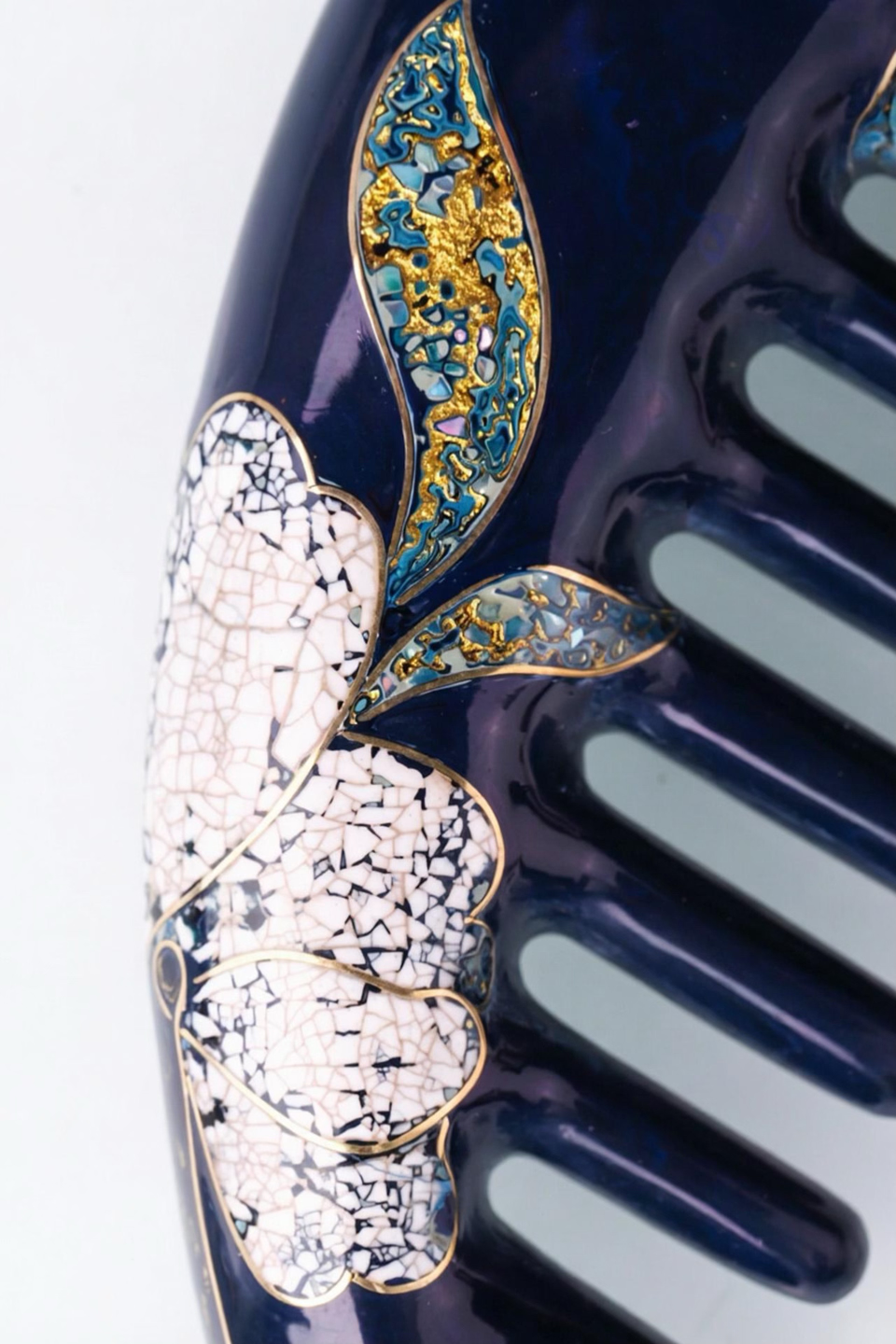
From a distance, the white petals read as solid patches of color. In the second photograph, you can see the individual pieces of eggshell and the dark seams between them. A continuous gold-colored line turns around the petals and traces the blue-green leaves. Tang’s description identifies this outline as fine metal wire shaped around the floral motifs. The eggshell inlay fills the pale petals.
Turn the comb over
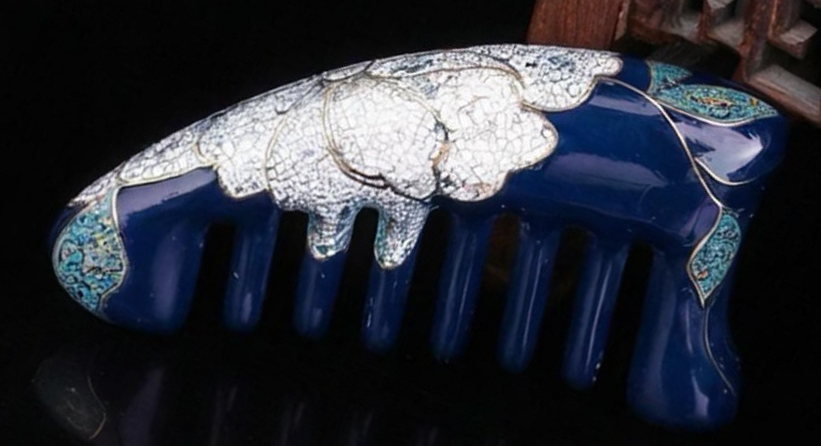
In the first photo, white blossoms sit at either end of the comb’s curved back. Turn to the third and fourth photos and the other face has a larger cluster of petals along the curve. A little of the pattern reaches the bases of the teeth, while most of the teeth remain deep blue. Tang describes the finish on the teeth and edges as a single color of lacquer applied in coats and polished. Follow the reflected light from the back of the comb to the rounded tips. You can see where the pattern stops and how the teeth curve into the body.
Tang Tian is an associate professor and master’s advisor at Tianjin University of Technology and a provincial-level Master of Arts and Crafts. Her work explores how traditional lacquer techniques can be used in contemporary objects.
 Lacquerware
Objects and guides on lacquer.
Explore Lacquerware Looking at a piece →