

What a stencil leaves on blue-dyed cloth
yincheng ·
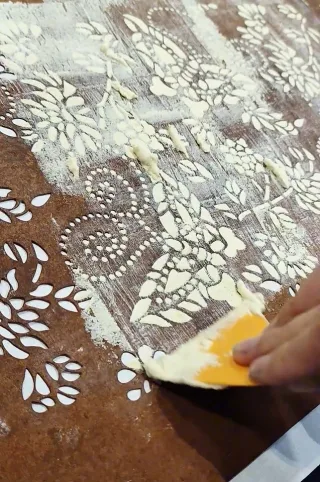
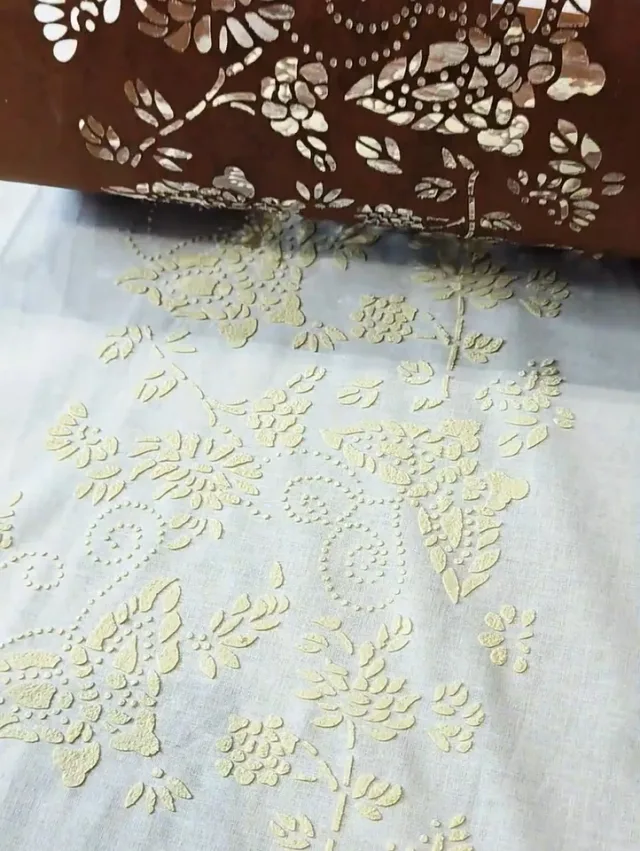
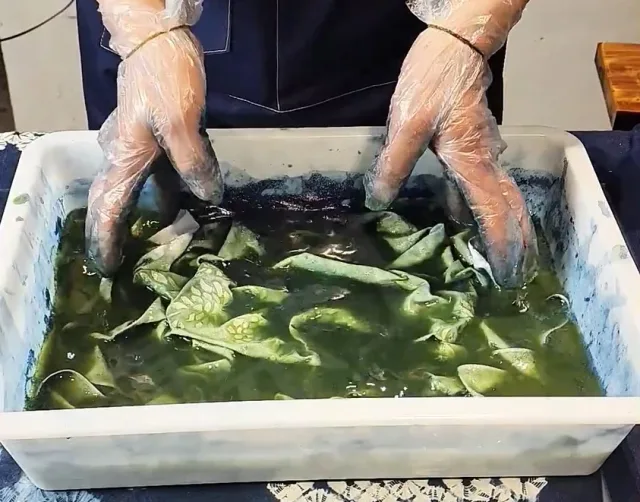
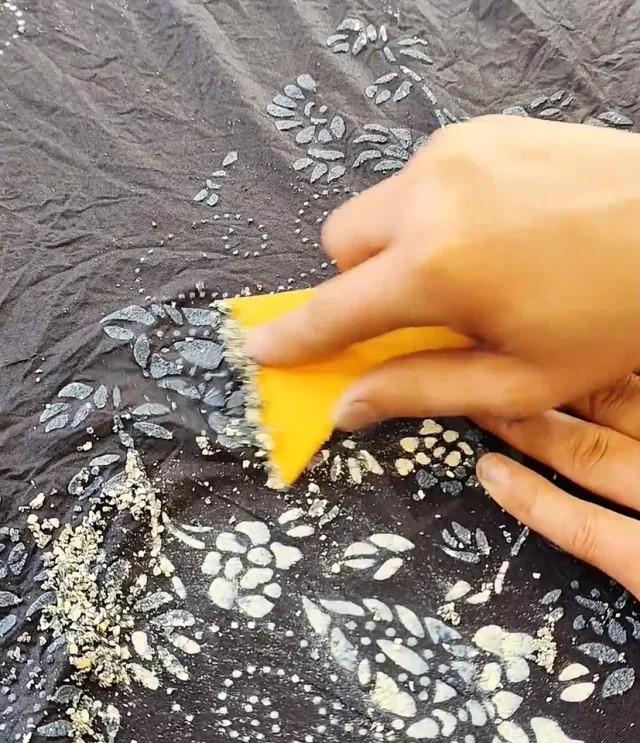
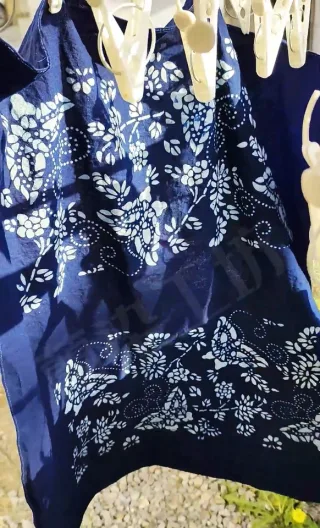
The pale butterflies on this indigo cloth trace the openings in a stencil. The maker spreads a thick paste through those openings before dyeing. The paste acts as a resist, shielding the cloth beneath it while the exposed fabric turns blue. Scraping away the dried paste reveals the original pale cloth. This is how the white-on-blue pattern is made on Chinese indigo printed cloth, known as lan yin hua bu.
Follow the openings from stencil to cloth
Look at the butterfly wing on the brown stencil. It is cut as a cluster of small shapes with narrow strips of stencil between them. When the maker lifts the stencil, the same cluster stands up in pale paste on the white cloth. The flowers and curved trails of dots transfer the same way.
Watch the cloth go into indigo and the paste come off
Once the paste dries, the cloth goes into the indigo vat. The folds hide most of the motif in the liquid. Later, a yellow scraper breaks the dry resist into crumbs, uncovering pale patches against the blue. Look for the loose crumbs beside the flat marks that have already been uncovered.
Read the pale marks and the blue gaps
On the finished cloth, the butterfly wings are made of separate pale patches with blue between them. The dotted curls are little pale marks with blue gaps. Compare one wing and one dotted curl with the lifted stencil. Those two details make it easy to see where the stencil was open and where it kept paste off the cloth.