

What changes when you turn a double-sided embroidery
max ·
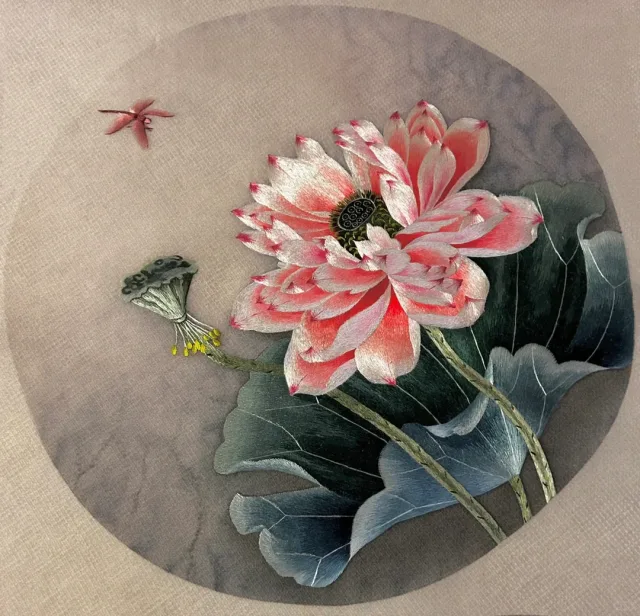
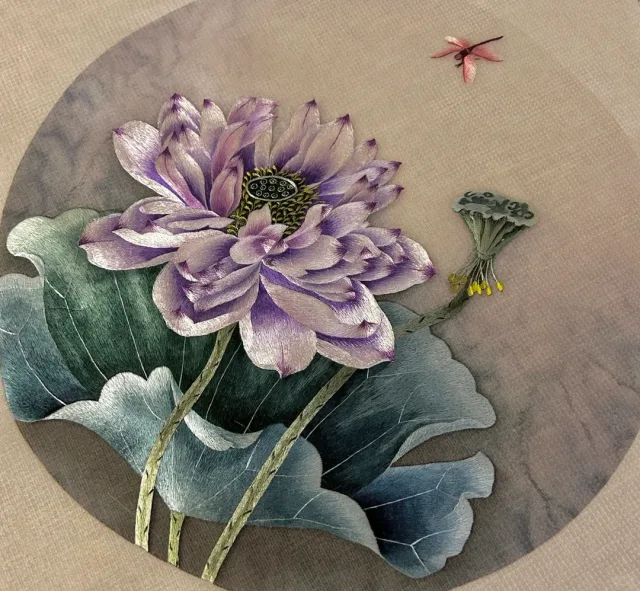
Turn this double-sided lotus embroidery over and the flower shifts from coral to violet. The leaf shapes, seed pod, and dragonfly still correspond, but they appear on opposite sides of the image because you are viewing the design from the opposite side.
Match the seed pod and dragonfly
On the coral side, the seed pod sits to the left of the bloom. The small dragonfly is above it, and the stems run down toward the right. On the violet side, the pod and dragonfly sit on the right, and the stems angle the other way. Those small details are easier to match than the overlapping petals.
Look closely at the petal shading
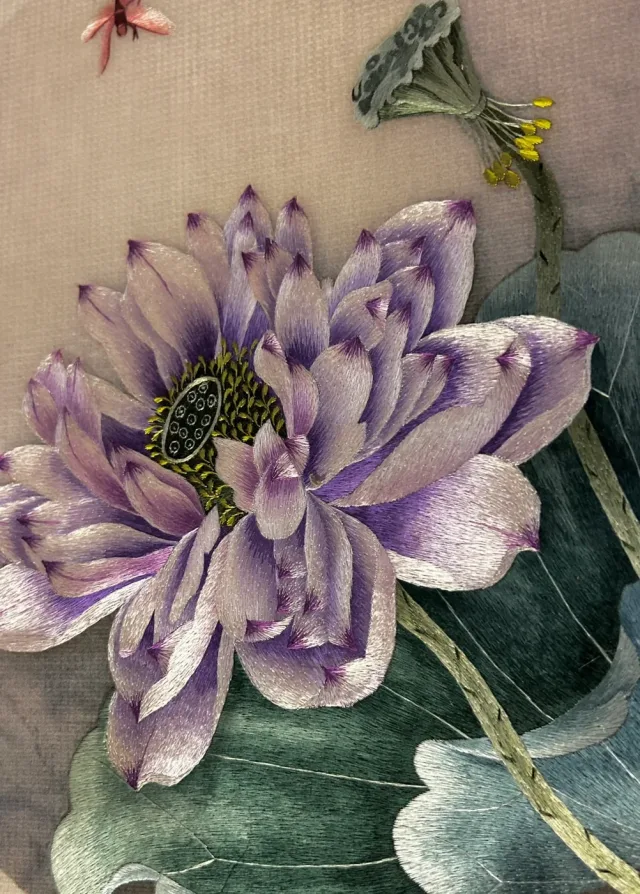
The close-up of the violet side shows dark purple at the tips and in the folds, with pale lavender across the wider parts of the petals. Compare that with the coral side, where warm red sits next to pale highlights. The two views carry the same flower outline with different shading.
Pick a landmark before turning the piece
If you see a double-sided embroidery in a frame, choose a landmark before you walk around it. A stem, bud, or insect gives you a place to start. Find its reflected position on the other side, then look for the colors the maker chose to change.
 Embroidery
Inspiration and guides on embroidery.
Explore Embroidery