

Why does embroidery floss bunch up as you separate it?
max ·
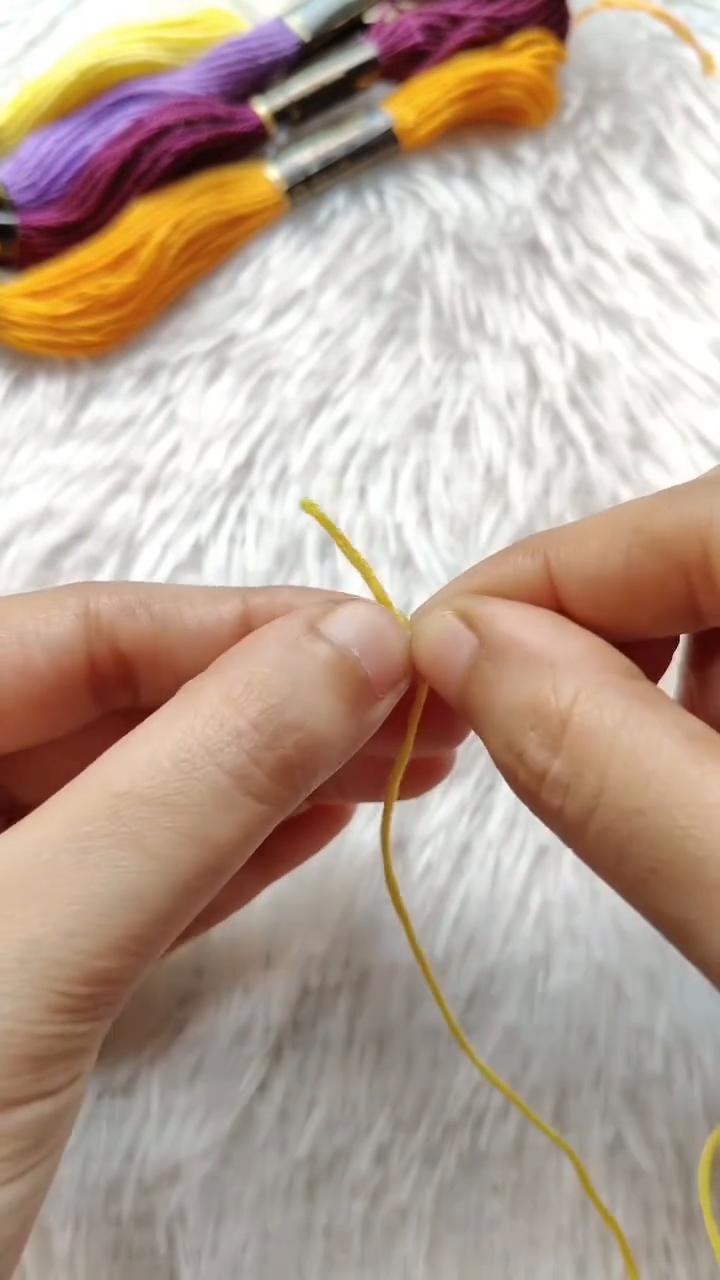
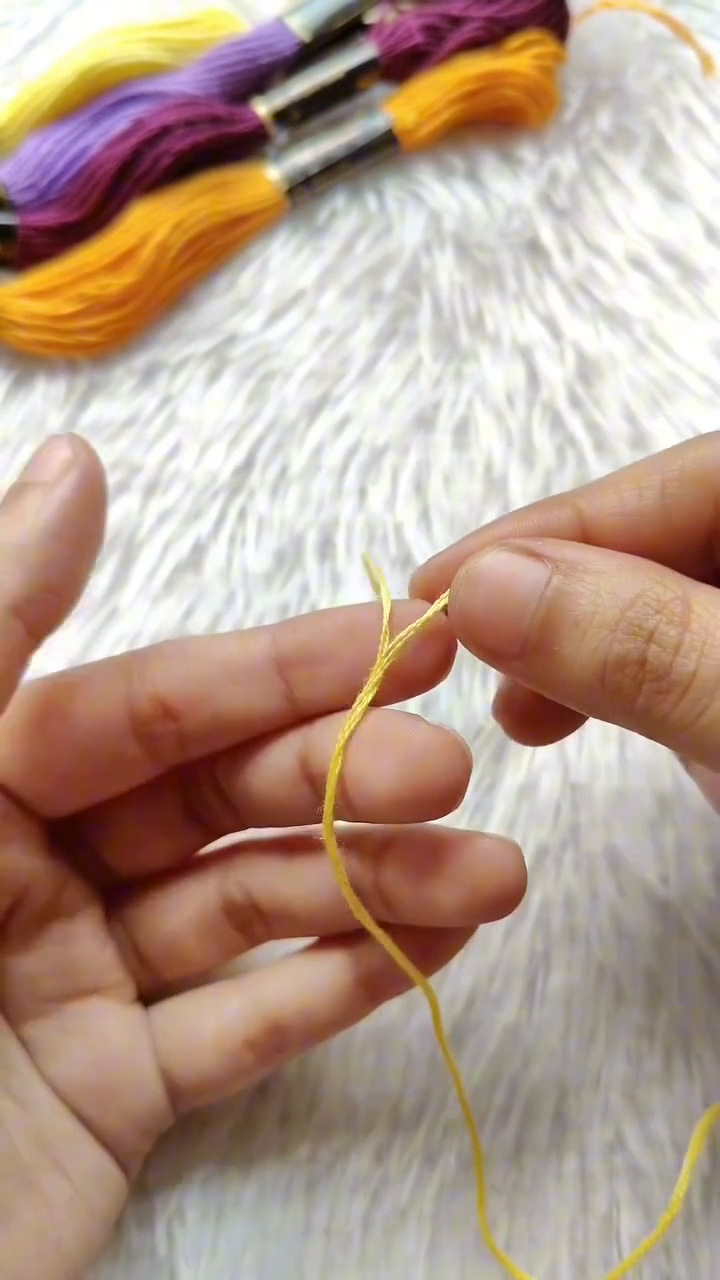
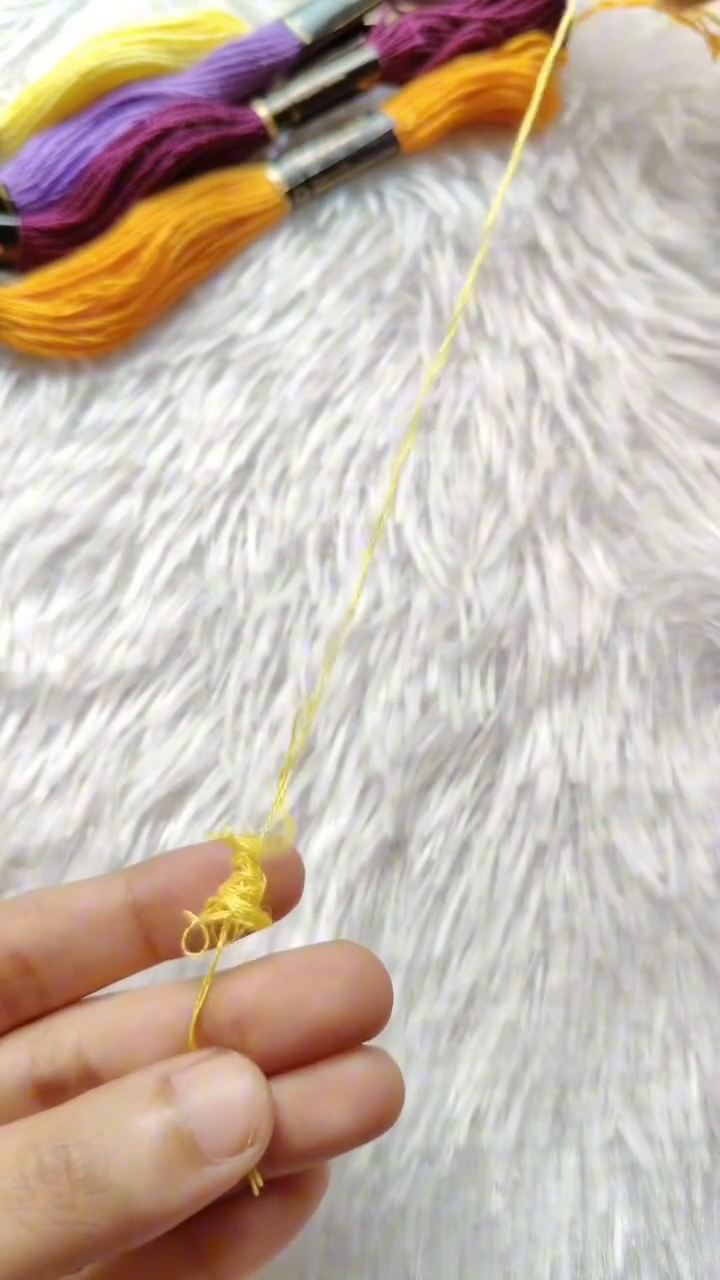
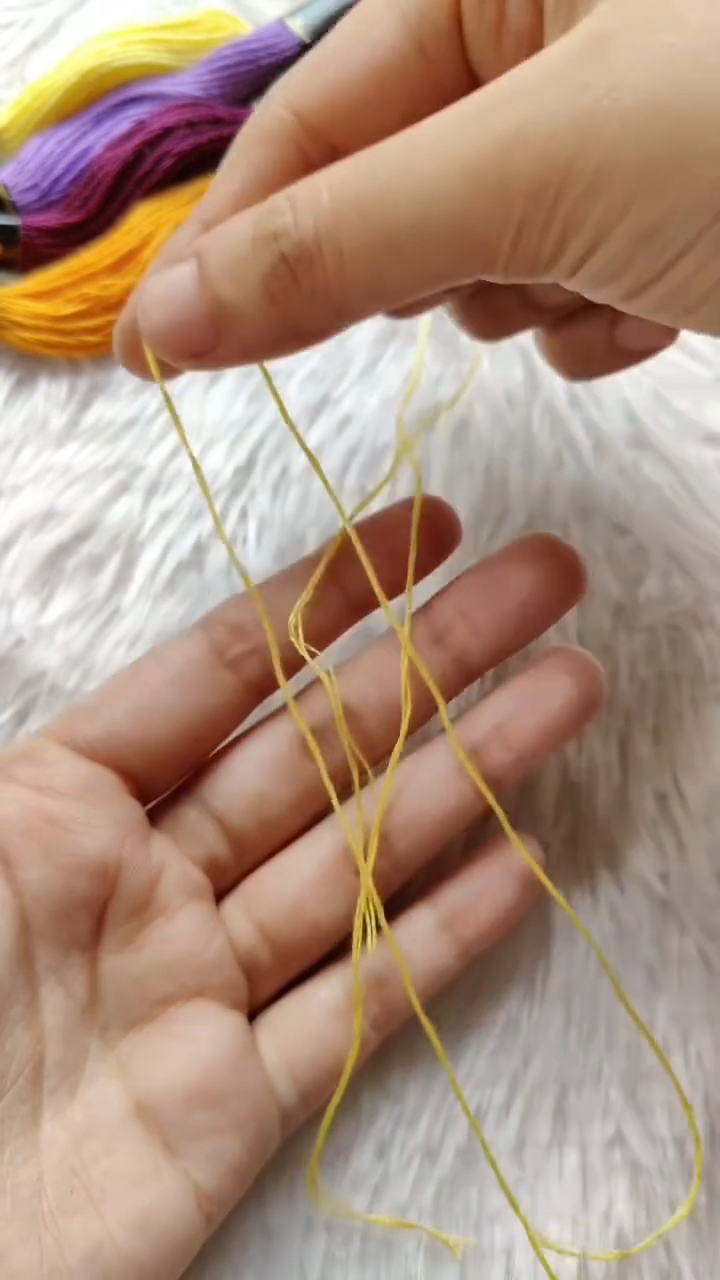
A gathered bundle does not, by itself, mean that you have made a knot. As a fine length is drawn out of a loosely held bundle, the remaining lengths can bunch near the fingers. Watch whether they can settle back into separate lengths when you ease your hold. These four photos follow one yellow-thread separation demonstration. They show the movement clearly, but they do not establish the fiber content or an exact strand count.
Start at the cut end
In the first photo, the fingers hold close to the cut end. In the second, a finer length extends upward while the thicker remainder hangs below. For six-strand cotton embroidery floss, the linked supplies guide recommends taking out one strand at a time and then laying together the number the pattern calls for. Separate the short cut length before threading the needle. The method depends on the thread being made of separable strands; it does not apply to every embroidery or sashiko thread.
Watch whether the remainder opens out
The third photo shows the yellow remainder gathered into small loops near the lower hand while the finer length extends upward. Compare this with the fourth photo, where several lengths hang more openly across the palm. A compact shape in one still is not proof of a knot. If your own thread tightens into a catch and stops sliding, stop pulling, loosen your grip, and gently open the caught loops before trying again. Pulling harder can tighten the catch.
Recombine the working strands before threading
For the two-strand practice setup in the supplies guide, withdraw one strand, let the remainder relax, and withdraw a second. Lay those two strands side by side and thread them together, leaving a short tail at the needle eye and stitching with the long end. Folding two strands in half and stitching with all four lengths would change the working strand count. The photos end with separated lengths in the hand; they do not show the final needle setup. Follow the guide for that next step.
Related resource
 Embroidery
Inspiration and guides on embroidery.
Explore Embroidery