

Why firing is not the last step for a cloisonné bangle
linlin ·
Firing fuses the enamel, but the surface still needs finishing. Traditional cloisonné work is ground and polished after the filling and firing stages. A bangle, a rigid bracelet, also has a narrow rim and an inner metal band to finish. This workshop series shows why the final shine involves more than the colored design.
Look beyond the color
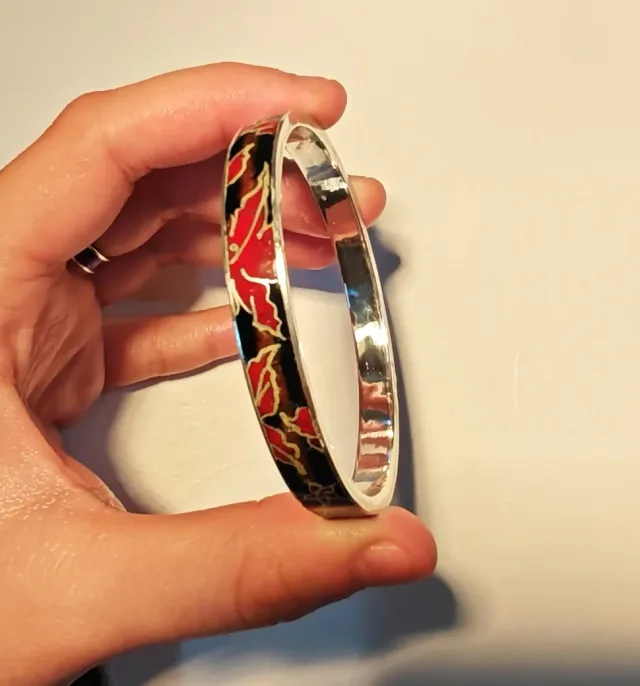
Start with the finished bangle in the first photo. Its red-and-black outer face sits between bright metal edges, and the inner band catches a broad reflection. Those are separate surfaces to look at: the color attracts attention first, while the rim and inner curve reveal another part of the finish.
See how the tool reaches the inner curve
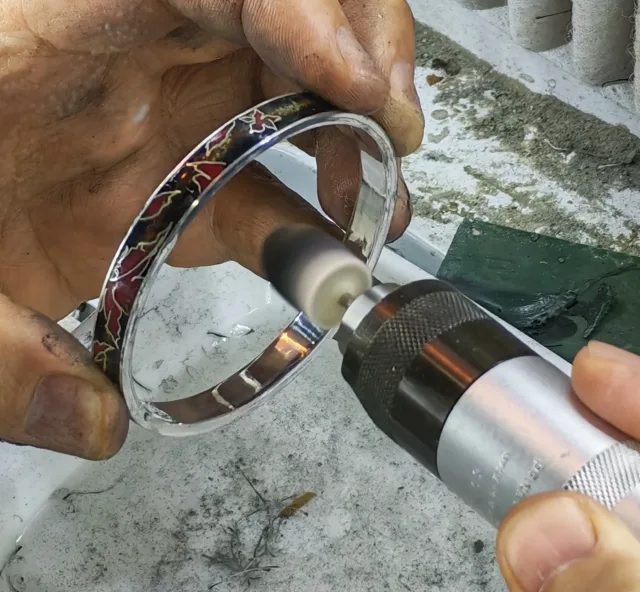
In the second photo, a small rotary head reaches inside the bangle. One hand steadies the ring while the other guides the tool against the inner band. The contact point is on the metal inside the curve. This view helps explain the practical problem: a tool must reach a narrow, curved surface without treating the whole bracelet as one flat area.
Notice the scale of the handwork
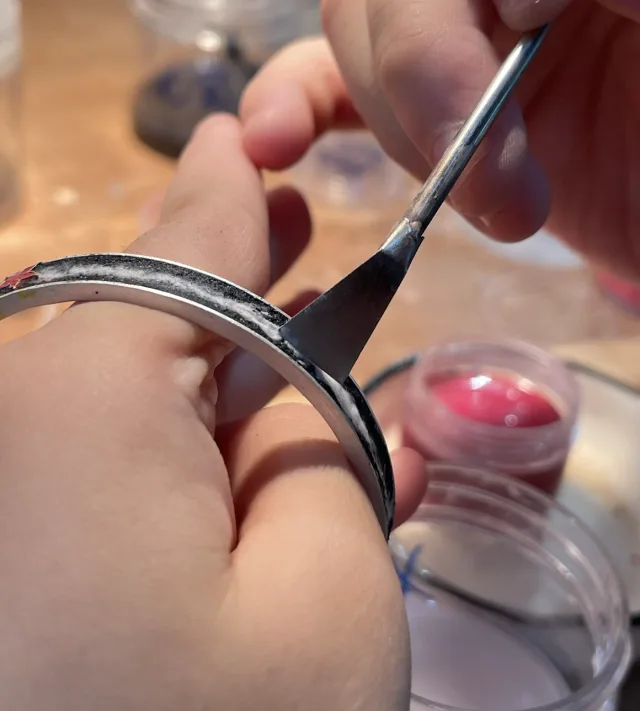
The third photo brings the edge closer. A hand braces the bangle while a slim, flat tool meets a small section of its surface. The material on the tool is not identified in the photograph, so the useful detail is the scale of the contact and how closely the ring is held. The maker describes grinding and polishing in the series, but the photos do not provide a complete operating sequence.
Follow the highlight around the bangle
When looking at a finished enamel bangle, follow the highlight from the colored face to the narrow rim and then around the inside. Compare all three instead of judging the finish by color alone. Workshop close-ups can show where the finishing work happens; the finished view shows the surfaces together.