

How Should I Handle, Display, and Clean Cloisonné Enamel?
Learn when to brush away loose dust, when to stop cleaning, and how to support a lidded cloisonné piece.
By BeenEast Editorial · Published · Reviewed
Check the surface before cleaning
On an intact decorative cloisonné piece, a clean, very soft brush can lift loose dust. Check the rim, the colored glass, and the joins in good light before you start. If you see a new crack, a lifted edge, a loose fitting, or fresh flakes, leave the area untouched and ask an objects conservator to assess it.
Sources: Canadian Conservation Institute · Basic care: Glass and ceramic objects
The colored cells contain glass enamel. The thin lines and fittings are metal, and some exposed areas may carry a thin gold finish. A cleaning method has to suit every surface it touches, including any old repairs.
Support the body and lid separately
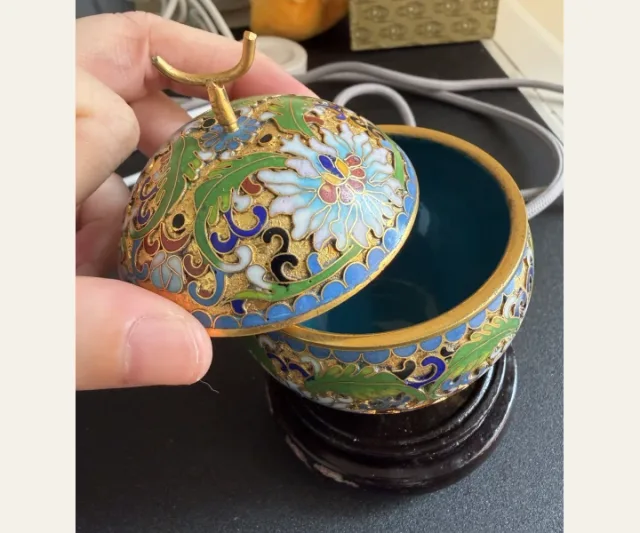
Look at the open box below. The lid lifts clear of the gold-colored rim. When moving a similar piece with a securely removable lid, set the lid down on a clean, padded surface first. Carry the body with both hands, supporting it underneath and steadying the side. Clear the route and set down a support before lifting.
Sources: Canadian Conservation Institute · Basic care: Glass and ceramic objects · Canadian Conservation Institute · Caring for metal objects
Distinguish loose dust from a surface mark
On a stable surface, sweep lightly with the soft tips of a dry brush and keep its metal collar clear of the object. Stop if a bristle catches or a fragment moves. Leave stuck material in place. Extra pressure can drag grit across the finish or catch a weakened edge.
Sources: Canadian Conservation Institute · Basic care: Glass and ceramic objects
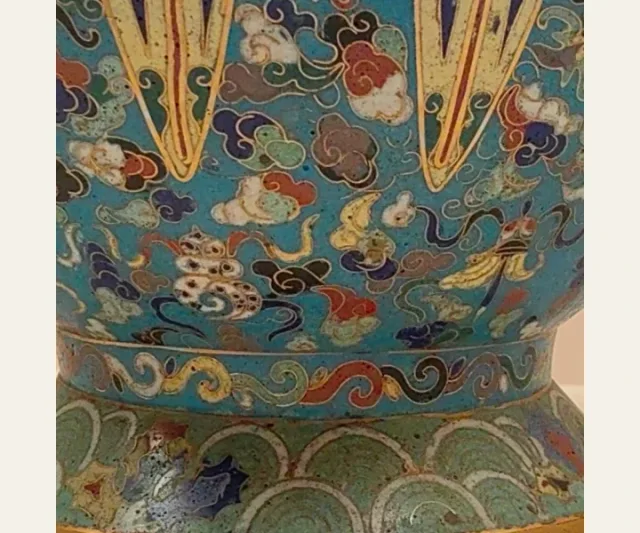
The close-up shows the location of the marks on a separate object. If you notice a mark on your own piece, take a dated overview and a close-up under similar lighting each time. A change in outline, new powder, or loose flakes gives a conservator more to work with than the color of the mark alone. Keep any detached fragments with the object for assessment.
Check before washing or polishing
Metal polish removes a little of the surface each time. At a gilded rim, repeated polishing can wear through the thin gold finish, and paste can collect beside the wire. For a decorative piece with no care instructions, leave wet cleaning and polishing for a conservator. For a modern piece, ask the maker what cleaning method they specify for that finished object and its fittings.
Sources: Canadian Conservation Institute · Caring for metal objects · Canadian Conservation Institute · Basic care: Glass and ceramic objects
Use the piece for display unless its maker or documentation confirms that the finished object is suitable for holding water or serving food, as applicable. A bowl shape or a “lead-free” enamel label alone does not establish the intended use.
Sources: Schlaifer’s Enameling · Safety and Food Contact Surfaces
Check what touches the shelf
The underside of the same box carries a flower pattern. Before setting a piece down, look for the areas that actually touch its stand or shelf. Choose a clean, level support with enough room to lift the piece clear. Lift it to reposition it so decorated contact points do not drag across the shelf.
Sources: Canadian Conservation Institute · Basic care: Glass and ceramic objects · Canadian Conservation Institute · Caring for metal objects
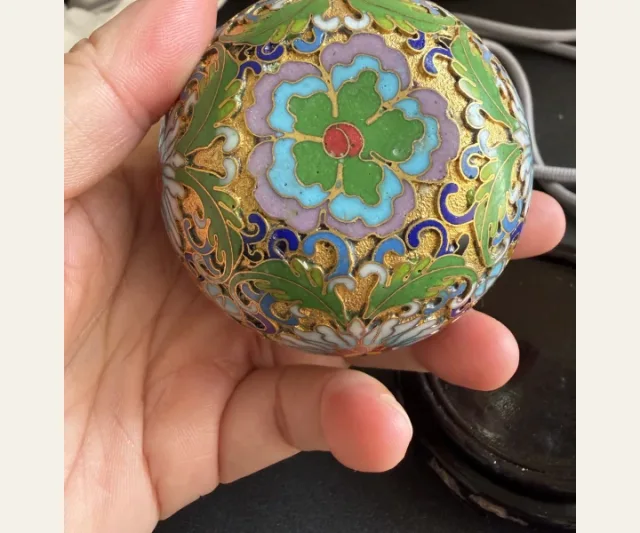
Keep the display away from splashes and abrupt changes in temperature or humidity. Space neighboring pieces so you can lift one without striking another. On this box, that clearance makes room for your hands at the decorated base.
Continue reading
References
Canadian Conservation Institute · Caring for metal objects
Canadian Conservation Institute · Basic care: Glass and ceramic objects