

How Is Cloisonné Enamel Made? From Metal Body to Gilding
Follow copper-body cloisonné from shaping to gilding, and see why enamel often needs more than one filling and firing.
By BeenEast Editorial · Published · Reviewed
From a copper body to a finished surface
A maker shapes a copper body, bends narrow metal strips into a pattern, and fixes them in place to make small cells. The cells take colored glass enamel. Filling and firing can take several rounds because the enamel settles as it fuses. Once the cells have enough glass, the maker grinds the surface level, polishes it, and may gild exposed metal.
Sources: China Intangible Cultural Heritage · Beijing Jingtailan · The Metropolitan Museum of Art · Chinese Cloisonné
The workshop photos show individual operations on different pieces. The drawings explain how enamel is placed and how its level changes. The last photo shows a finished incense burner from a separate example.
Shape the copper body
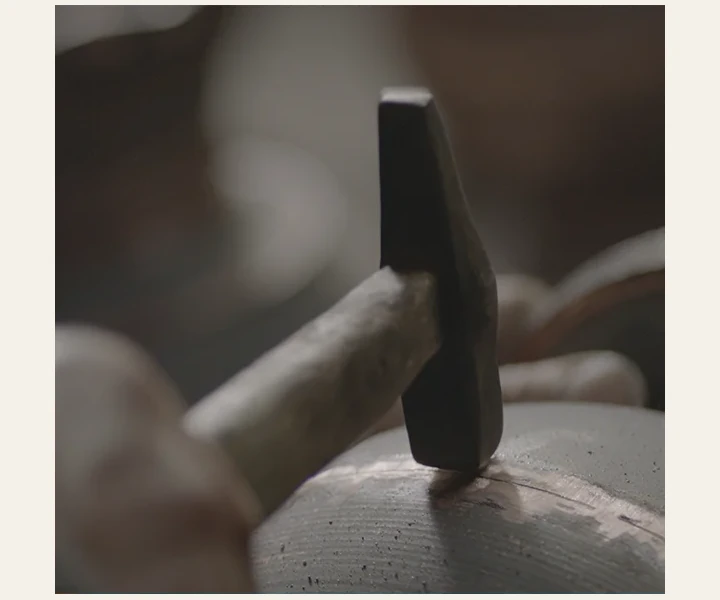
The copper body gives the piece its shape. Look where the hammer meets the curved metal. On a vessel, the shoulder turns in toward the neck. A strip that will sit there has to follow that curve as well as the drawn pattern.
Sources: Victoria and Albert Museum · A guide to metalworking techniques
Bend the strips that divide the colors
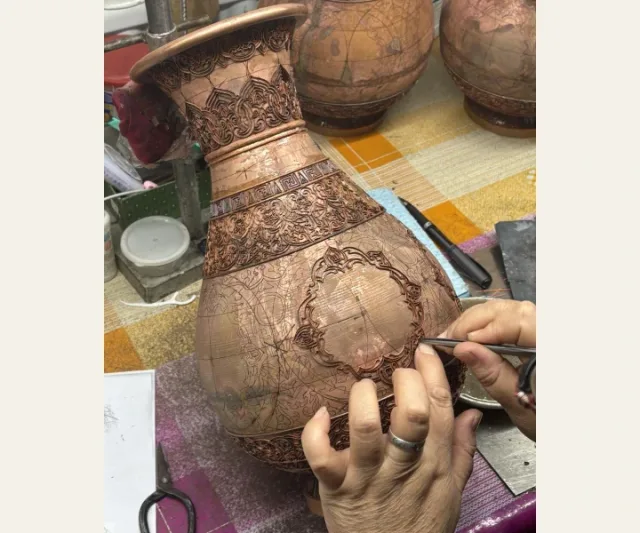
The maker stands a narrow copper strip on edge. Its side makes a wall for the enamel, and its thin top can show as a line in the finished design. On the unfinished vase, follow the loop around the medallion and the smaller curls beside it. Each closed loop makes a space that can take its own color.
Sources: China Intangible Cultural Heritage · Beijing Jingtailan · The Metropolitan Museum of Art · Chinese Cloisonné
Fit and secure the wire
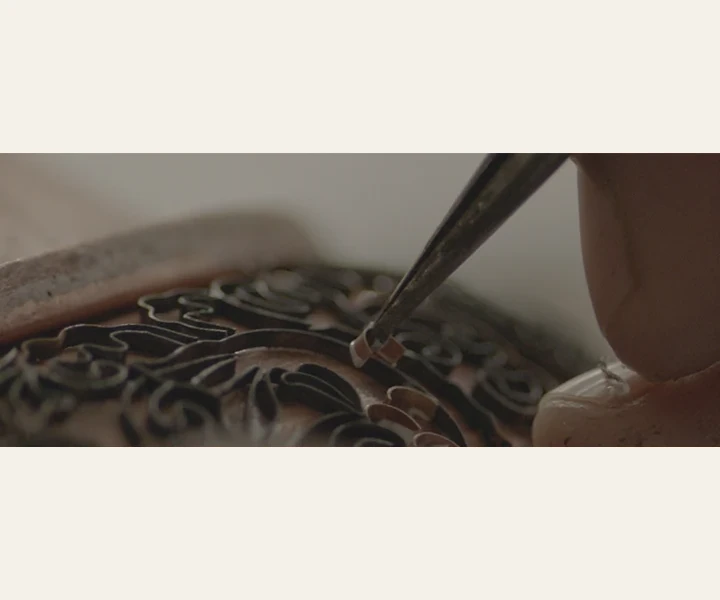
Tweezers place the bent strip where it belongs. Before adding color, the maker checks that the strip sits against the surface and that joins intended to close a cell meet. A loose strip can shift when wet enamel is placed beside it.
The Met describes pasted or soldered partitions in Chinese cloisonné. A small pendant can use another sequence. In Woodrow Carpenter’s example, the wire is secured in a previously fired base coat before the colored enamel goes in.
Sources: The Metropolitan Museum of Art · Chinese Cloisonné · Woodrow W. Carpenter · Intro to Enameling: Cloisonné Pendant (Glass on Metal / Ganoksin)
Pack wet enamel into the cells
Colored enamel starts as fine glass grains. In wet packing, a small tool or the tip of a brush carries the damp grains into a cell. Place them along the inside edge as well as in the middle. If liquid runs over a partition, it can carry grains into the next color.
Sources: Woodrow W. Carpenter · Intro to Enameling: Cloisonné Pendant (Glass on Metal / Ganoksin)
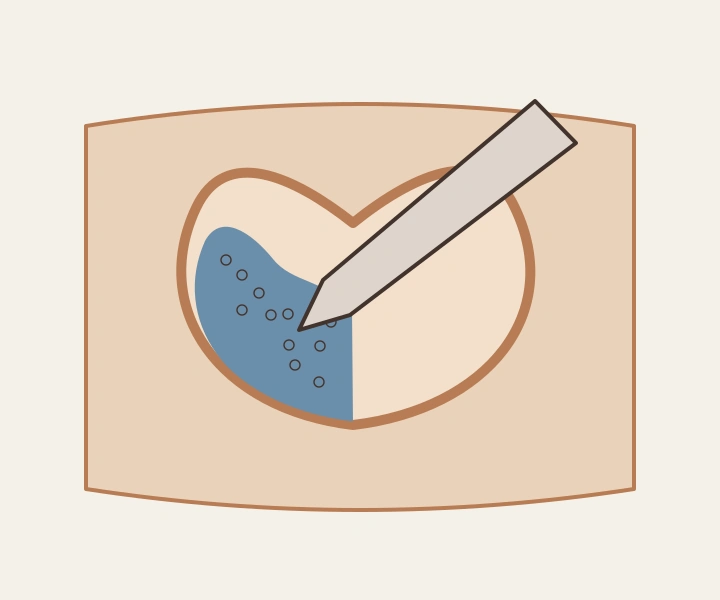
Before firing, look for bare spots at the edges and for grains that have strayed into another cell. The wet enamel then dries before it goes into the kiln.
Sources: Woodrow W. Carpenter · Intro to Enameling: Cloisonné Pendant (Glass on Metal / Ganoksin)
Fire, cool, and check the enamel level
Heat fuses the glass grains. As they join, the spaces between grains close and the enamel takes up less room. A cell that looked full before firing can sit below the wire after it cools. Use the top of the wire as a reference when you compare the two stages in the drawing.
Sources: Jean Tudor · The Art of Enameling: Cloisonné, student working outline · The Metropolitan Museum of Art · Chinese Cloisonné
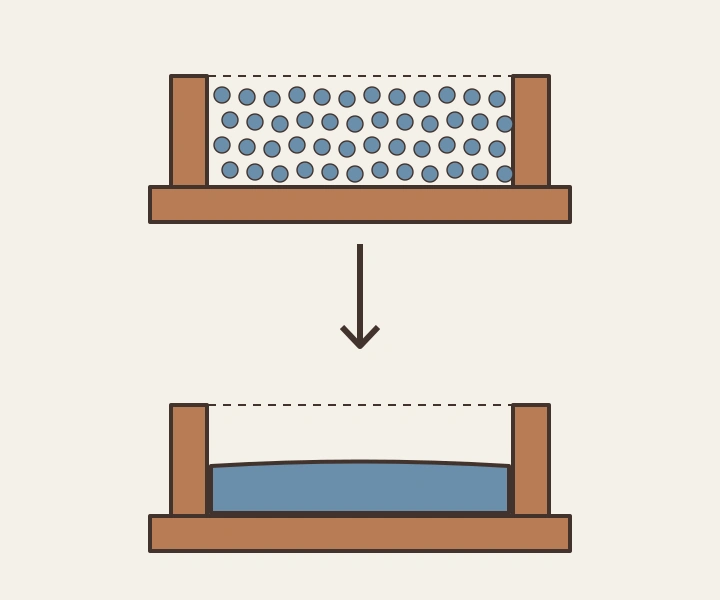
Check the cooled piece before deciding what to do next. An intact cell that is simply low can take another layer and another firing. A crack calls for a separate check before adding more glass. Once there is enough sound enamel to level against the wire, the piece can move on to grinding.
Sources: The Metropolitan Museum of Art · Chinese Cloisonné · Jean Tudor · The Art of Enameling: Cloisonné, student working outline
Grind level, then polish
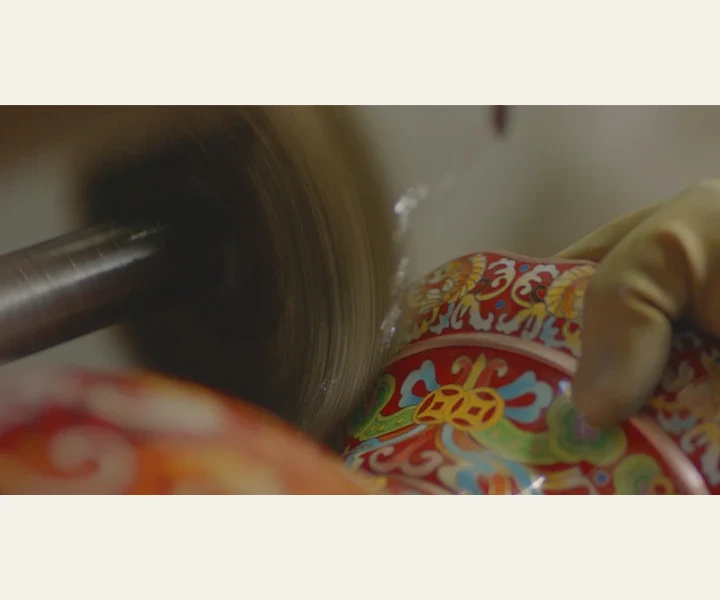
Grinding takes down high spots and reveals the top edges of the partitions. If a cell is still too low, grinding the glass around it only removes more material. A refill builds up the low area. Once the surface is level, finer finishing removes the scratches left by leveling.
Sources: The Metropolitan Museum of Art · Chinese Cloisonné · Jean Tudor · The Art of Enameling: Cloisonné, student working outline
Gild exposed metal
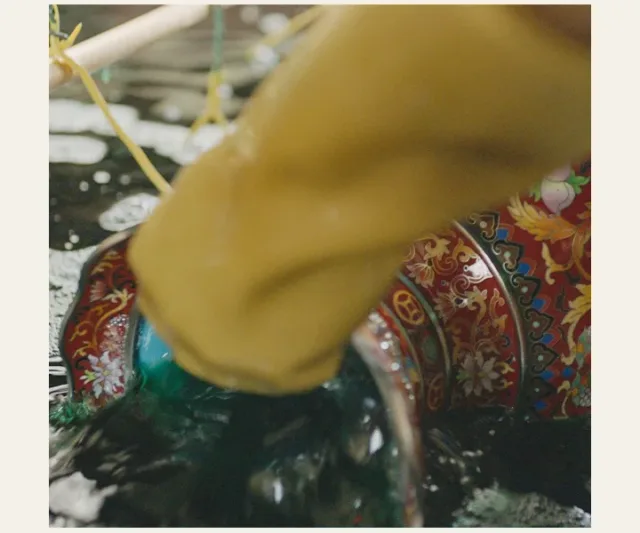
Gilding adds a thin gold layer to exposed metal. On Chinese cloisonné, the Met notes gilding on areas such as rims, interiors, and bases. The color inside the cells comes from fired glass. At a rim, you can see where the glass decoration ends and the metal edge begins.
Sources: The Metropolitan Museum of Art · Chinese Cloisonné
Read the finished piece at the rim
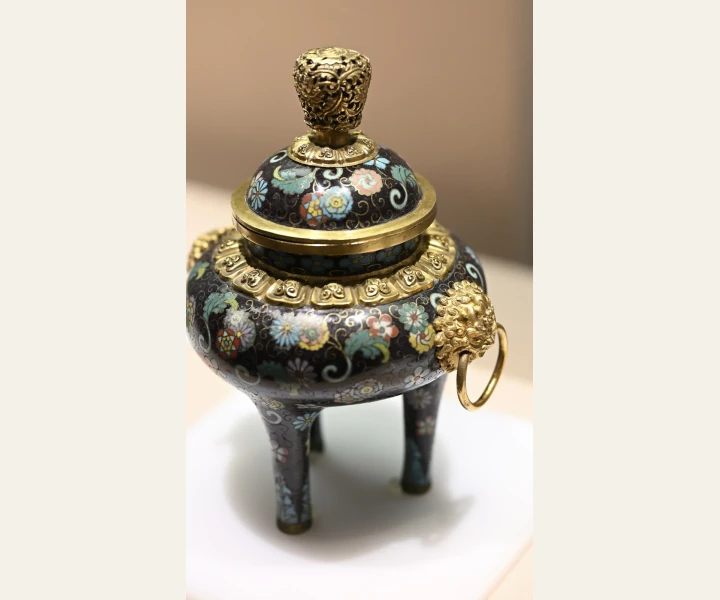
On this separate incense burner, the colored pattern follows the rounded body. Look just below the lid for the continuous metal rim, then look for the much finer lines between the colored areas. The broad rim follows the opening of the vessel. The thin lines show where the glass was held in separate cells.
Continue reading
References
China Intangible Cultural Heritage · Beijing Jingtailan
The Metropolitan Museum of Art · Chinese Cloisonné
Victoria and Albert Museum · A guide to metalworking techniques
Woodrow W. Carpenter · Intro to Enameling: Cloisonné Pendant (Glass on Metal / Ganoksin)
Jean Tudor · The Art of Enameling: Cloisonné, student working outline