

Cloisonné, Champlevé, and Cold Enamel: What Is the Difference?
Compare how metal strips or recesses make the cells, how glass or resin sets, and what a finished photo can tell you.
By BeenEast Editorial · Published · Reviewed
Two questions to ask about any piece
Cloisonné and champlevé describe how a maker forms the spaces for enamel. In cloisonné, added metal strips divide the surface into cells. In champlevé, the cells are recesses in the metal itself. Both can use glass enamel fused by heat. “Cold enamel” is a trade label for a fill or coating. It can refer to a resin that hardens by curing, and the label leaves the shape of the cells open.
Sources: V&A · A guide to metalworking techniques · CONIEX · ESMALTEX cold enamels
Cloisonné builds the walls above the base
On the unfinished vessel, dense scrolls and bands rise above the bare lower body. You can see where the pattern ends and the metal surface continues. A narrow strip stands on edge. Its side contains the fill, and its top can remain visible as a fine line between colors.

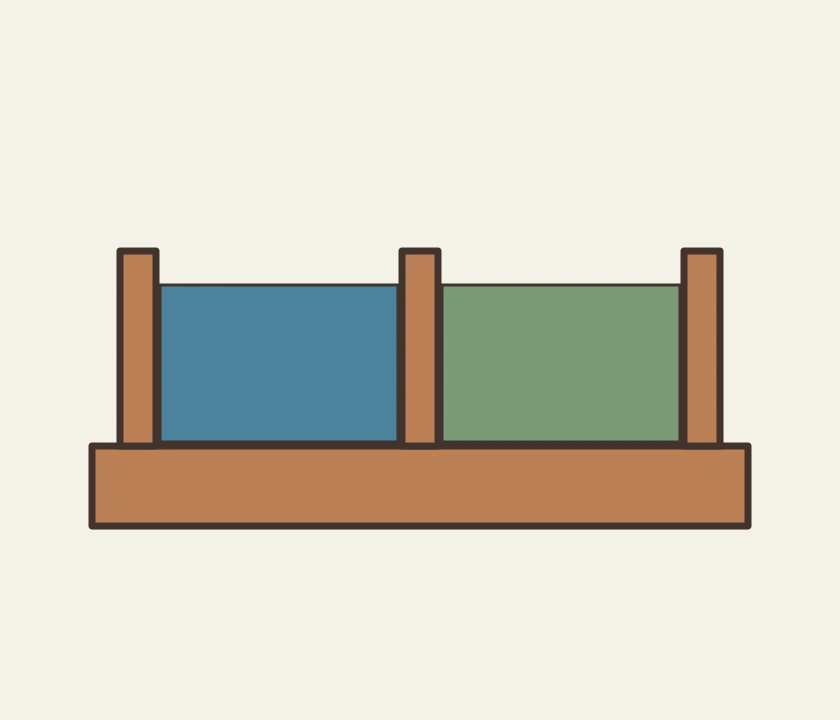
The cross section below isolates two cells. The dark seams mark where added strips meet the base. They show the relationship between the parts. The exact attachment method depends on the workshop and object.
Sources: V&A · A guide to metalworking techniques
Champlevé sets the glass into the metal
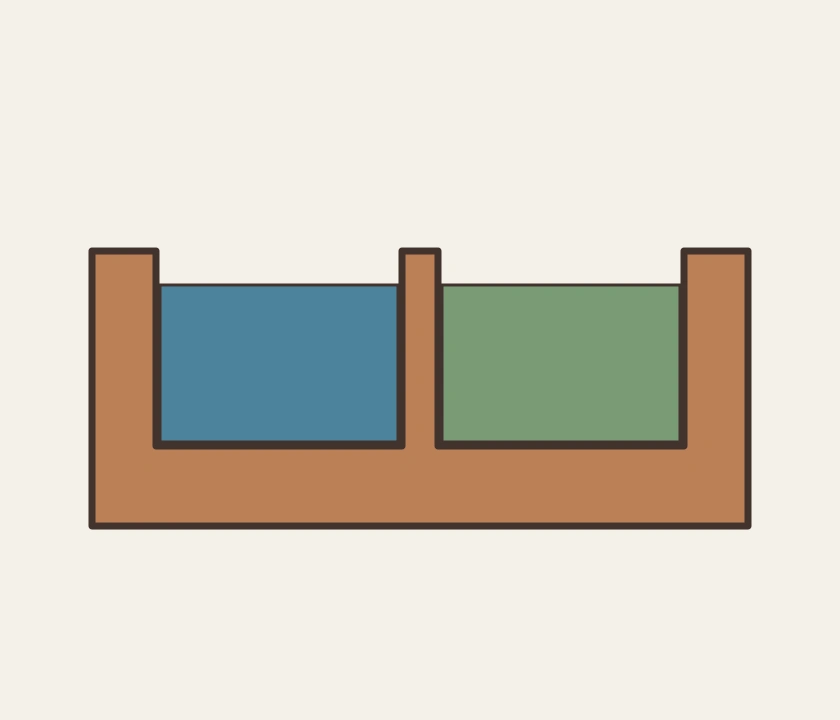
Here the raised divider and the floor of each recess are part of one metal body. Cutting, etching, or casting can produce the recesses. Once glass enamel fills them and the surface is finished, the remaining metal can outline the colors much like a cloisonné partition does. A photo of the finished face may show that outline clearly. A process view or an object record can tell you how it was made.
Sources: V&A · A guide to metalworking techniques
A resin fill can use the same walls
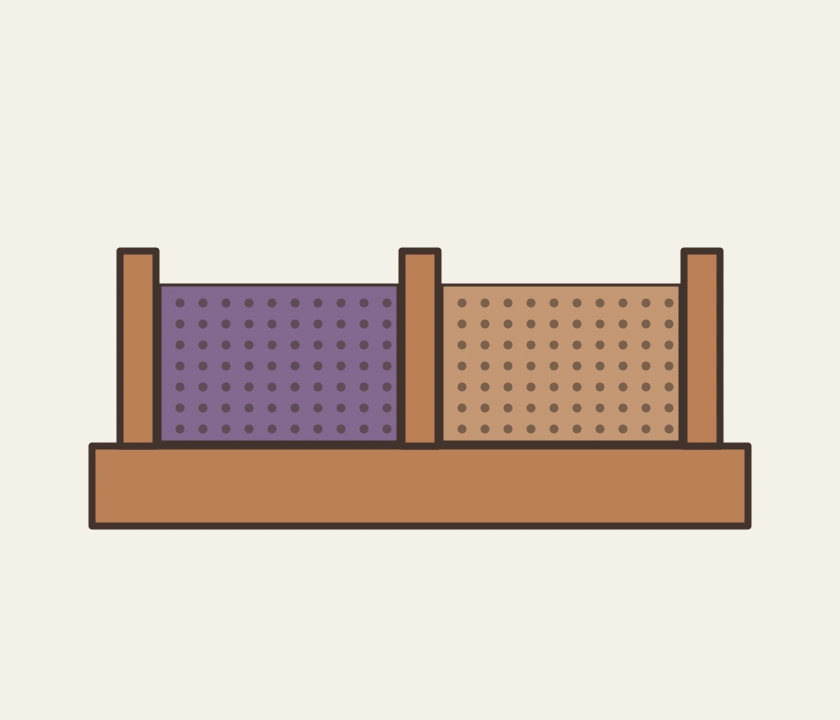
The last cross section uses the same added walls as the cloisonné drawing. Only the fill has changed. In this example, a colored epoxy hardens by curing. Glass enamel hardens into a glass surface after fusing in a firing. CONIEX describes its ESMALTEX cold enamels as two-part epoxy resins. Other products may use the label differently, so ask for the material name and how it hardens.
Sources: CONIEX · ESMALTEX cold enamels · Guild of Enamellers · What is vitreous enamelling?
What to check in a listing or class
| Example | What forms the boundary | How the fill sets |
|---|---|---|
| Cloisonné enamel | Added metal strips | Glass fuses in a firing |
| Champlevé enamel | Recesses in the metal body | Glass fuses in a firing |
| Wire with a resin fill | Added strips in this example | Resin hardens by curing |
If a listing says “handwired enamel,” ask what was placed between the wires and how it hardened. A work-in-progress photo may answer where the wall came from. A maker’s description or materials sheet can answer what the colored fill is. In a class, a prepared base can give you practice placing color. Shaping the strips, firing glass, or examining a fired sample teaches a different part of the process. Ask which of those steps you will do yourself.
Continue reading
References
V&A · A guide to metalworking techniques