

What a knot leaves on blue-dyed cloth
yincheng ·
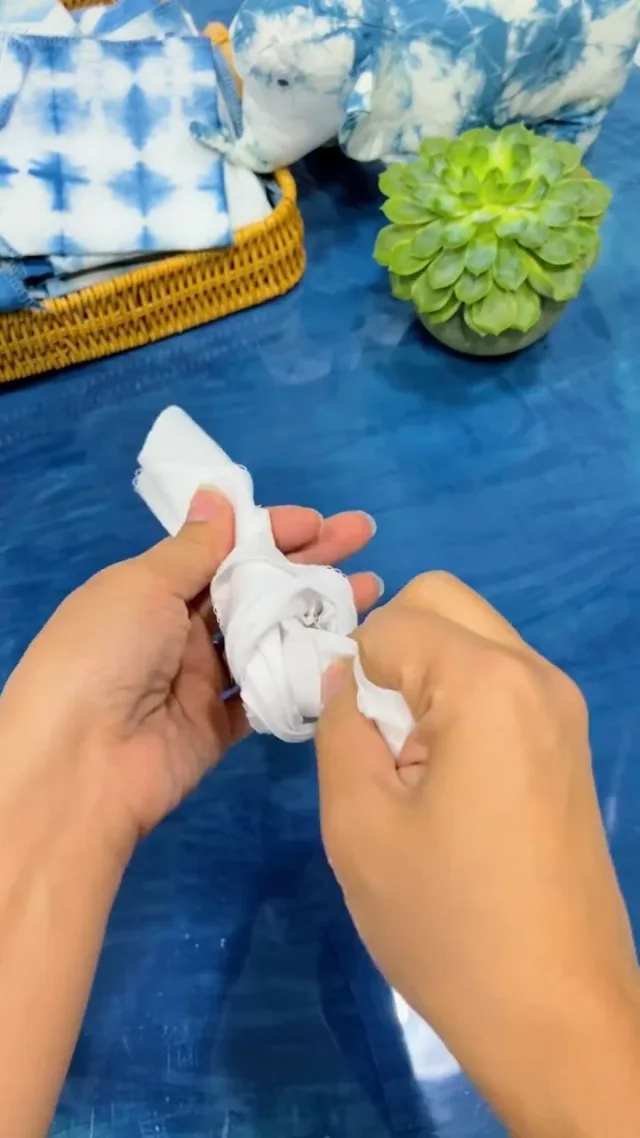
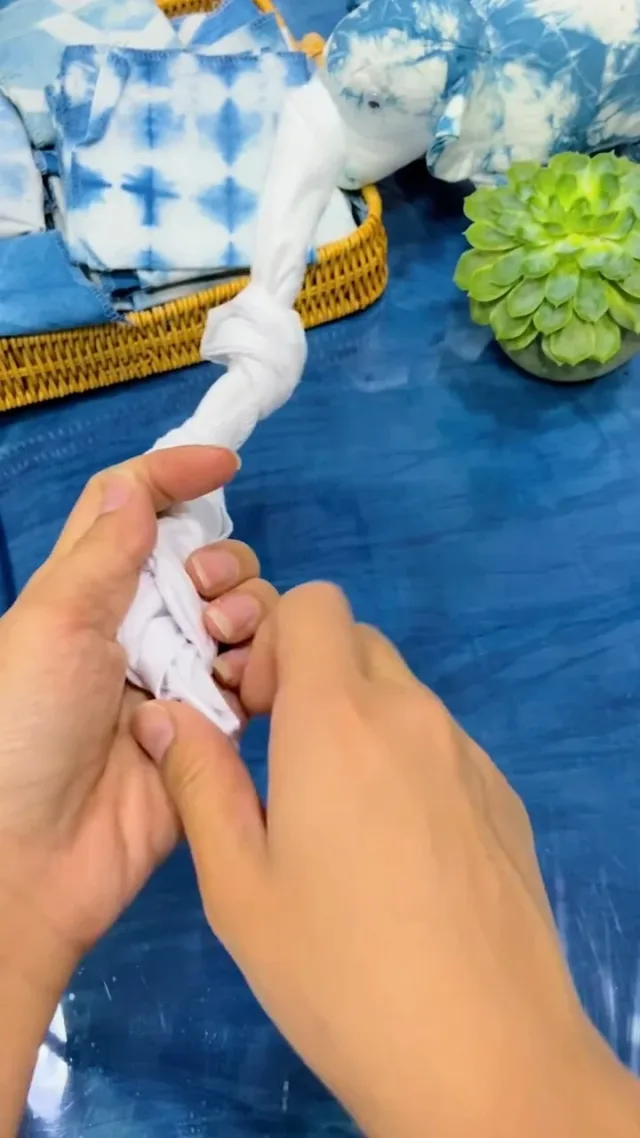
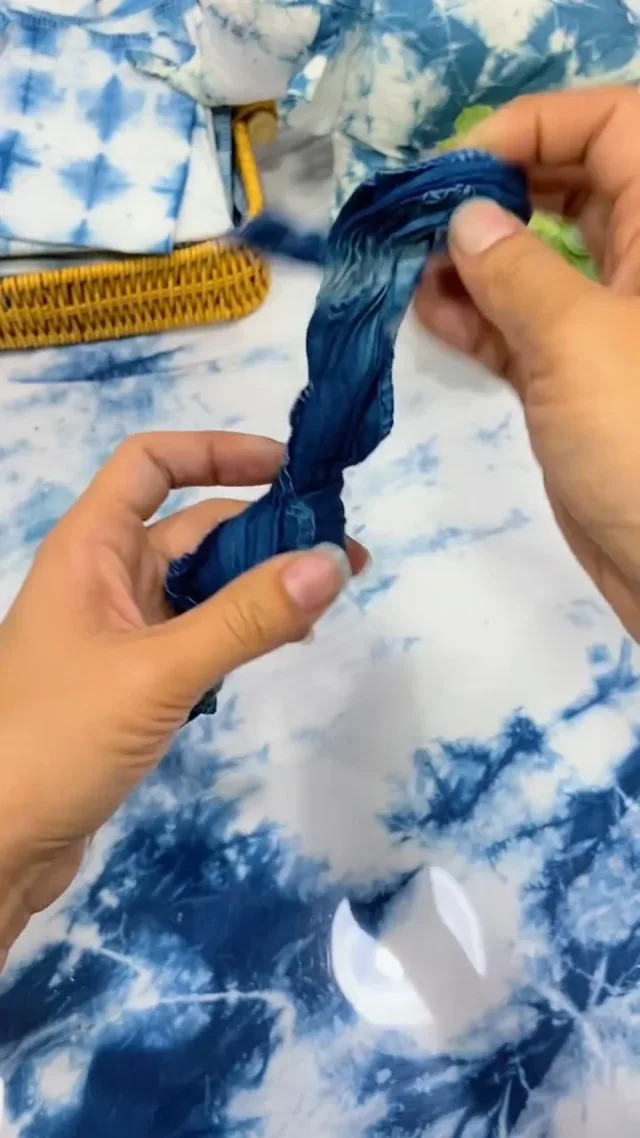
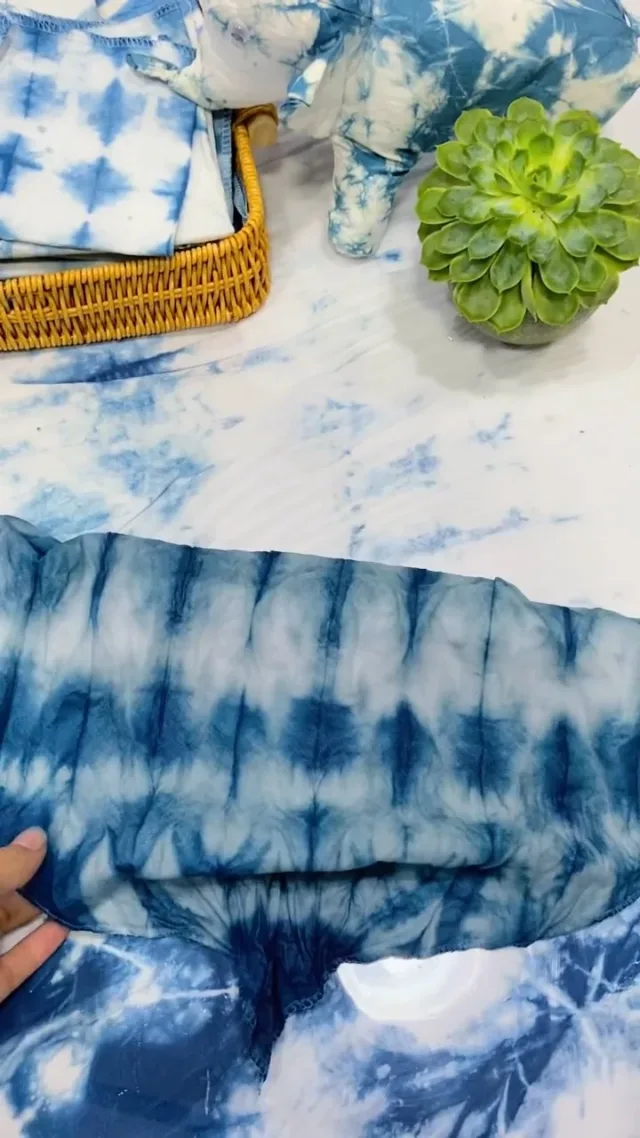
Tying folded cloth brings its layers together so less dye can reach the squeezed areas. That is the idea behind resist dyeing. In this sequence, one folded cloth starts out white, turns dark blue, and opens to reveal a row of pale areas between darker lines.
Find the knots in the folded cloth
Look at where the fabric crosses itself in the first frame. The maker ties the folded cloth into a knot. Farther along the strip, the second frame shows the maker working on another knot. The cloth between the knots is still folded, so only a small part of the surface is visible.
Watch the blue knot loosen
After dyeing, the folded strip looks dark blue from the outside. Watch the fingers pull one end of the cloth through a knot. The tight bundle starts to lengthen before the layers are pulled apart.
Look across the cloth as it opens
As the cloth opens, look across the width instead of following the narrow strip. Pale areas repeat between dark blue lines that reach into the folds. If you document your own sample, take one picture while it is still tied and another as you open it. The two views make it easier to see which parts were gathered and how the pattern reads across the cloth.