

How Do You Choose an Embroidered Piece?
Choose an embroidered piece for the way you will use it. Learn what to check on a jacket or a display piece, and how embroidery differs from woven Song brocade.
By BeenEast Editorial · Published · Reviewed
Start with how you will use the piece
Choose by use first. On a garment you will wear often, check the cloth and stitches where it bends or rubs, then ask how to clean the whole garment. For a piece you will display, check how the fabric is supported and which sides you can see. In both cases, ask how the pattern was made before paying for a particular technique.
Check where a garment bends and rubs
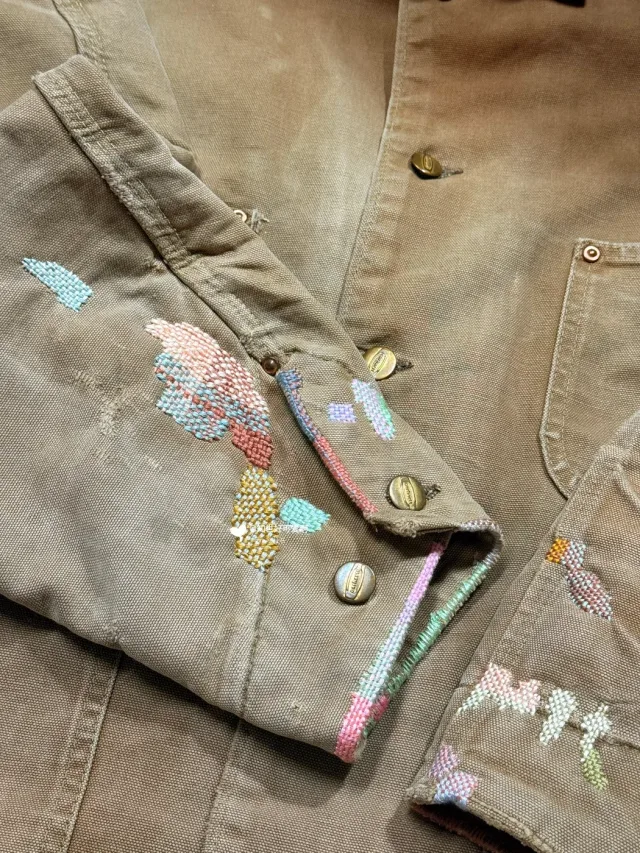
On this tan jacket, small motifs sit on the sleeves and narrow bands follow both cuff openings. Cuffs bend at the wrist and brush against surfaces, so ask for a current close-up with the cuff open if you plan to wear the garment often.
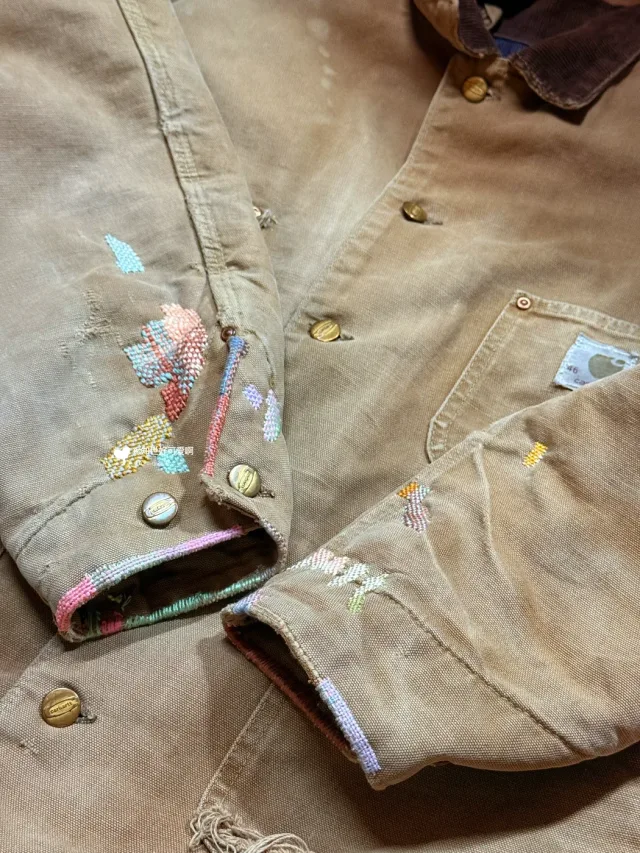
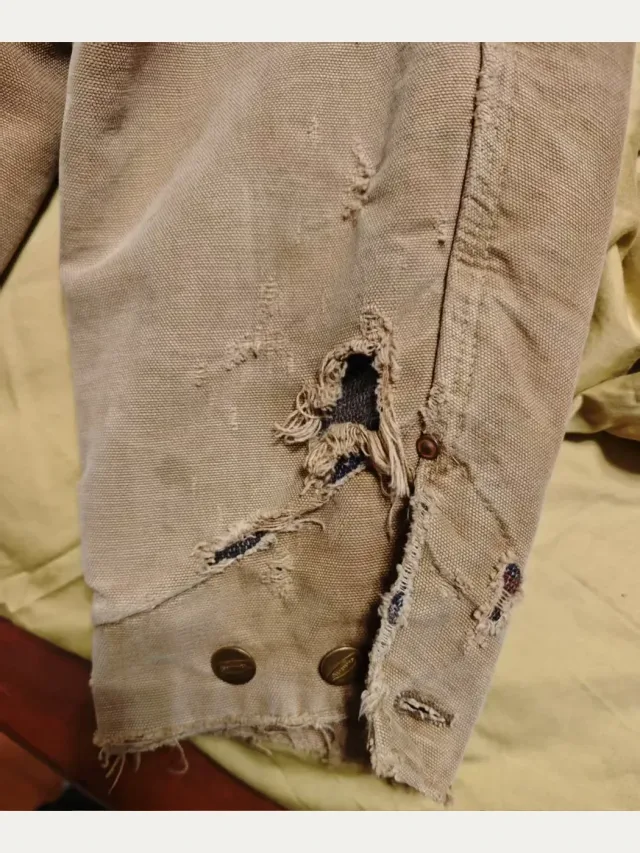
The repair record shows the same jacket before and after stitching. The early photo shows torn cloth near the snaps; the finished view shows colored stitches beside the opening. On a repaired garment, look for gaps in the cloth next to the stitches and loose thread near the fastening. If a lining covers the inside, ask whether a patch or other support sits behind the repair.
Sources: BeenEast · An embroidered cuff repair
For display, check the mount and both sides
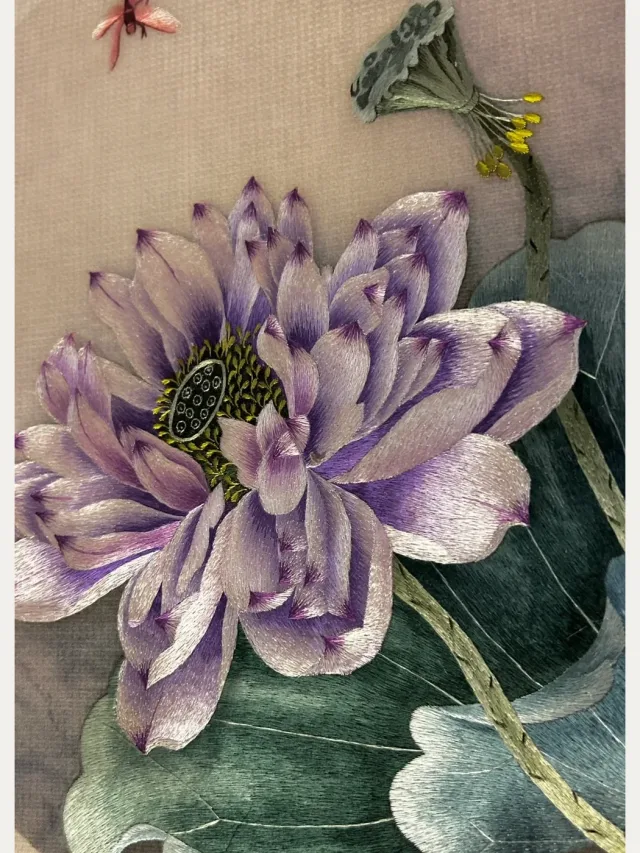
For a framed embroidery, ask for a straight-on photo that includes the whole frame. Look for ripples or sagging near the edges, and ask how the fabric is held in place. If the seller describes a piece as double-sided, ask to see both sides and check whether the stand or frame lets you view them. On the double-sided Su embroidery below, the lavender stitches show how one side of the lotus is shaded; the maker’s other view shows the same flower in coral.
Sources: BeenEast · Two sides of an embroidered lotus
Ask whether the pattern is stitched or woven
Su embroidery uses stitches on a ground fabric. Song brocade, or Songjin, is a Chinese weaving tradition in which threads form the pattern as the cloth is woven. A piece can combine both. If a description mentions Song brocade and embroidery, ask: “Which parts are woven into the fabric, and which parts are stitched on afterward? What are the fabric and decorative threads made of?” A clear answer tells you what you are paying for.
Sources: China National Silk Museum · Song brocade and traditional silk crafts · China Intangible Cultural Heritage · Song brocade weaving
Confirm care before you choose
For a piece you will wear, ask for the care label and whether the embroidery, lining, or repair changes how the whole piece can be cleaned. If you want to see both sides of a display piece, ask for a photo of its current mount from the back. A jacket with a sound-looking cuff still needs care you can live with, and a double-sided embroidery is easier to enjoy in a mount that lets you see both faces.
Continue reading
References
China National Silk Museum · Song brocade and traditional silk crafts
China Intangible Cultural Heritage · Song brocade weaving
BeenEast · An embroidered cuff repair