

What Is Hand Embroidery? How to Read the Stitches
See how stitches form an edge on an embroidered butterfly and give a green leaf the appearance of a curl.
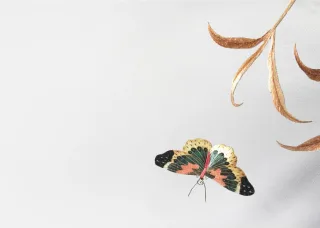
Explore how stitches turn thread and fabric into outlines, textures, and images.
8 guides
See how stitches form an edge on an embroidered butterfly and give a green leaf the appearance of a curl.
For your first stitched outline, gather woven cotton, six-strand cotton floss, a sharp embroidery needle, a small hoop, and thread snips or sharp scissors. Use two strands to test the setup on a scrap.
Learn how sashiko uses running stitches and spacing to reinforce cloth and draw patterns, then practice a simple crossing on a cotton scrap.
Choose an embroidered piece for the way you will use it. Learn what to check on a jacket or a display piece, and how embroidery differs from woven Song brocade.
To backstitch a continuous outline, bring the needle up ahead of the last stitch, then take it down through the same hole at that stitch’s forward end. Use shorter stitches around tight bends.
Set the angle with one straight stitch across the middle of the leaf. Lay the next stitches beside it, close enough to cover the fabric, and work toward the tip. Return to the middle and fill toward the base at the same angle.
Bring the needle up and down through woven cotton to make three even dashes. Lay the cloth flat, then compare the stitch lengths and the gaps between them. Then use shorter stitches and gaps where a curve turns sharply.
A small, sturdy hoop piece can hang in a dim, dry room. Store fragile or heavy embroidery flat, and leave room above raised stitches if you frame a piece.