

Does every sashiko crossing need an open center?
max ·
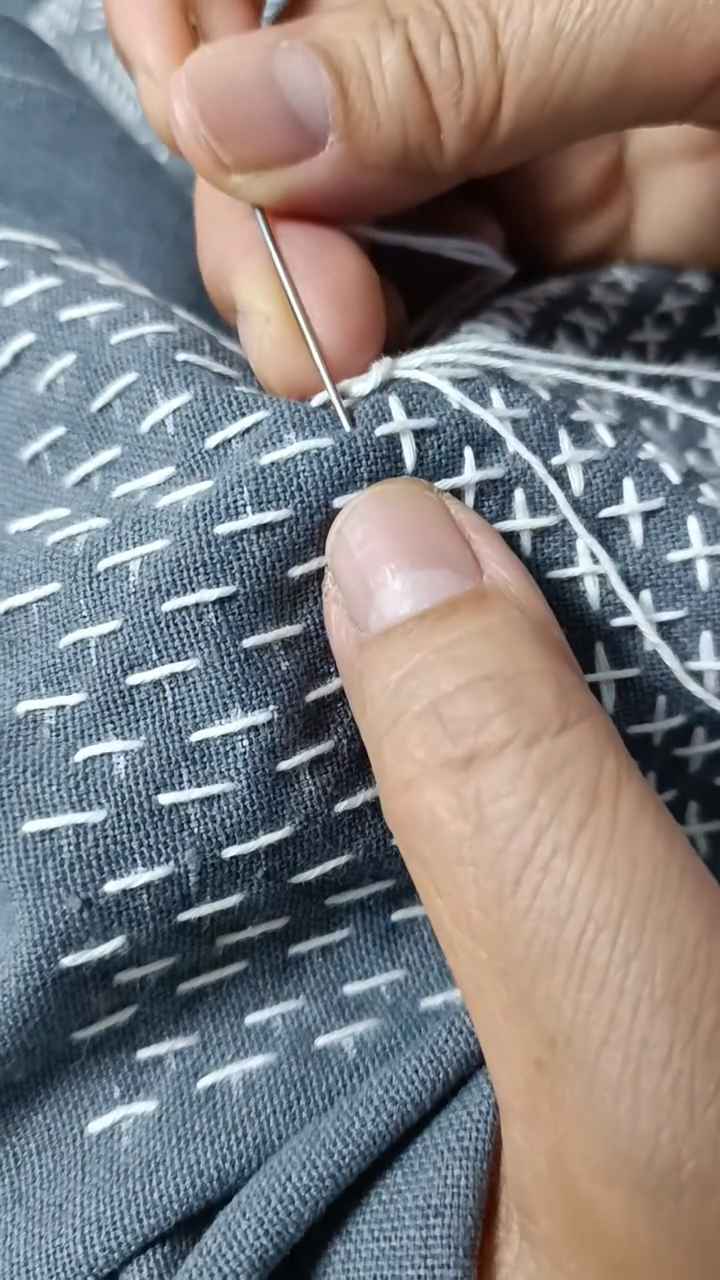
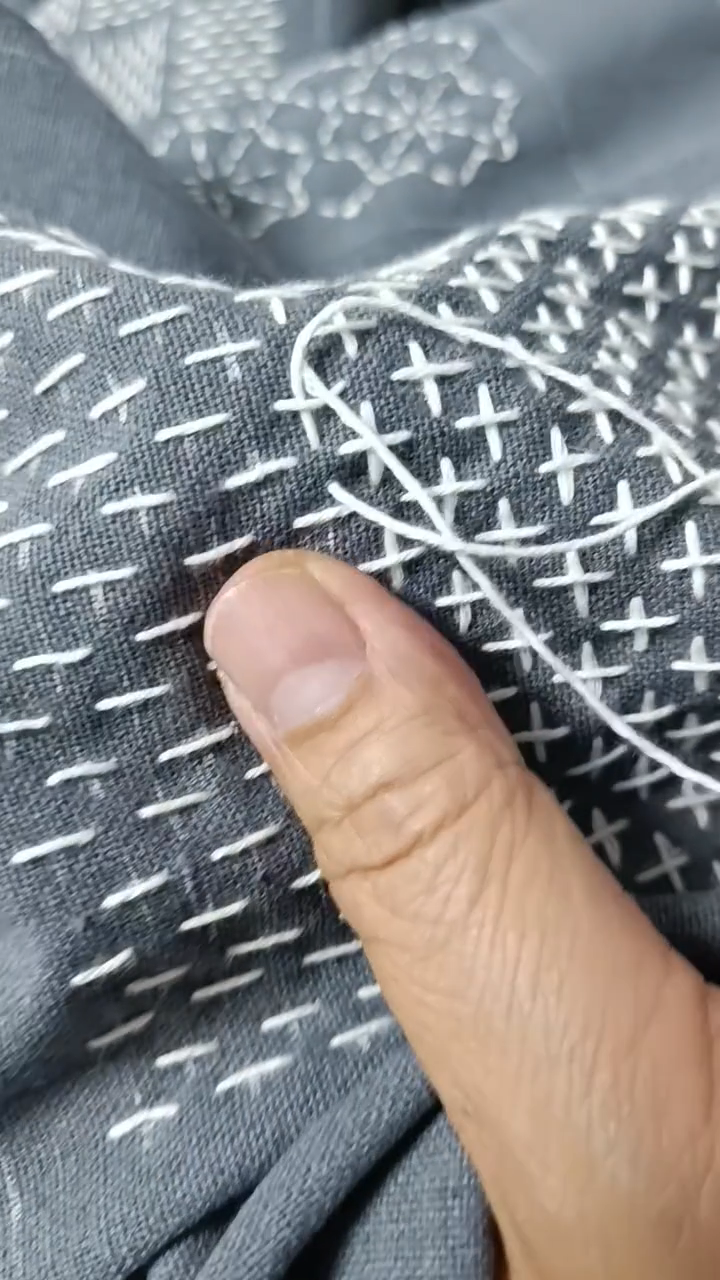
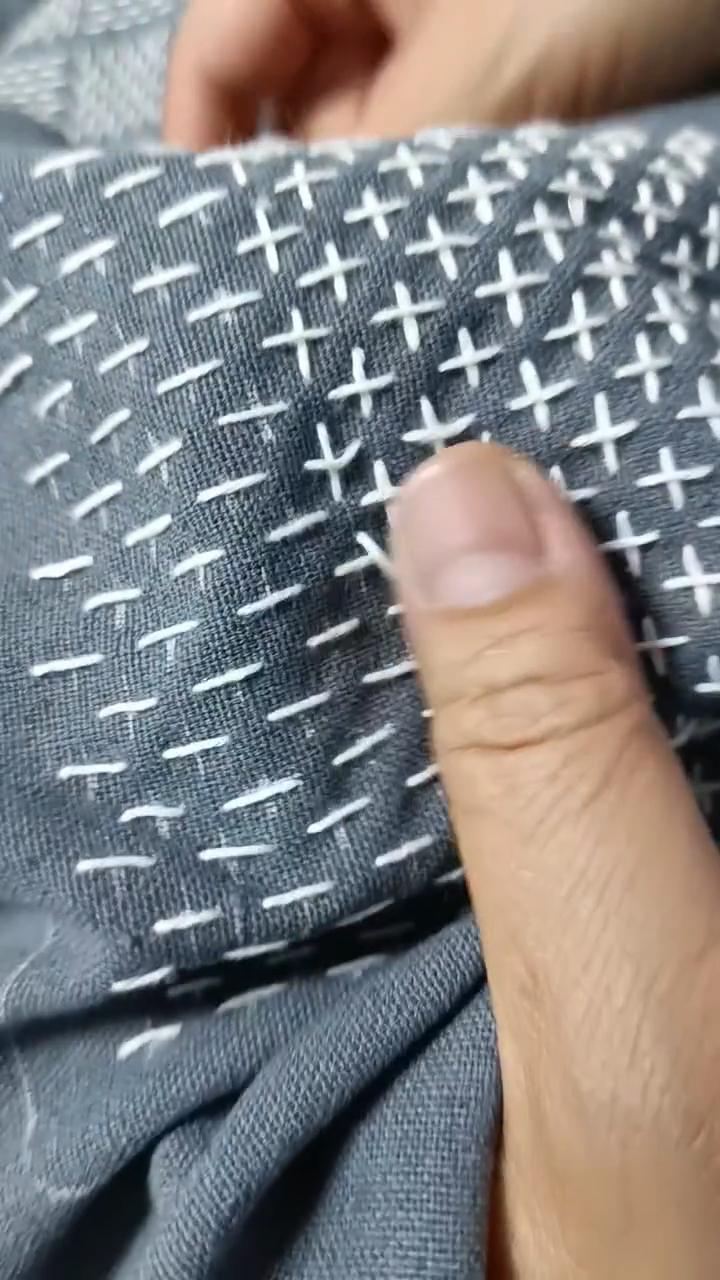
The open center in our sashiko guide is a specific practice arrangement. These white cross motifs show a different arrangement: thread occupies the middle where the two bars meet. Sashiko uses running stitches to make patterns, and crossing treatments can vary. Follow the arrangement for the pattern you are learning rather than treating every filled center as a mistake. These three photos come from one short hand-stitching demonstration on dark woven cloth.
Locate the bars before judging the center
Look first at the small white crosses to the right of the working area. Each has a horizontal bar and a vertical bar that meet over the cloth, with white thread visible at the center. Farther left, rows of horizontal dashes have not yet formed the same cross pattern. The first photo places the needle near one of those bars. The maker describes guiding the needle beneath existing thread at the meeting point; the still alone does not show every part of that path.
Separate the working loop from the settled motif
The second photo has a loose working-thread loop above the supporting thumb. That loop is part of the ongoing motion, not the intended outline of a finished cross. The third photo exposes more of the stitched field as the hands shift their hold. Compare the settled cross motifs beside the active area, keeping their centers in view. These are successive views of the same demonstration, not a complete, measured tutorial for a single cross.
Compare with the guide’s open-center sample
For a controlled comparison, follow the linked sashiko guide’s small plus-sign exercise on a separate scrap. It asks you to mark a gap at the crossing in both directions, stitch the horizontal row, then the vertical row. In that sample, the center should show cloth between the four dashes. Compare that opening with the thread-filled centers in these photos. Check whether the junction matches your chosen pattern and whether the cloth rests flat; a close-up cannot establish the material, pulling force, reverse-side finish, or durability.
Related resource
 Embroidery
Inspiration and guides on embroidery.
Explore Embroidery